
Last updated November 18, 2026
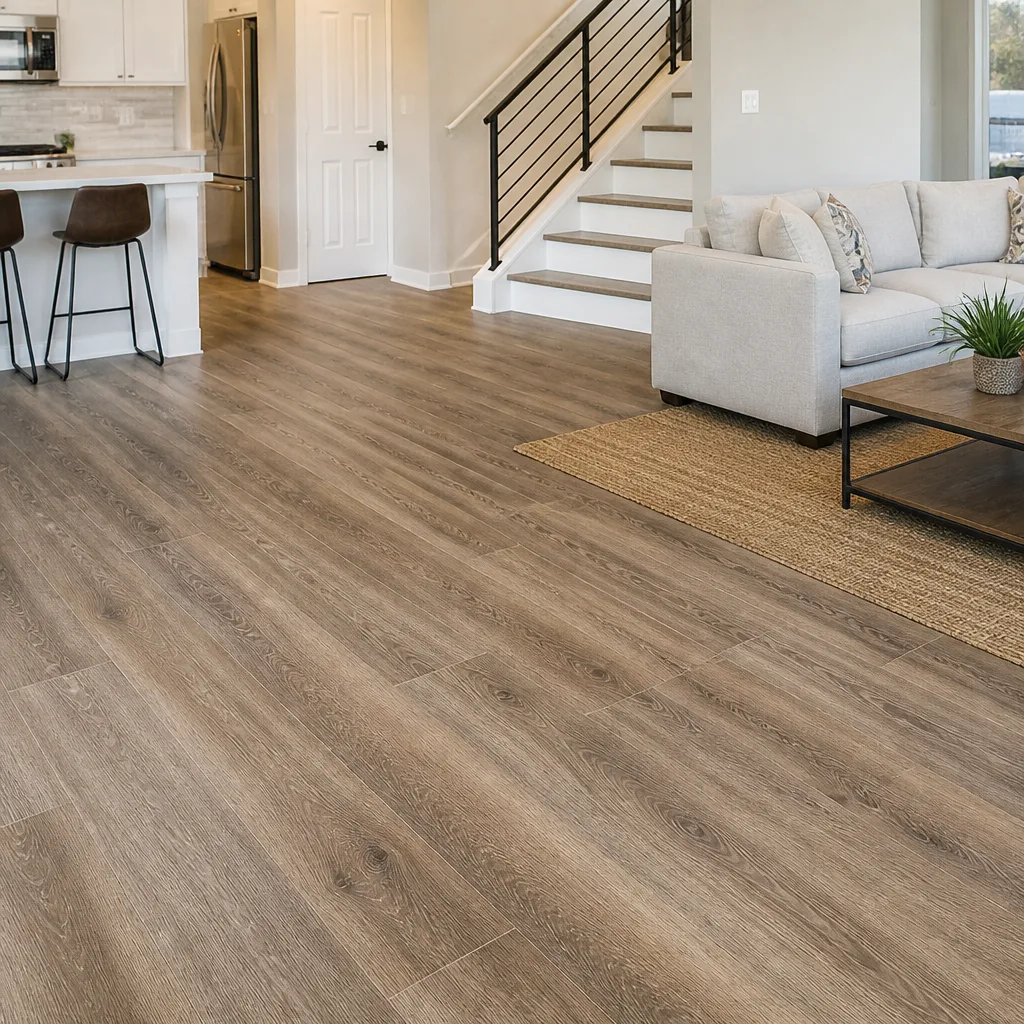 Luxury vinyl plank
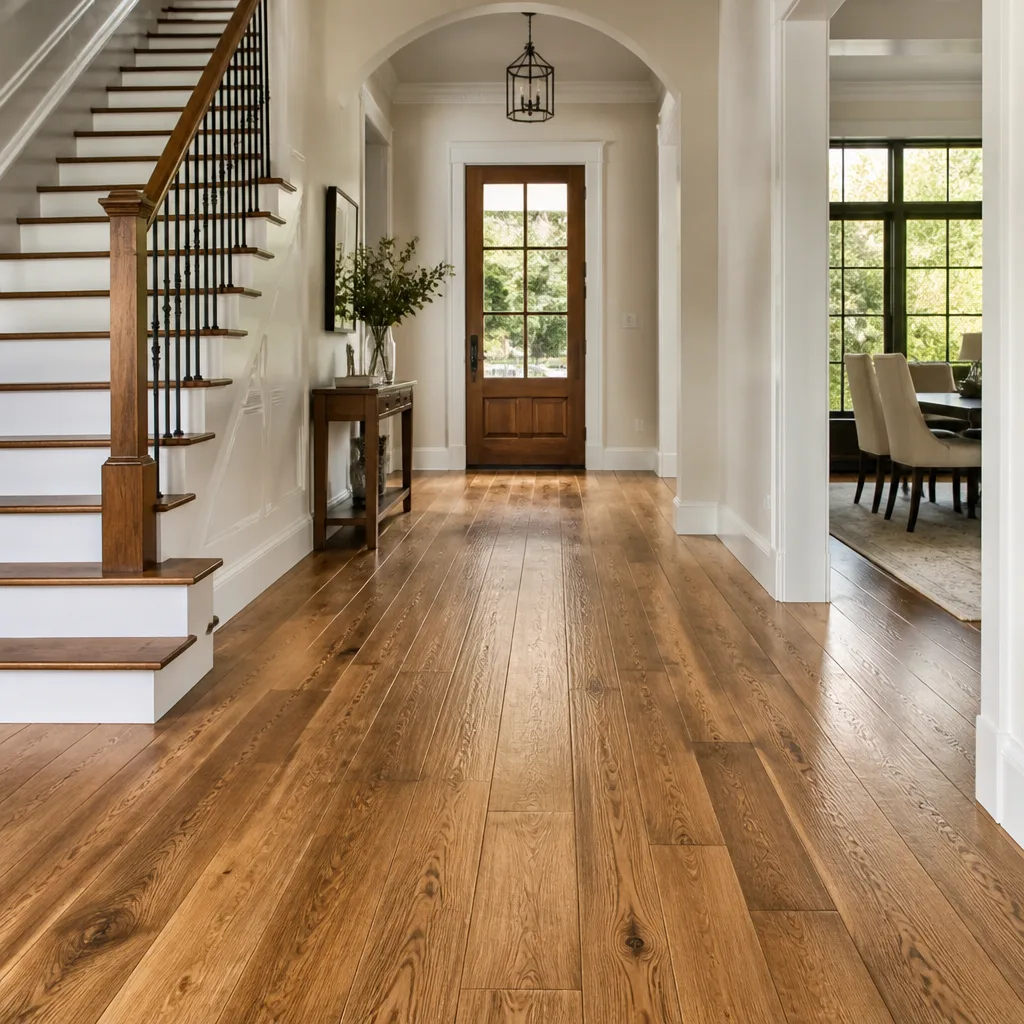 Hardwood
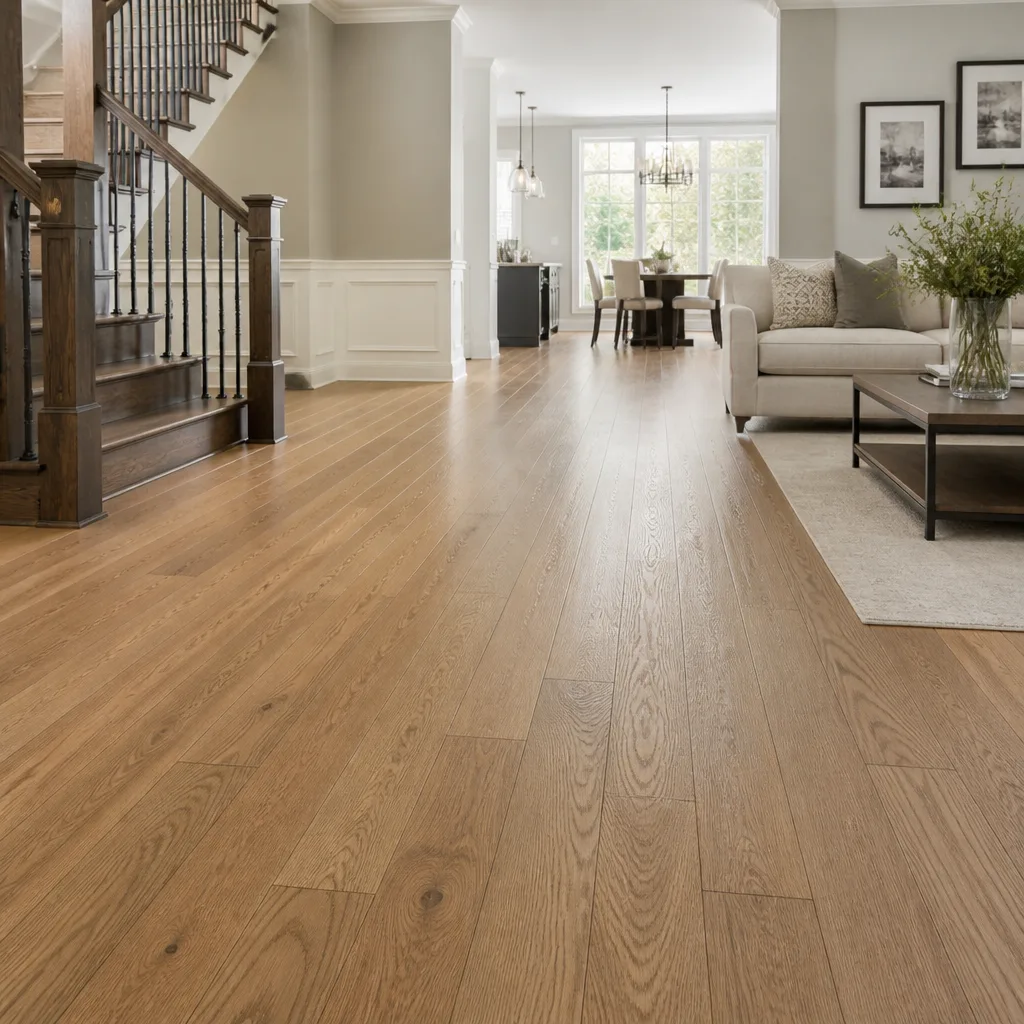 Engineered hardwood
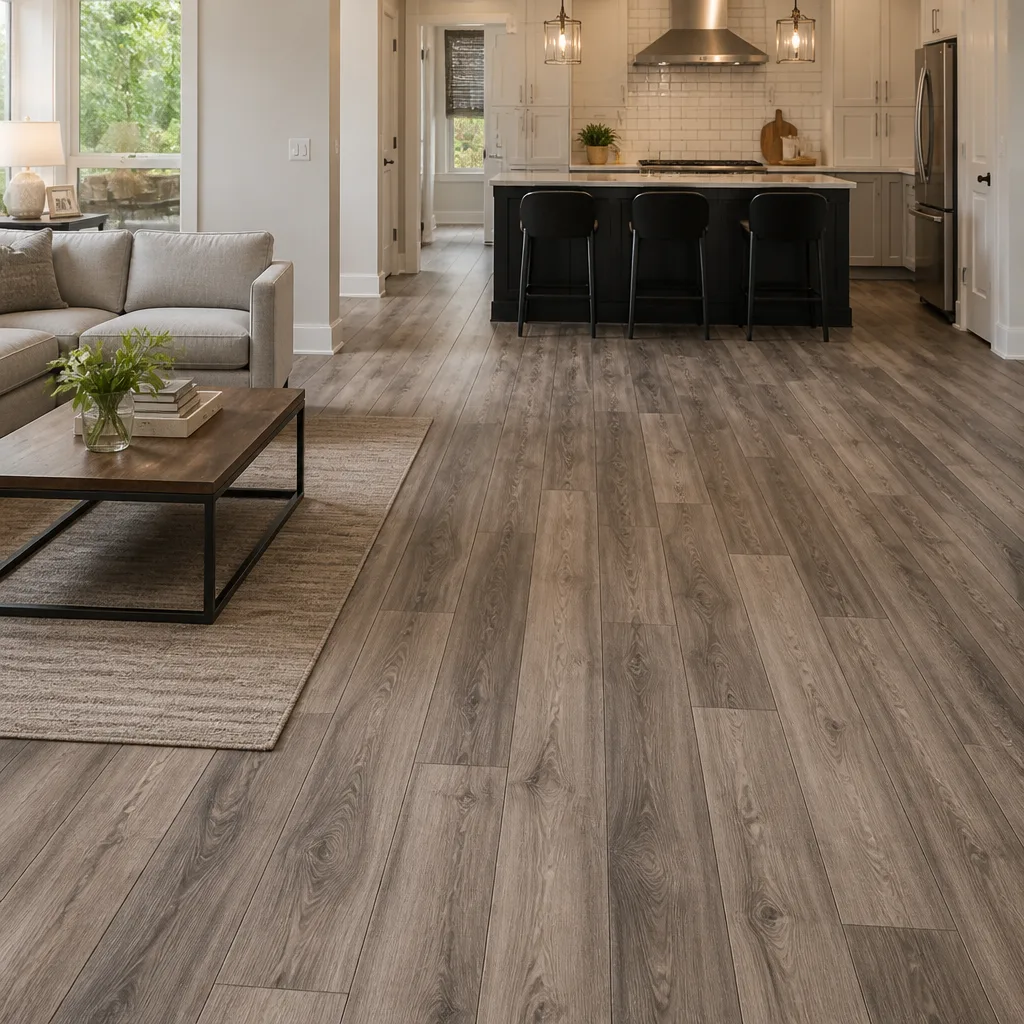 Laminate
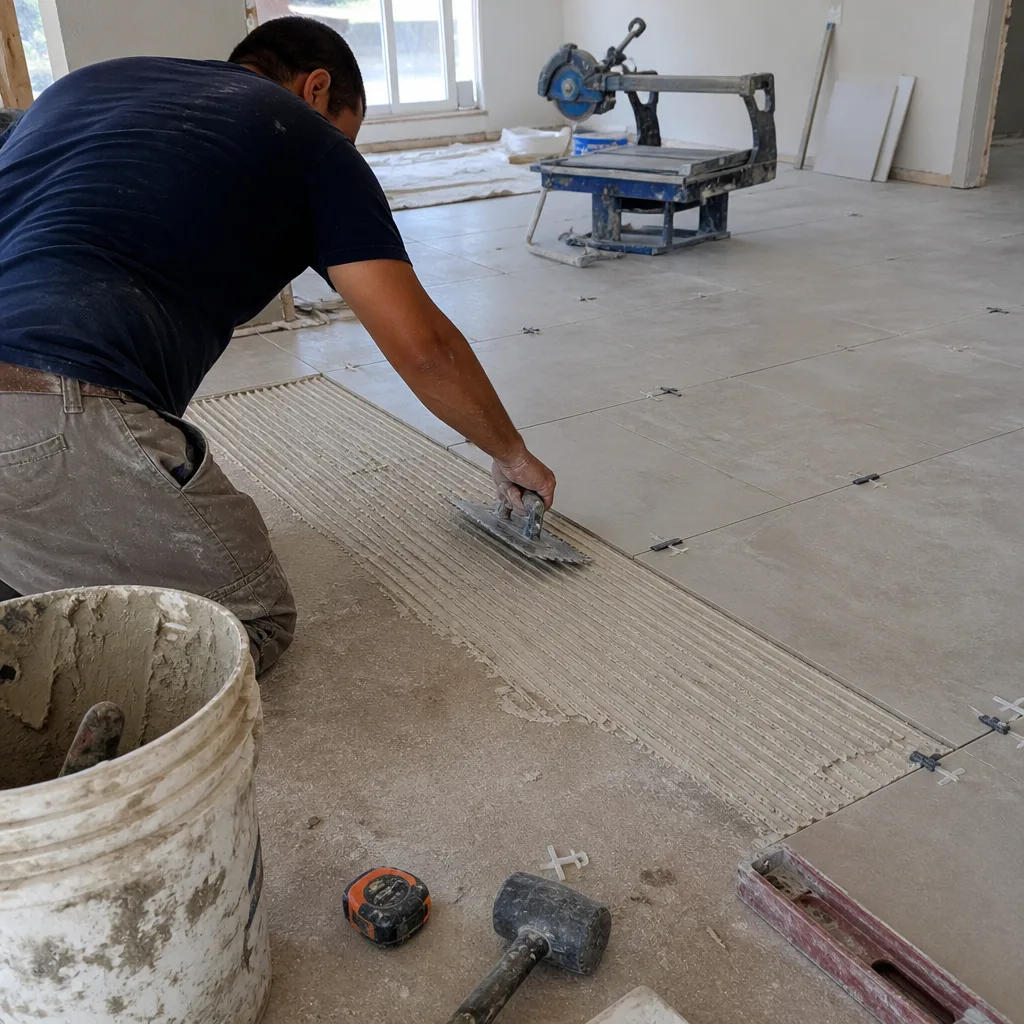
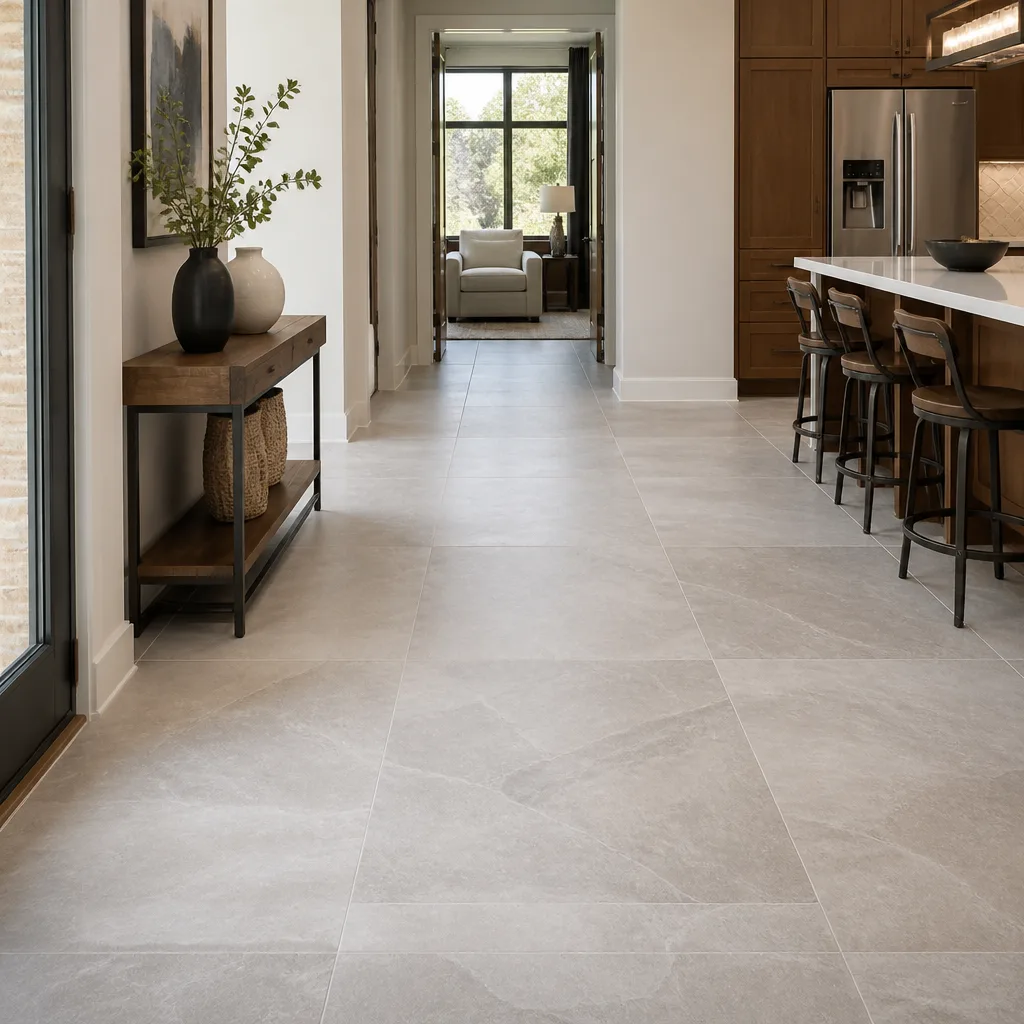 Porcelain tile
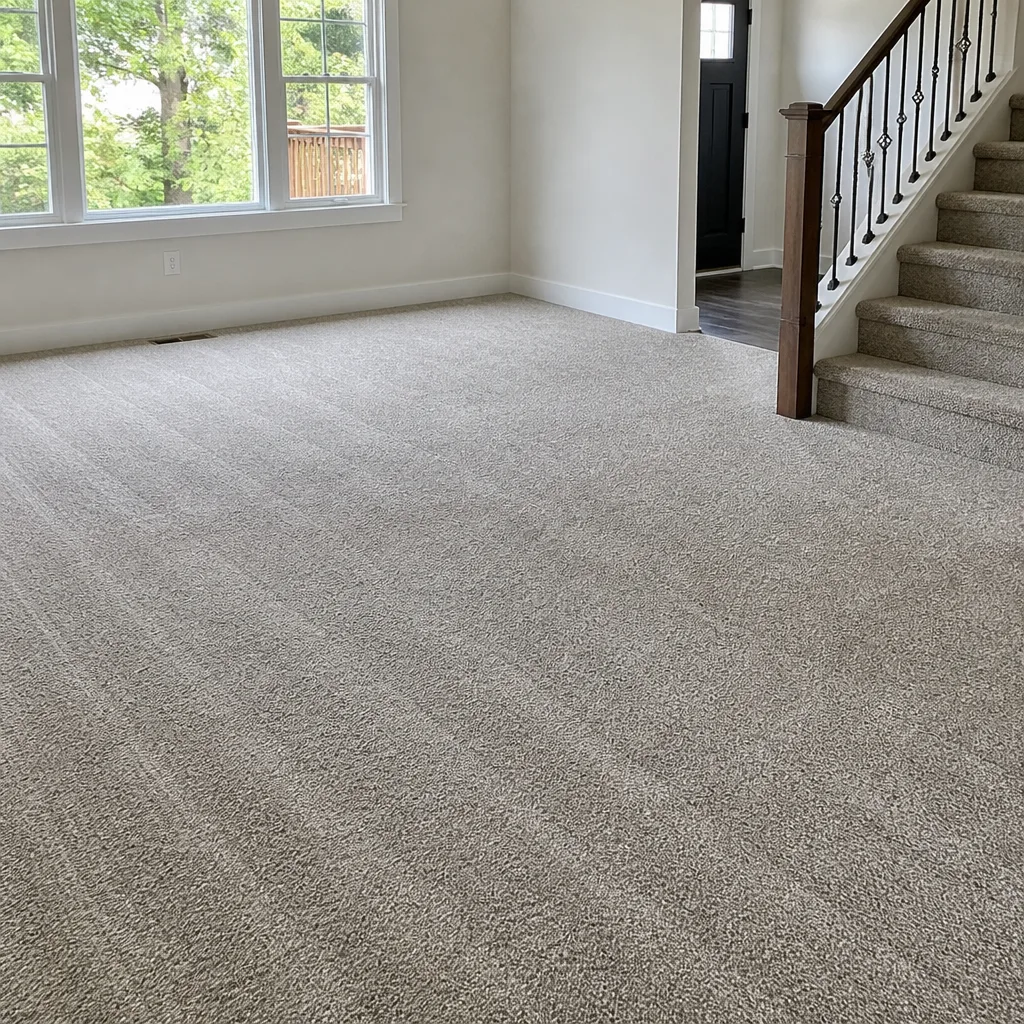 Carpet
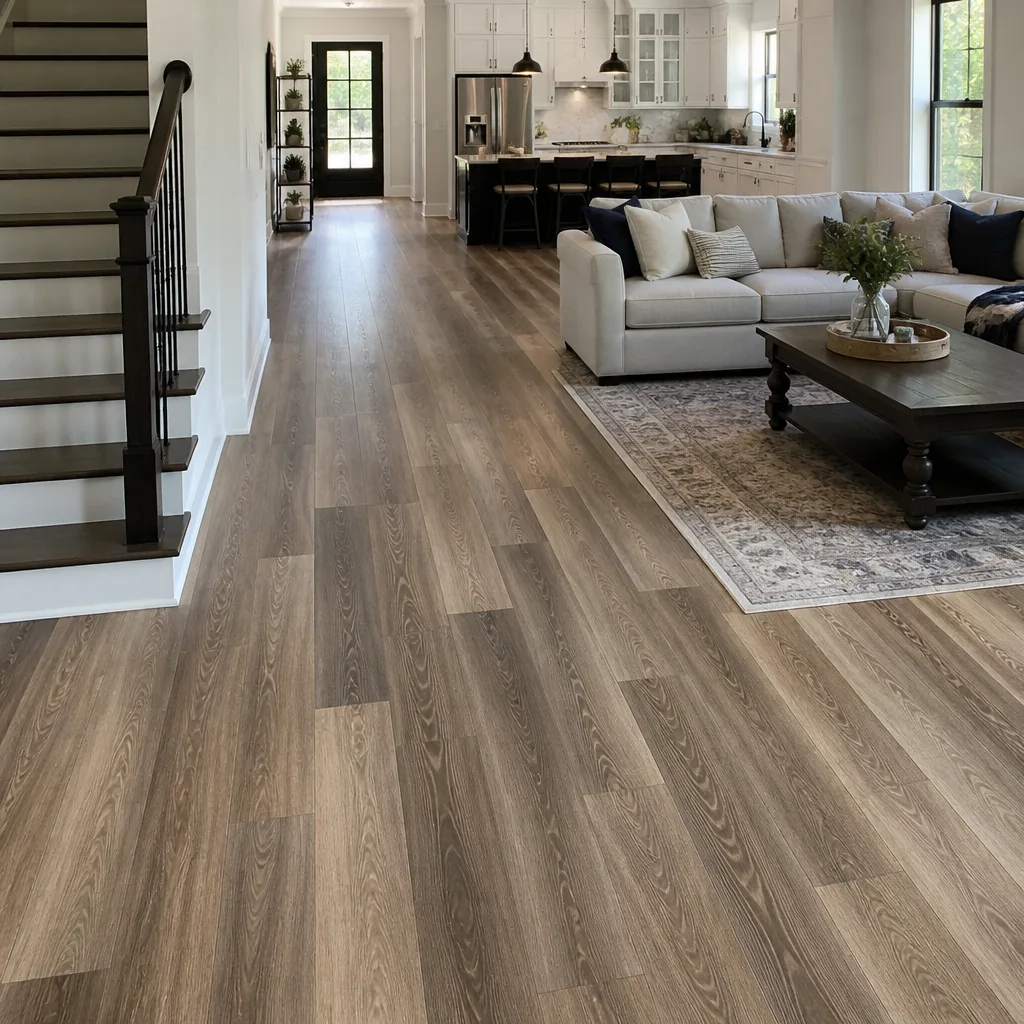 Shaw
 Mohawk
 COREtec
 Pergo
Free in-home measure and written estimate: Shaw, Mohawk, COREtec and Pergo lines compared on your own rooms, with carpet, tile, vinyl plank, laminate and hardwood laid out side by side
Get your free estimateHardwood, Vinyl Plank, Laminate or Tile: How North Las Vegas Homeowners Decide
Luxury vinyl plank outsells hardwood across the Las Vegas Valley, and it’s not because it looks better. It’s because most installers won’t put their name behind solid hardwood glued or nailed over a slab in this climate, and most North Las Vegas homes sit on slab. Homeowners usually learn this after they’ve already picked a wood look they love and built a budget around it. This guide gives you the technical framework to sort hardwood, vinyl plank, laminate, and tile before you commit: how each one behaves over a North Las Vegas slab, what the spec sheets actually say, and how to compare all four at the same price point instead of comparing bargain laminate to premium hardwood.
Quick Answer
For most North Las Vegas homes on slab, engineered hardwood and luxury vinyl plank are the practical choices over solid hardwood, which is a warranty and performance risk over concrete in this desert climate. Tile is the strongest performer for great rooms and traffic corridors because its thermal mass helps keep a hot room stable. Laminate works well on a budget but has a real vulnerability at entryways and in homes with hard water. The right pick comes down to which room, which subfloor, and which of these four you can honestly afford to maintain.
Styles & brands we work with
- Hardwood
- Engineered hardwood
- Luxury vinyl plank
- Laminate
- Porcelain tile
- Carpet
- Shaw
- Mohawk
- COREtec
- Pergo
Table of Contents
- Why Solid Hardwood Over a North Las Vegas Slab Is a Risk
- What Engineered Hardwood Does Differently at the Structural Level
- How to Read a Luxury Vinyl Plank Spec Sheet for Desert Performance
- Where Laminate Fails in North Las Vegas Homes
- The Underrated Case for Large-Format Tile in Great Rooms
- Comparing All Four at the Same Price Point
- Refinish Before You Replace: How to Know Which Is Worth It
- A Step-by-Step Way to Decide
Why Solid Hardwood Over a North Las Vegas Slab Is a Risk
Solid hardwood is milled from a single piece of wood and it moves with moisture. Over a concrete slab, that wood has no joist cavity to breathe into and no place to relieve stress. In the desert, the concrete itself pulls moisture from below, and the humidity swings between a dry summer and a wetter winter can make solid planks cup, crown, or gap at the seams. That’s why many manufacturers cap how solid hardwood can be installed over concrete, and why installers who value their reputation won’t promise a warranty on a solid-over-slab job in the Las Vegas Valley.
The slab isn’t just a surface, it’s a moisture source. Concrete wicks vapor from the soil underneath, and in a hot climate that vapor wants to travel up into whatever sits on top of it. Over time, a wood floor that wasn’t built for that movement will let you know.
What a homeowner should check before choosing solid hardwood over slab:
- Whether the slab is at or below grade, and how it was originally finished.
- Whether there’s a vapor barrier under the concrete.
- What the product instructions say about concrete subfloors for that specific plank.
- Whether the room is a great room, a bedroom, or a hallway that sees daily traffic.
None of this means hardwood is off the table. It means the decision has to start with the subfloor, not the swatch. In our experience, the homeowners who end up happiest with a wood look are the ones who asked what the slab would do to it before they picked a finish. This is also the reason we always walk a North Las Vegas home and check the slab in person before quoting a wood floor.
What Engineered Hardwood Does Differently at the Structural Level
Engineered hardwood is built in layers: a real wood top layer bonded to a plywood or high-density core that runs in cross-grain directions. That cross-grain construction limits how much the plank can expand and contract, which is why engineered flooring is the wood category most often approved for installation over concrete. It’s still real wood on the surface, it can be sanded and refinished in many cases, and it handles the temperature and humidity swings of North Las Vegas far better than a solid plank of the same species.
The structural difference matters more than the marketing. A solid plank is one piece of wood fighting the slab on its own. An engineered plank distributes that fight across layers that were designed to resist it.
When choosing engineered hardwood, these are the things worth asking about:
- How thick the top wear layer is, since that determines whether it can be refinished and how many times.
- Whether the core is plywood or a composite, and how the manufacturer describes its moisture tolerance.
- What the specific product instructions say about concrete subfloors and any required underlayment.
- How the plank handles direct sun through a west-facing window in July.
We install hardwood and refinish it, which means we see both sides of this decision. A wood floor that’s installed correctly over a properly assessed slab can last decades. A solid plank forced onto an unprepared slab in a hot, dry climate is a gamble a lot of installers won’t take. If you’re comparing wood options, ask the estimator to explain which specific product is approved for your slab, not just which finish you like.
How to Read a Luxury Vinyl Plank Spec Sheet for Desert Performance
Luxury vinyl plank has become the workhorse floor of the Las Vegas Valley, and the reason is durability under rough conditions, not a resemblance to wood. But not every plank handles a desert home well, and the difference shows up on the spec sheet. Most homeowners never read it. The two numbers that actually predict how a plank will perform in a North Las Vegas home are wear layer thickness and temperature tolerance range.
Wear layer thickness is the clear protective layer above the printed design. It’s measured in mils, and it tells you how much abrasion the plank takes before the pattern starts to wear through. Thicker wear layers handle more foot traffic and grit, and the desert brings grit. Sand tracked in from a yard, dust from a windy day, driveway gravel on a shoe. In a hallway or an entry, a thin wear layer gets tired faster than the same plank would in a low-traffic bedroom.
Temperature tolerance range is the spec most people skip and the one that matters most out here. A North Las Vegas home can go from a hot afternoon to a cool evening fast, and the interior of a house with big west-facing glass can swing even more. Vinyl expands and contracts with temperature, and a plank whose recommended range is narrow may gap, buckle, or telegraph the subfloor. The product instructions tell you the approved range for that specific line. Read them.
Other things to look for on the sheet:
- Whether the plank is rated for installation over a slab, and what underlayment the manufacturer requires.
- How the line describes its resistance to standing water versus splashes, because water-resistant is not the same as waterproof in every room.
- The recommended expansion gap at walls and doorways.
We install and service vinyl plank across North Las Vegas using names like LifeProof and Mannington, and we’ll tell you honestly which products are built for a room like yours. We’re not a big-box store selling boxes off a shelf; we install what you choose, and we read the spec sheet with you before the order goes in.
Where Laminate Fails in North Las Vegas Homes
Laminate is often sold as the budget hardwood alternative, and in a dry bedroom it can be a reasonable floor. But laminate has a specific vulnerability that shows up again and again in North Las Vegas homes: its core is prone to swelling when water sits on it or gets underneath. That makes it the wrong choice for an entryway, a laundry room, or any home with hard water, where a slow drip or a small spill near a door can reach the seams before anyone notices.
The hard-water problem is real and often overlooked. Mineral-heavy water leaves deposits on floors and around doors, and repeated damp mopping in an entry can push moisture into plank seams that weren’t designed for it. Once the core swells, it doesn’t go back. Unlike wood, it can’t be sanded and refinished, and unlike tile, it can’t be re-grouted. A laminate plank that swells at the edge is a plank that has to be replaced.
Where laminate makes sense:
- Bedrooms and low-moisture rooms where traffic is light.
- Rental or budget-sensitive projects where the floor is a stepping stone, not a forever floor.
- Homes with a properly assessed slab and a plan for keeping water off the seams.
Where it doesn’t:
- Entryways, mudrooms, and any room where wet shoes land.
- Homes with hard water where spills and mop water are a regular event.
- High-traffic corridors that see constant grit from outside.
If laminate is on your list, we’ll tell you straight whether it’s the right call for the room you have in mind. That’s part of a free estimate: matching the product to the space, not the other way around.
The Underrated Case for Large-Format Tile in Great Rooms
Tile gets treated as the bathroom floor. In a North Las Vegas great room, that’s a missed opportunity. Large-format tile, and the source brands that supply it, is one of the most energy-smart floors you can put in a hot-climate home because of a property called thermal mass. Tile is dense and it absorbs heat slowly, which means it holds the room’s temperature steadier than a thin, lightweight floor. In a house where the afternoon sun cooks a west-facing great room, a floor that doesn’t instantly reflect heat back into the room makes a difference you can feel underfoot.
Great rooms in North Las Vegas tend to be open, connected to the kitchen and the hall, and they see a lot of traffic. Tile handles that well. It doesn’t scratch, it cleans easily, and it doesn’t care about the desert dust. The larger the format, the fewer grout lines there are, which makes the room look bigger and the maintenance easier.
What to weigh with large-format tile:
- Grout choice matters as much as tile choice. It’s the line that takes the abuse.
- Tile is hard underfoot, which is wonderful in summer and cold in January. Consider where you actually walk barefoot.
- The slab has to be flat and the installation has to account for movement at the perimeter.
We install tile in North Las Vegas with brand names like Daltile, the same line architects and commercial contractors specify, because sourcing matters for a floor this permanent. If you’re weighing tile against a wood look for a great room, this is a conversation worth having in person with an estimator who can see the room and the light it gets.
Comparing All Four at the Same Price Point
Most flooring comparisons are unfair. They put entry-level laminate next to premium hardwood and call it a cost comparison. That’s not a comparison, it’s a sales tactic. A real comparison holds quality level constant and looks at the whole cost: material, installation, and what you’ll spend maintaining the floor over a decade. Below is a rough way to structure that comparison. Final numbers come from a written estimate, never from a chart.
- Material: the product you actually want, not the cheapest version of it.
- Installation: what the install requires (underlayment, subfloor prep, grout, trim) and how much labor it takes.
- Ten-year maintenance: refinishing for wood, resealing grout for tile, replacing swollen planks for laminate, and the general cleaning time each floor demands.
A floor that costs less on day one can cost more by year ten if it needs replacing. A floor that costs more up front can be the cheaper floor if it can be refinished or repaired instead of torn out. We talk through that math with every homeowner who asks, because the right floor for your space is not always the one we’d sell most easily.
Here’s how the framework shakes out in a North Las Vegas great room or entryway:
- On a slab, solid hardwood is usually out of contention unless the product is specifically approved for concrete and the slab is assessed.
- Engineered hardwood competes well when you want real wood and the ability to refinish down the road.
- Vinyl plank competes on durability and water resistance, especially with brands like LifeProof, and its ten-year cost can be low because upkeep is minimal.
- Laminate competes on budget in dry rooms, but the ten-year math changes fast if it takes on water.
- Tile competes on longevity; the up-front install is the bigger line, but the floor outlasts most others in a traffic corridor.
Refinish Before You Replace: How to Know Which Is Worth It
If you already have hardwood in your North Las Vegas home, replacement is usually the second-best option. Refinishing restores the surface by sanding back the old finish and applying a new one, and it’s a technically different skill from installation, which is why many installation-only shops can’t do it. Refinishing is often the cheaper path, and it keeps the original floor in the house instead of sending it to a landfill.
Whether a floor can be refinished depends on how much wood is left above the tongue and how the floor has been treated. A solid or engineered wood floor with a thick enough top layer can usually be sanded. A floor that’s been refinished several times, or one that’s worn too thin, isn’t a candidate. A plank with water damage in a corner may need spot repair rather than a full refinish.
The steps we walk through during a refinish assessment:
- Inspect the top layer of the wood and its condition across the room, not just in one spot.
- Check for cupping, gaps, and areas that need repair before sanding.
- Determine how much material can come off without exposing the tongue.
- Confirm the stain or finish the homeowner wants, and set expectations honestly about how close a match is realistic.
If the floor can’t be refinished, we’ll tell you that too. Refinish before you replace, and we’ll tell you honestly which is worth it for the floor you actually have.
A Step-by-Step Way to Decide
The decision feels overwhelming because it’s usually made backward, starting with a look and working toward a budget. Do it the other way and it sorts itself out. Here’s the order that works:
- Identify the room and what it puts up with. A bedroom and a great room want different floors.
- Check the subfloor. Slab, wood joist, at-grade, below-grade. This narrows the field fast.
- Decide the priority. Real wood look, lowest upkeep, most durable, or highest resale. Pick one primary.
- Read the spec sheet on your top two products. Wear layer and temperature range for vinyl, top layer thickness for wood, water exposure for laminate.
- Get an in-home estimate that walks the room with you. This is where the slab, the light, and the traffic get checked.
- Compare like-for-like, ten-year cost included. Not entry-level against premium.
- Book the install day. The schedule gets set at the estimate, once you’ve chosen the floor and the price is written down.
Each of these steps is something we can help you with. We install carpet, tile, and hardwood and offer hardwood refinishing, and we line up the product from nine nationally recognized brands so you can compare real, researchable options instead of mystery-label product. That’s the whole pitch on this page: nine brands, three surface categories, one specialist, and an honest recommendation for your North Las Vegas home.
One more note on the slab. A lot of North Las Vegas homes were built on the same few slab styles, and the same moisture behavior shows up again and again. We won’t guess what’s under your floor. We’ll check.
Common Mistakes to Avoid
- Picking a floor before checking the slab. Solid hardwood over slab is the classic North Las Vegas mistake. By the time the swatch has won your heart, the subfloor may already have ruled it out.
- Comparing entry-level laminate to premium hardwood. That’s not a comparison, it’s a pricing setup. Compare like-for-like quality and you’ll see the choice differently.
- Ignoring the temperature tolerance range on vinyl plank. A plank that wasn’t built for a hot-climate interior is a plank that gaps at the seams. Read the spec sheet first.
- Putting laminate in an entryway or a home with hard water. Laminate’s core doesn’t forgive a slow leak or damp mopping. Once it swells, it can’t be repaired.
- Overlooking the great room when choosing tile. In a North Las Vegas home, the biggest room in the house is often the one where thermal mass matters most. Tile deserves a look there.
- Replacing wood that could simply be refinished. If your existing floor has enough material above the tongue, refinishing is often the better call. An assessment tells you which it is.
- Choosing on day-one price alone. A floor that costs more up front but can be repaired is cheaper over ten years than a floor that has to be replaced.
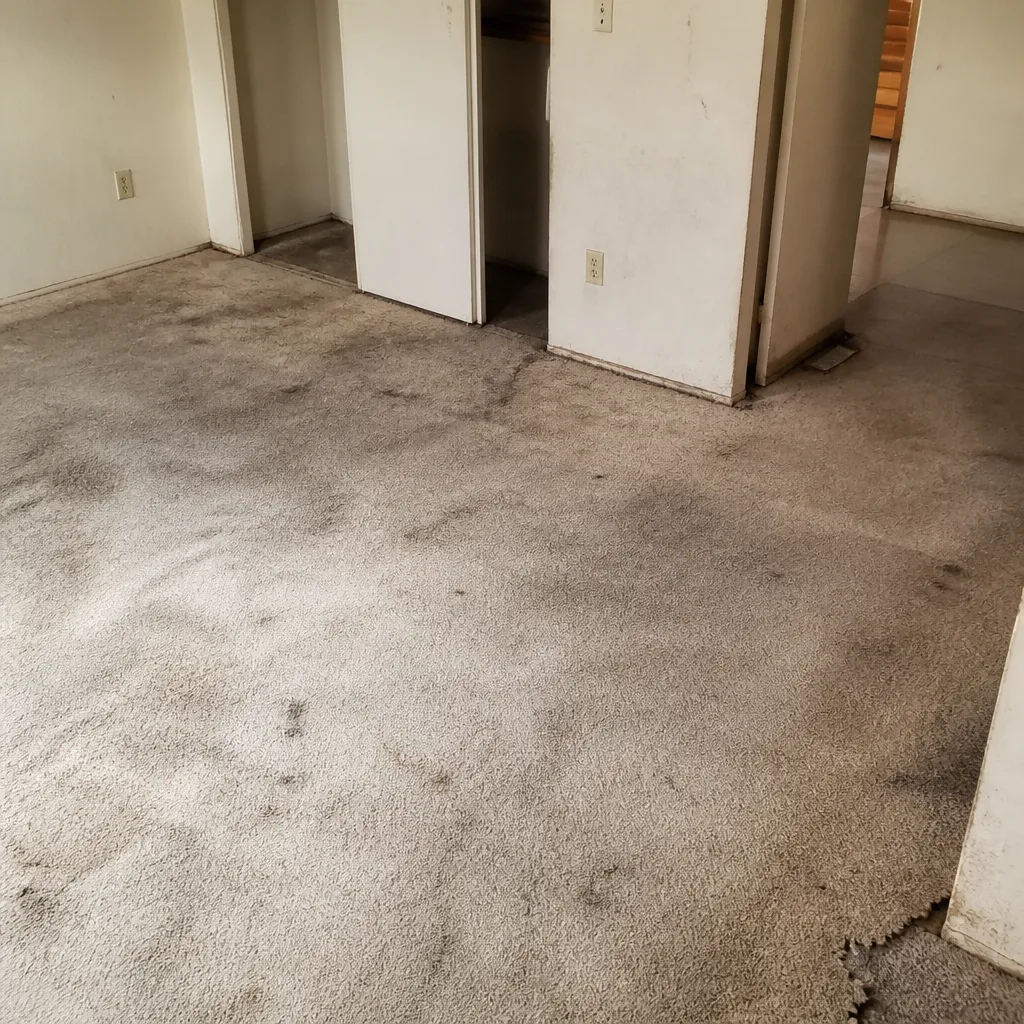
See the difference
 Before
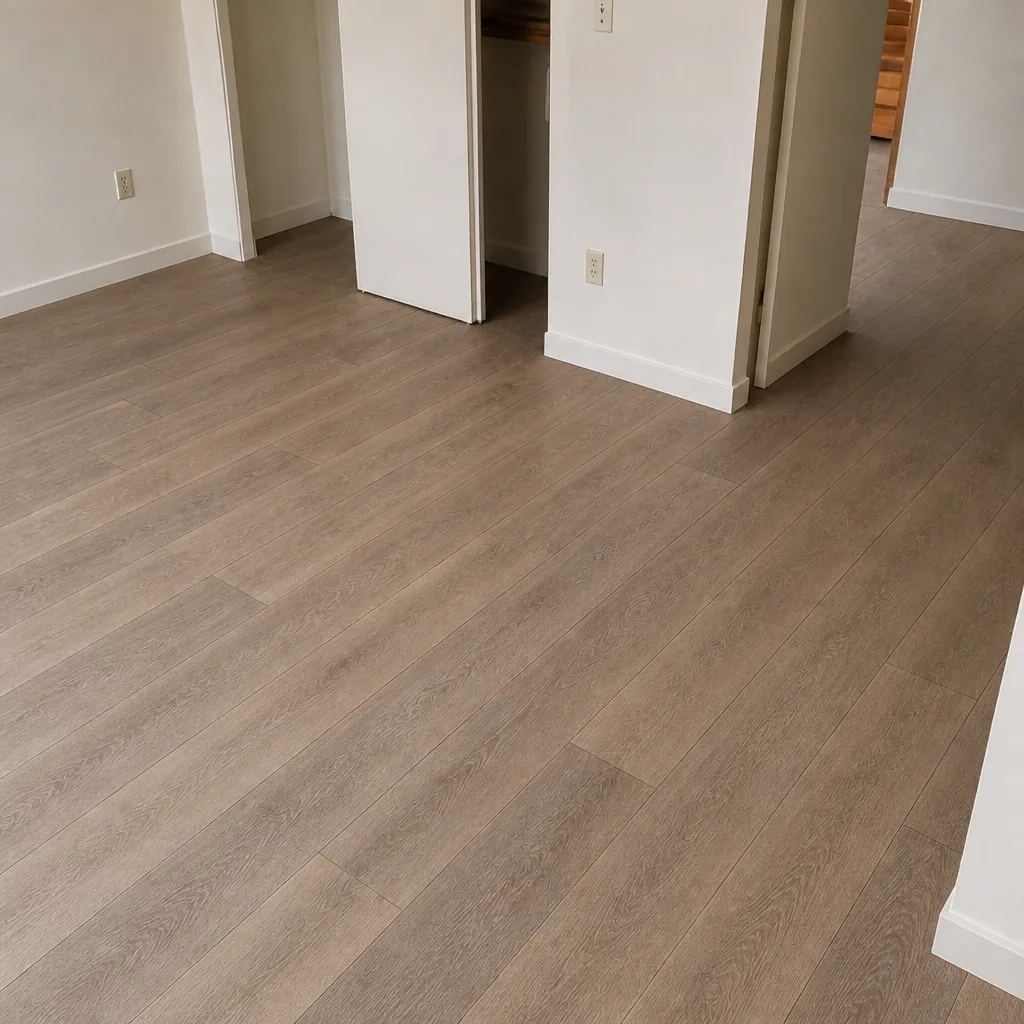 After
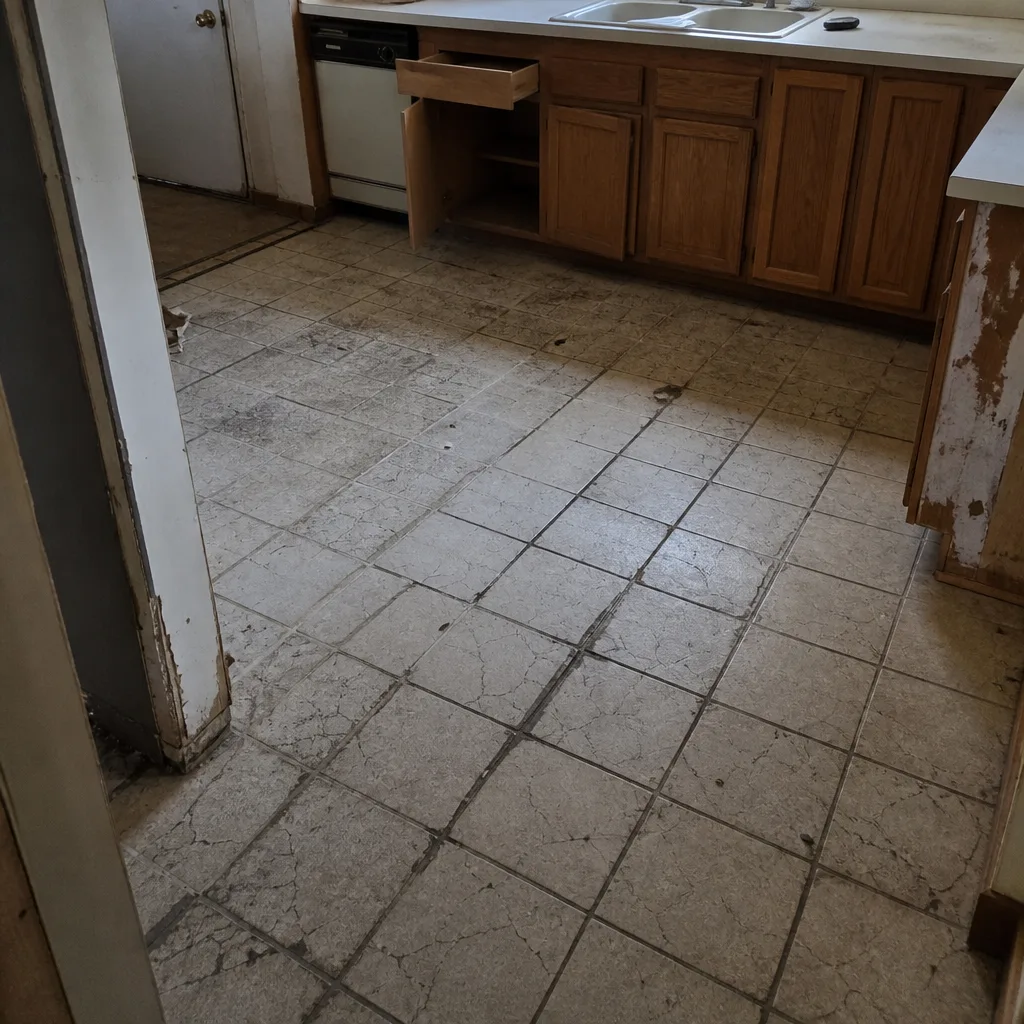 Before
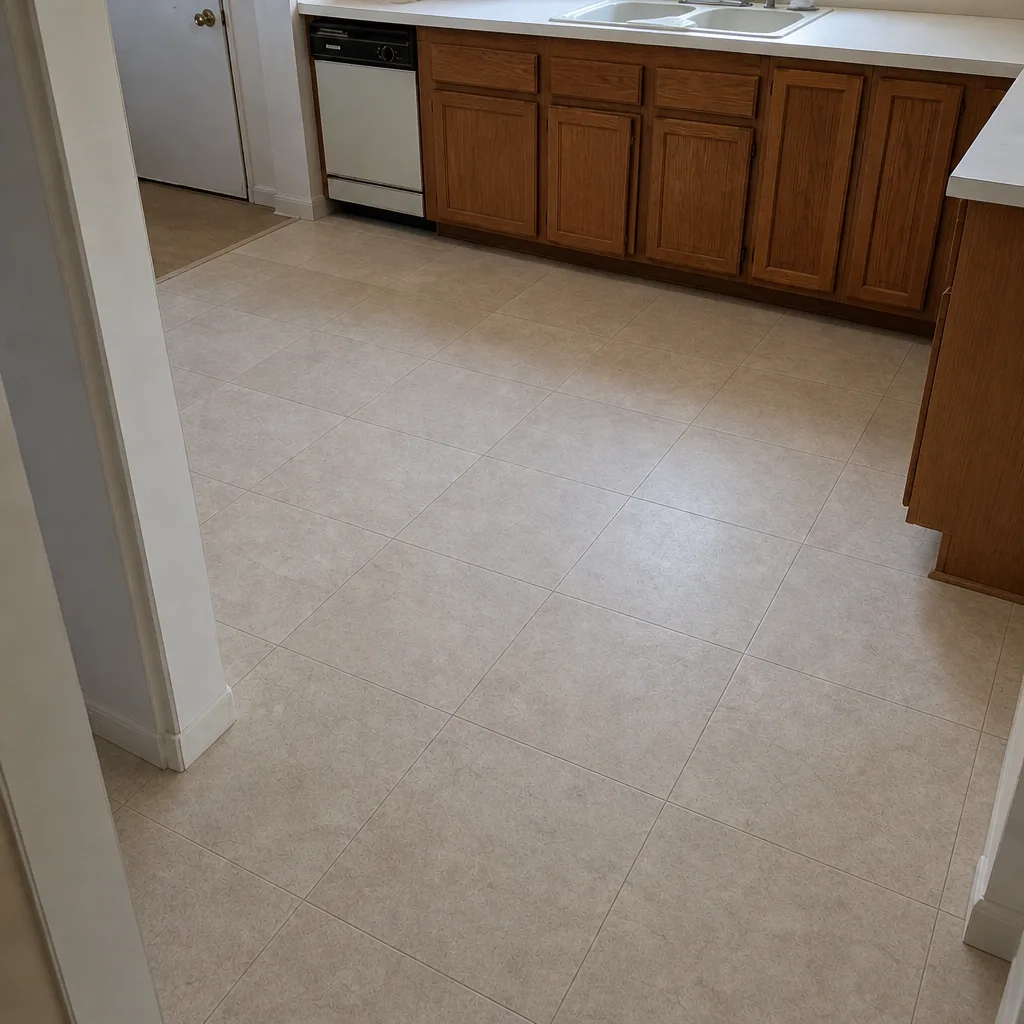 After
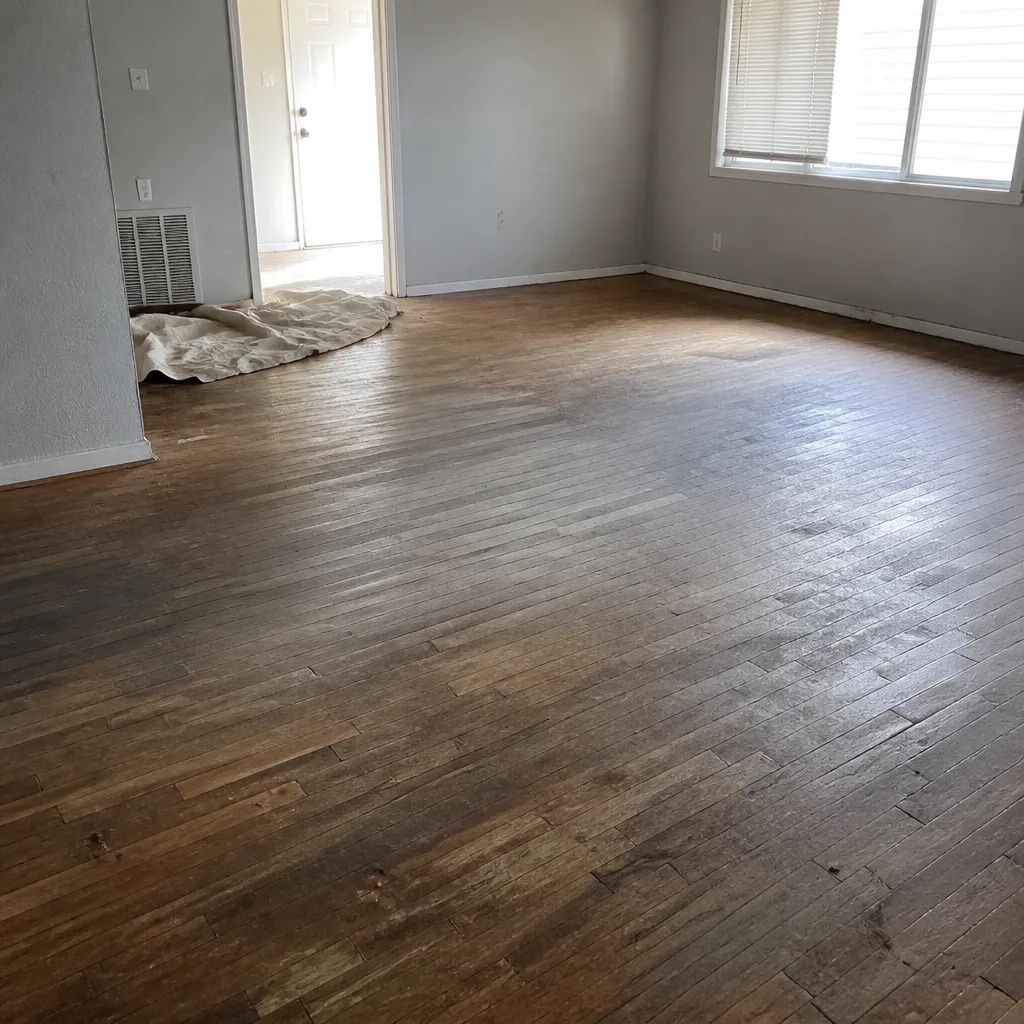 Before
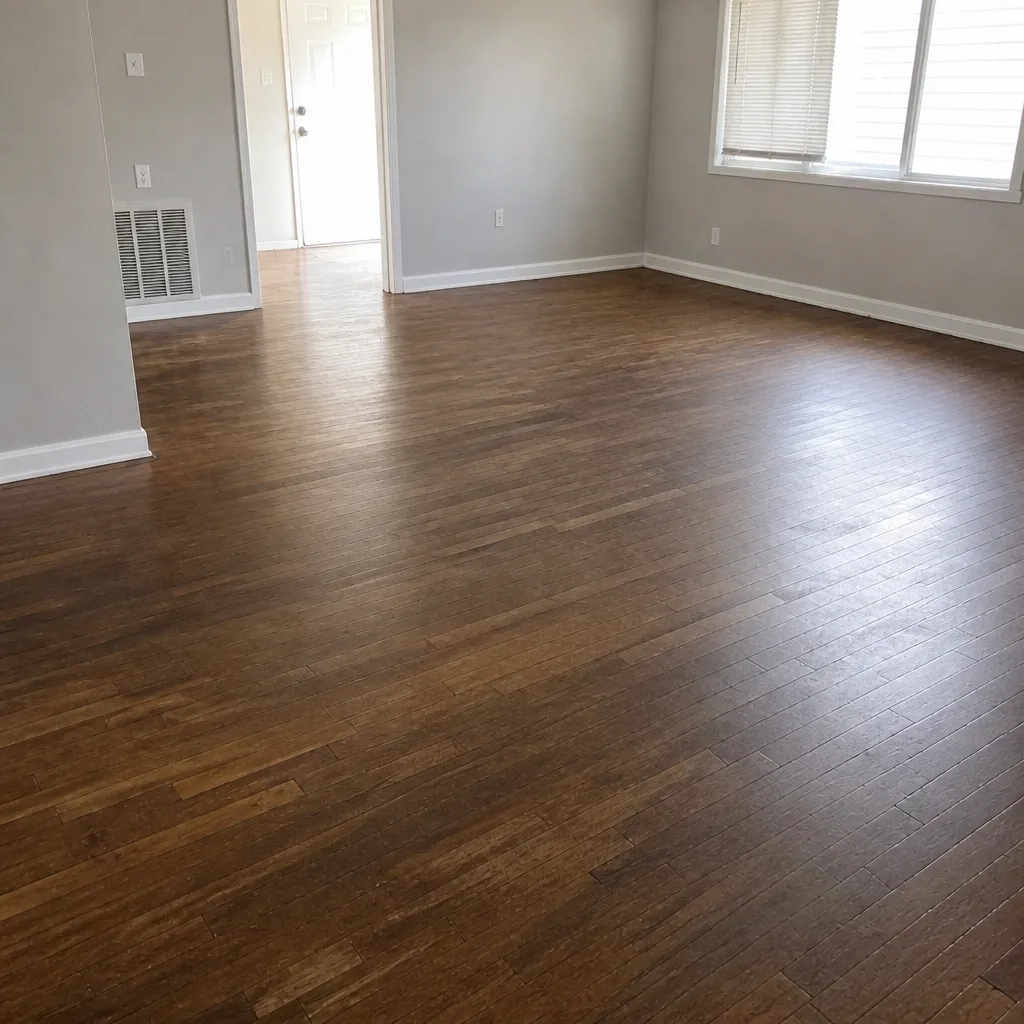 After
When to Call a Professional
Some calls are obvious. A floor that’s cupping, a plank that’s swelling at the seam, a tile that has cracked underfoot, or a wood floor that’s worn through in the traffic lanes. Those need eyes on them. The less obvious call is the one before you buy: an in-home assessment that checks the slab, the room’s sun exposure, and the product you’re considering before the order goes in. That’s where the most expensive mistakes get caught. If you’re deciding between hardwood, vinyl plank, laminate, and tile for a North Las Vegas home, an estimator who’s walked this exact slab type before can save you a lot of regret. Flooring North Las Vegas offers free estimates in North Las Vegas and we bring the product conversation to your living room. Call (844) 761-9160. We answer 24/7. Fast dispatch from 7am to 7pm, Sunday through Friday.
Frequently Asked Questions
It’s a risk most installers won’t take, and many manufacturers place limits on solid hardwood over concrete. The concrete wicks moisture from below and the desert’s humidity swings can make a solid plank cup, gap, or crown. Engineered hardwood is the wood category most often approved for concrete subfloors because its cross-grain construction handles that movement better. Before ruling anything out, have an estimator check your slab and the specific product instructions. Call (844) 761-9160 for a free estimate.
The two numbers that matter most in a North Las Vegas home are wear layer thickness and temperature tolerance range. Wear layer tells you how much foot traffic the plank handles before the pattern wears through. Temperature range tells you whether the plank is built for the interior swings a desert home sees. The product instructions set both, and the written estimate ties them to the product you choose. Call (844) 761-9160 to talk through the products we install.
Usually not. Laminate’s core swells when water reaches the seams, and entries in this climate see wet shoes, damp mopping, and in some homes hard water that leaves deposits. Once the core swells, the plank can’t be sanded or refinished, it has to be replaced. Vinyl plank or tile handles that exposure far better. If you’re weighing laminate, tell the estimator which room and let them give you an honest read. Free estimates are available at (844) 761-9160.
Tile has thermal mass, meaning it absorbs heat slowly and holds the room’s temperature steadier than a lightweight floor. In a large great room with west-facing glass, that stability is a real comfort benefit in summer. Large-format tile also means fewer grout lines, which makes the room look bigger and the upkeep easier. If you’re considering tile for a great room, an in-home estimate is the right first step. Call (844) 761-9160.
Often yes, but it depends on how much wood is left above the tongue and the overall condition of the floor. A floor that’s been sanded down too many times, or one with water damage in part of the room, may need repair rather than a full refinish. Refinishing is a different skill from installation, and not every installer can do it. We can assess your floor and tell you honestly which path is worth it. Call (844) 761-9160 for a free estimate.
Hold quality constant and look at total cost: material, installation, and ten-year maintenance together. Entry-level laminate against premium hardwood isn’t a comparison, it’s a pricing setup. A floor that costs more up front but can be refinished or repaired can be the cheaper floor over a decade. We walk through that math with homeowners during estimates. Call (844) 761-9160 for a free, no-pressure conversation.
The Bottom Line
For most North Las Vegas homes on slab, engineered hardwood and luxury vinyl plank are the practical wood-look choices, tile is the standout for great rooms and traffic corridors, and laminate is a budget pick for dry, low-traffic rooms rather than an entryway. The right answer comes from the subfloor first, the room second, and the product third, not the other way around. Nine brands. Three surface categories. One specialist. If you want a straight read on your space and an honest recommendation, that’s what we’re here for. Nine brands means real choices, and a free estimate means no pressure to pick one until you’re ready. Call (844) 761-9160. We answer 24/7. Fast dispatch from 7am to 7pm, Sunday through Friday. You can also start with flooring North Las Vegas, look at carpet installation for the rooms where soft surface makes more sense, or compare tile options through our tile flooring installation page before you book your estimate in North Las Vegas.
Written by the team at Flooring North Las Vegas.