
Last updated November 18, 2026
 Hardwood
 Engineered hardwood
 Luxury vinyl plank
 Laminate
 Porcelain tile
 Carpet
 Shaw
 Mohawk
 COREtec
 Pergo
Free in-home measure and written estimate: Shaw, Mohawk, COREtec and Pergo lines compared on your own rooms, with carpet, tile, vinyl plank, laminate and hardwood laid out side by side
Get your free estimateHow to Hire a Flooring Contractor in North Las Vegas: A Step-by-Step Guide
Nevada requires flooring contractors to hold a C-16 license, but a surprising number of flooring jobs around the valley are pulled under a general contractor license instead. That’s legal, and it’s also the reason two bids that look identical can produce very different outcomes. A general contractor can coordinate your floor, but the license itself doesn’t reflect specialized flooring knowledge. The homeowner who understands that difference asks better questions, compares bids on what’s actually in writing, and protects the installation before the first box of material arrives. This guide walks through licensing, scope of work, payment schedules, and the red flags specific to the North Las Vegas market, step by step.
Quick Answer
To hire a flooring contractor in North Las Vegas, verify the contractor’s Nevada State Contractors Board license and confirm the classification covers flooring work, get a written scope that names product model numbers, subfloor prep, install method, and warranty terms, then tie payments to project milestones rather than to the calendar. Compare at least three written estimates, ask who actually performs the install, and never sign on the day of the estimate because of a discount.
Styles & brands we work with
- Hardwood
- Engineered hardwood
- Luxury vinyl plank
- Laminate
- Porcelain tile
- Carpet
- Shaw
- Mohawk
- COREtec
- Pergo
Table of Contents
- Step 1: Verify the Contractor’s Nevada License
- Step 2: Find Out Who Actually Installs the Floor
- Step 3: Read the Written Scope of Work Line by Line
- Step 4: Understand Subfloor Prep in a Desert Climate
- Step 5: Structure a Payment Schedule That Protects You
- Red Flags Specific to the Las Vegas Flooring Market
- Questions to Ask Before You Sign
- Common Mistakes to Avoid
Step 1: Verify the Contractor’s Nevada License
Every contractor performing flooring work in Nevada should be able to show a license, and you can verify that license yourself through the Nevada State Contractors Board before you sign anything. Ask for the license number in writing, look it up, and confirm the classification matches the work. The C-16 classification is the flooring-specific license. A general contractor license can legally cover a flooring project, but it doesn’t signal the same specialized knowledge, and it can make accountability murkier when something goes wrong underfoot.
Here’s what the verification actually tells you, and what it doesn’t:
- License classification: A C-16 license is specific to flooring. A general contractor license permits the work but reflects broad construction oversight rather than flooring specialization.
- Active status: A license can be suspended, expired, or restricted. The lookup tells you the current standing, not the standing from three years ago.
- Bonding and insurance: Nevada licensing rules require bonding and insurance to hold a license. Ask for a certificate of insurance and confirm it’s current.
- Disciplinary history: The board’s records show complaints and disciplinary actions. Read them. A pattern matters more than a single old complaint.
In our experience, the contractors who hand over license and insurance information without hesitation are the same ones who write clear scopes. The ones who get vague when you ask are telling you something.
Step 2: Find Out Who Actually Installs the Floor
A flooring company is either an installer or a broker. Those are different businesses, and the difference shows up in the quality of the finished floor. An installation company employs or directly contracts installers who do flooring as their trade. A broker takes your order and finds whoever is available to install it that week. Both will hand you a quote that looks the same. Only one of them has a reason to stand behind the workmanship.
Ask directly: “Who will be in my home, and do they work for you?” A clear answer is the right answer. A vague answer (“our team” with no names, no structure, no answer about whether the installers are employees or subs) is a warning. If the company subcontracts, that’s not automatically disqualifying, but you should know it, and the scope should specify who handles workmanship issues after the install.
This is one of the reasons we point homeowners toward a flooring specialist rather than a generalist. When a single company covers carpet, tile, and hardwood under one relationship, you’re not coordinating three different crews across three rooms. See how that works in practice on our Flooring North Las Vegas page. If you’re replacing carpet in a rental or a new build, the same question applies to carpet installation as it does to tile.
Step 3: Read the Written Scope of Work Line by Line
A legitimate written scope of work for a flooring job in North Las Vegas should name the room, the product, the model number, the install method, and the cleanup terms. If any of those are missing, you have a verbal agreement with a price attached, and that’s not a scope. Here’s what a proper scope contains:
- Room-by-room measurements with square footage and overage for cuts and waste.
- Product brand and model number – not just “luxury vinyl plank” but the exact line. Brand-name product like COREtec or Mohawk is researchable before you commit. Mystery-label product isn’t.
- Subfloor prep specification – what will be ground, patched, leveled, or replaced, and how the prep is priced.
- Install method – floating, glue-down, nail-down, thinset, and whether the direction of the layout is specified.
- Trim, transitions, and baseboards – who removes and reinstalls, and what happens if the existing trim breaks.
- Furniture and appliance handling – what the crew moves and what you’re expected to clear.
- Demo and haul-away – what happens to the old floor, and whether the dumpster cost is in the price or billed later.
- Warranty terms in writing – workmanship warranty and the product manufacturer’s terms, stated separately, since they cover different things.
- Cleanup responsibilities – dust containment, daily cleanup, final walk-through.
The word “and materials” on a quote is where the trouble hides. It can mean anything from a full material allowance to a number that grows the moment you pick a better-grade product. Ask for the material cost itemized.
Step 4: Understand Subfloor Prep in a Desert Climate
North Las Vegas sits in the Mojave Desert, and that affects a floor more than most homeowners expect. Indoor humidity swings between the dry heating season and the summer monsoon months, and a concrete slab in a desert home can hold moisture that has nothing to do with rain. That’s why subfloor prep is not a line item to bargain away. It’s the part of the job that decides whether the floor looks right in five years or starts to lift at the seams.
What should the contractor check at the estimate visit?
- Slab moisture: The installer tests it, and the product instructions set the acceptable limit. Don’t accept “it’s desert, it’s dry” as the answer.
- Slab flatness: Most manufacturers require a flat substrate within a tolerance printed in the product instructions. Ask what the flatness reading was and how the prep addresses it.
- Existing floor conditions: Tile over a cracked slab, carpet over a pad that has absorbed years of moisture, and hardwood over a subfloor that has moved all change the prep plan.
- Transitions and doors: Adding a floor with a different thickness means doors and casings need to be adjusted. Confirm that’s in the scope.
- Acclimation: Some products require the material to sit in the home for a set period before install. The product instructions set the time; the estimate should account for it in scheduling.
This is where a flooring specialist earns the fee. tile flooring installation over a slab has different prep requirements than a floating plank floor over the same slab, and a company that does only one category may not know the difference. Our technicians have up to 8 years of experience and know what a North Las Vegas slab looks like in a home built in the 1990s versus one built this decade.
Step 5: Structure a Payment Schedule That Protects You
A fair payment schedule ties money to milestones, not to dates. A typical structure for a flooring job has three or four payments, and the final payment is held until the walk-through. Here’s how to think about it:
- Deposit at contract signing: Covers material ordering. The amount should match the material cost, not the whole job. Ask what the deposit covers.
- Second payment at material delivery: Paid when the flooring arrives on site and you’ve confirmed the product matches the model numbers on the scope.
- Third payment at install start or midpoint: Tied to the work beginning or a stated percentage of the install complete.
- Final payment at the walk-through: Held until you’ve inspected the floor, transitions, trim, and cleanup, and any punch list items are resolved.
What you shouldn’t see: a demand for the full amount upfront, or a “cash discount” that takes the payment off the record. If a contractor can’t work with a milestone schedule, ask why. The answer tells you a lot about their cash flow and their confidence in the work.
Red Flags Specific to the Las Vegas Flooring Market
The Las Vegas flooring market has a few patterns that show up on quote sheets across the valley, and homeowners who don’t know them pay for the lesson. Here’s what to watch for:
- Vague “and materials” pricing: A single lump sum with no material itemization is a quote that changes after you pick a product. Demand the material cost and the model number in writing.
- No physical showroom or sample access: You should be able to see and touch the product before you commit. If a company can only show you a photo on a phone, ask how you’ll confirm the color against your cabinets and lighting.
- Day-of discount pressure: “Sign today and I’ll take 10% off” is a sales tactic, not a pricing structure. A legitimate price doesn’t expire in an hour.
- Pressure to skip the in-home measure: Square footage estimated from a phone call is a guess. The estimate visit is where subfloor issues get found before they become change orders.
- No workmanship warranty on paper: A warranty that only exists in the sales pitch isn’t a warranty. It should be a clause in the contract.
- Installers you can’t identify: Ask who shows up and whether they work for the company. “We’ll send a crew” without further detail is a broker answer.
Questions to Ask Before You Sign
Bring this list to the estimate visit and write down the answers. If a contractor can’t answer any of them, that’s information.
- What’s your Nevada license number and classification, and can you show me the certificate of insurance?
- Who will install the floor, and do they work for your company?
- What brand and model number are in this quote, and can I see a sample of it?
- What’s the subfloor prep plan, and is it itemized or bundled into the square-foot price?
- What’s the workmanship warranty, and how do I file a claim?
- What’s the payment schedule, and what does the final payment depend on?
- Who moves the furniture, who hauls away the old floor, and who cleans up?
- Can I have a copy of the written estimate to compare with other bids?
A written estimate should be free, and you should be able to take it home and read it. Any contractor who won’t put a number in writing before you commit isn’t giving you an estimate; they’re giving you a sales conversation.
Common Mistakes to Avoid
- Comparing only the bottom-line number. A low bid and a high bid often aren’t for the same job. One includes subfloor prep and haul-away; the other bills them later. Compare line items, not totals.
- Not checking the license classification. A general contractor license permits the work, but a C-16 flooring license reflects specialization. Know which one you’re hiring.
- Picking a floor by price per square foot alone. In a North Las Vegas home with big temperature swings and a concrete slab, the product that holds up matters more than the one that saves a dollar a foot.
- Skipping the in-home measure. Square footage guessed from a phone call leads to change orders and material shortages. The measure is where surprises get found early.
- Paying too much upfront. A deposit that covers material is normal. A demand for the full job cost before install starts is not.
- Accepting a verbal warranty. Workmanship coverage should be a clause in the contract with a clear process for claims. If it’s not written, it doesn’t exist.
- Letting the discount pressure you. “Sign today” is a tactic, not a deal. Take the estimate home, compare at least three, and decide without a stopwatch running.
See the difference
 Before
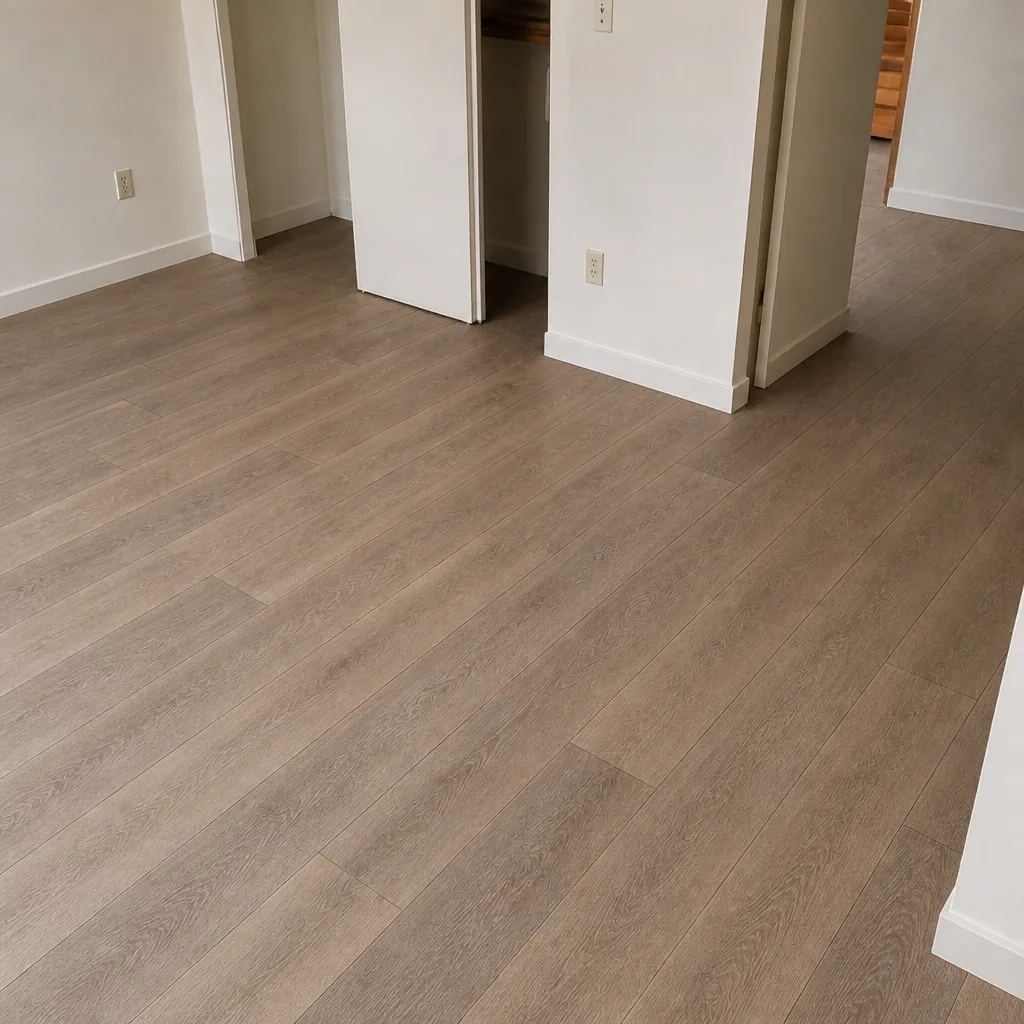 After
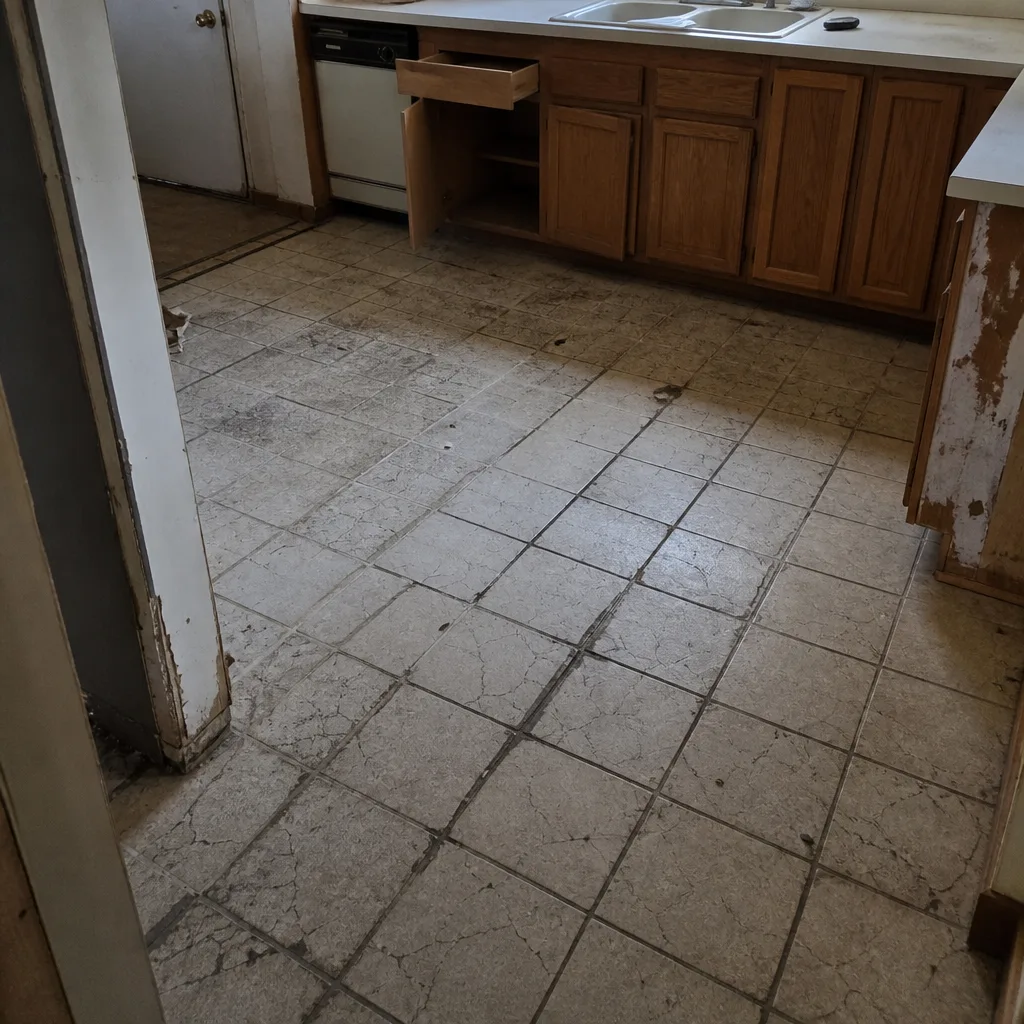 Before
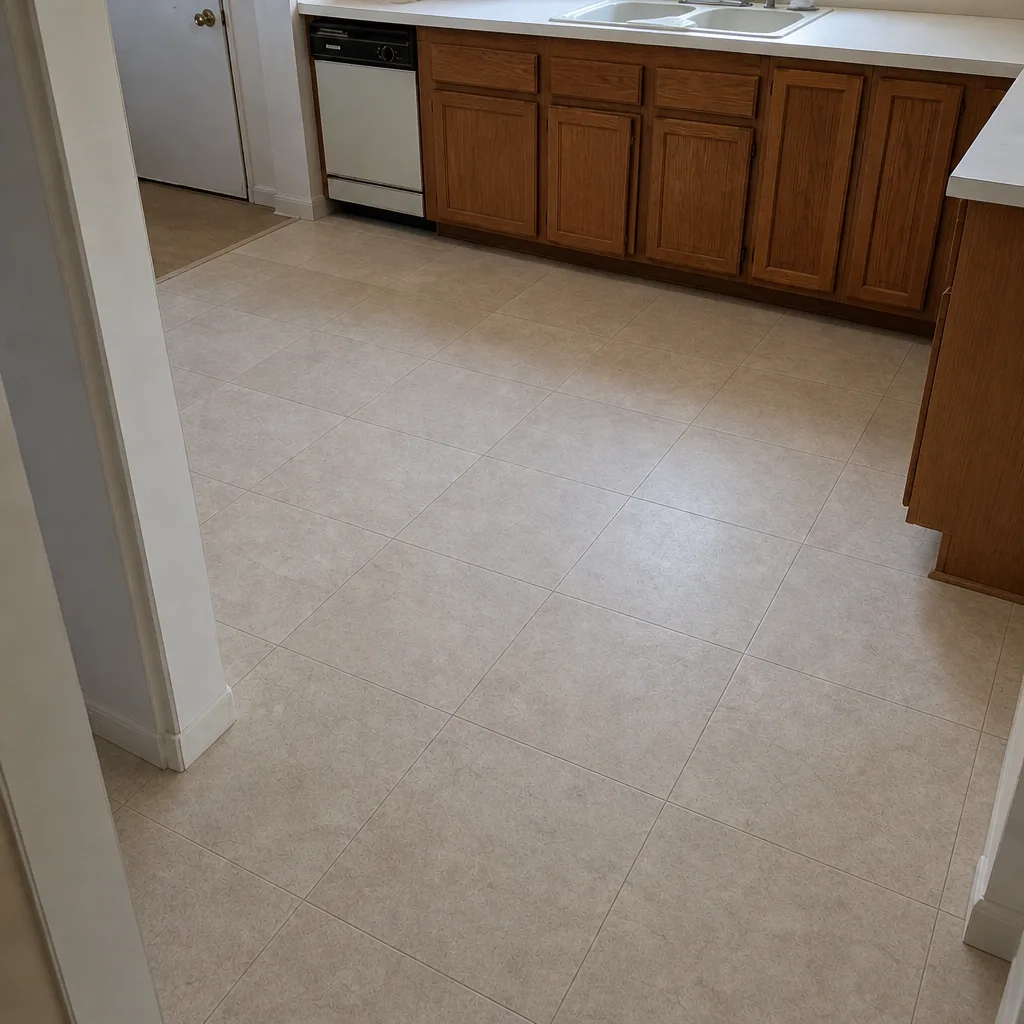 After
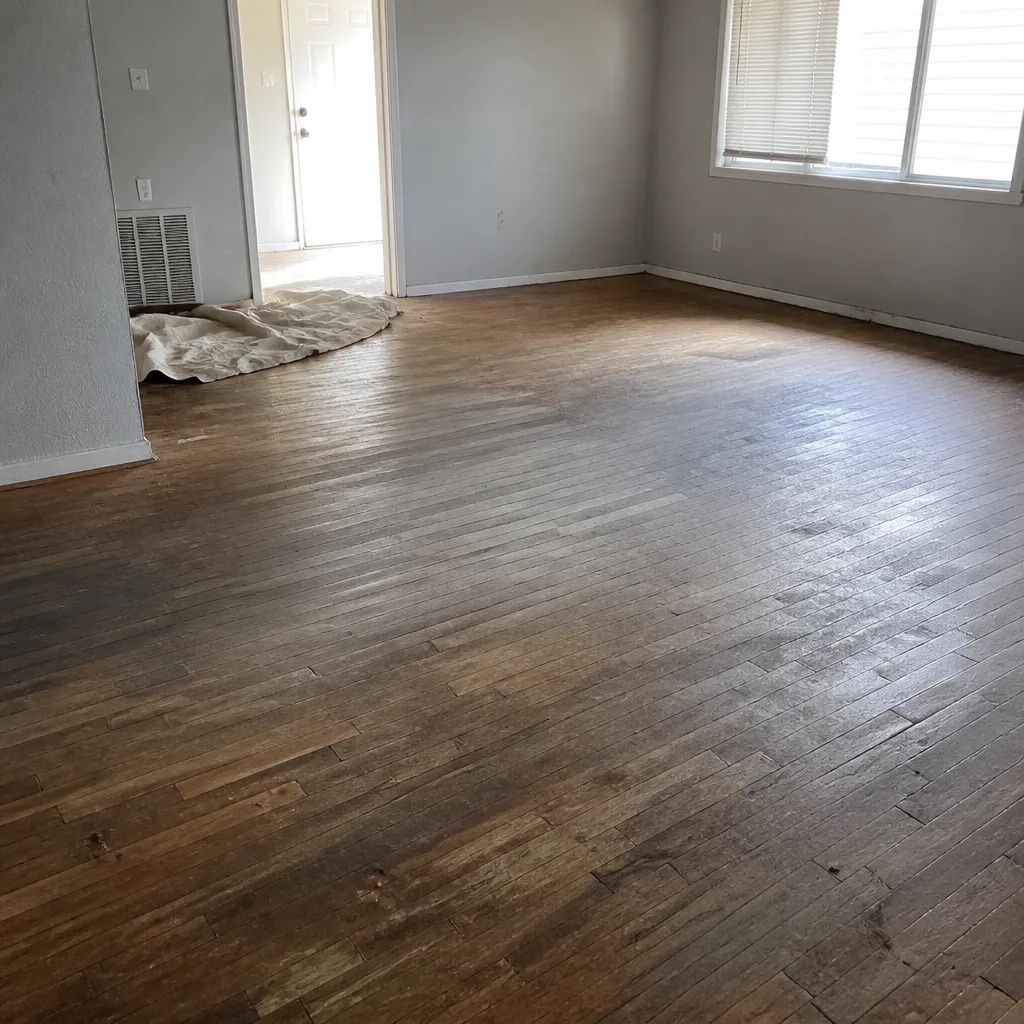 Before
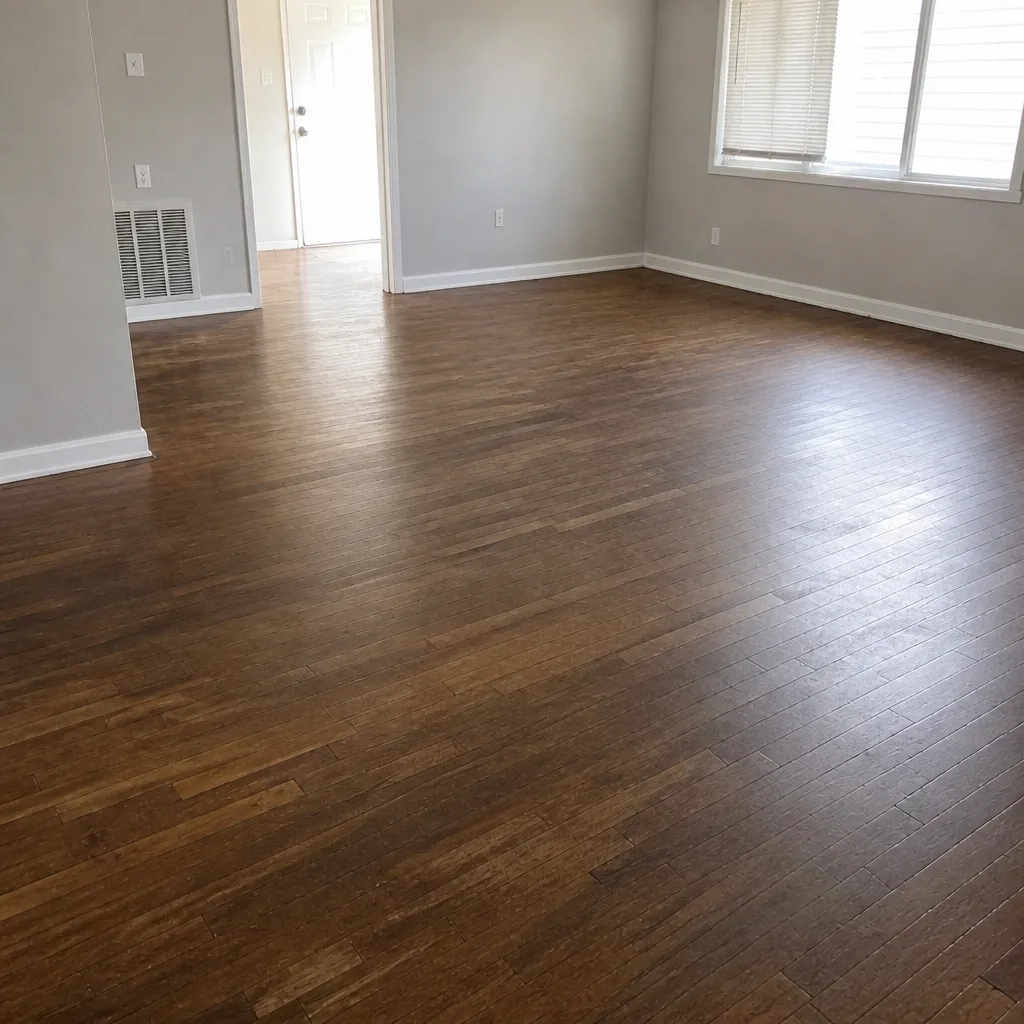 After
When to Call a Professional
Some flooring projects are honestly within reach of a careful homeowner: a small repair, a closet, a single room of floating plank over a flat floor. The moment the job involves a concrete slab with moisture or flatness concerns, a full-house install, tile over a substrate that needs prep, or hardwood that may be worth refinishing rather than replacing, a professional is the better call. Refinishing in particular is a restoration skill that most installation-only companies can’t offer, and whether your existing floor can be sanded depends on the thickness of the wood and its condition, checked at the estimate visit. Flooring North Las Vegas offers free estimates in North Las Vegas, and you can call (844) 761-9160 to schedule one.
Frequently Asked Questions
We price each job by written estimate, which means the number depends on square footage, product, subfloor condition, and prep. The most reliable way to compare contractors is to request an itemized written estimate from each one and compare what’s included, not just the total. Call (844) 761-9160 to schedule your free estimate.
Yes. Nevada requires contractors, including flooring contractors, to hold a state license, and the C-16 classification is the flooring-specific license. A general contractor license can legally cover the work, but it doesn’t reflect the same specialization. Verify the license number through the Nevada State Contractors Board before signing.
Most residential flooring replacement doesn’t require a building permit, but some scopes do, such as structural subfloor repair. The rule varies by scope, so ask the City of North Las Vegas building department directly, and confirm with your contractor whether the job as scoped triggers one. Never assume the answer in either direction.
The schedule is set at the estimate, because square footage, product, prep, and acclimation time all affect the timeline. A single room and a full house are different jobs. Once the scope is written and the material is on site, the contractor should give you a start date and a completion estimate in writing.
Whether a floor can be refinished depends on the thickness of the wood and its condition, which is checked at the estimate visit. Refinishing is a restoration skill separate from installation, and not every flooring company offers it. If a contractor tells you to replace without inspecting the wood, ask why. Call (844) 761-9160 for a free estimate.
Ask what the payment covers and propose a milestone schedule instead. A deposit at signing that covers material is normal. Paying the full job cost before the install begins removes your leverage if the work isn’t finished to the scope. A contractor who won’t discuss a structured schedule is a contractor to walk away from.
A big-box store sells flooring; a flooring specialist installs and, in some cases, refinishes it. If the outcome matters and you want the person installing the floor to be accountable for the workmanship, a specialist is usually the better call. Brand-name product you can research before you commit is part of that. A specialist like Flooring North Las Vegas installs the floor you choose from Shaw, Mohawk, COREtec, Pergo, LifeProof, Mannington, Armstrong, Daltile, or Karndean, so you can research the product independently.
The Bottom Line
Hiring a flooring contractor in North Las Vegas comes down to four things: verify the Nevada license and its classification, find out who actually installs the floor, demand a written scope that names product model numbers and subfloor prep, and tie payments to milestones. The red flags (vague material pricing, no showroom, day-of discounts, no written warranty) are the same ones that separate a specialist from a broker. The process is not complicated, but skipping a step is how homeowners end up paying twice. Call (844) 761-9160 to schedule a free estimate with Flooring North Las Vegas. We answer 24/7. Fast dispatch from 7am to 7pm, Sunday through Friday.
Written by the team at Flooring North Las Vegas.