
Last updated November 18, 2026
 Hardwood
 Engineered hardwood
 Luxury vinyl plank
 Laminate
 Porcelain tile
 Carpet
 Shaw
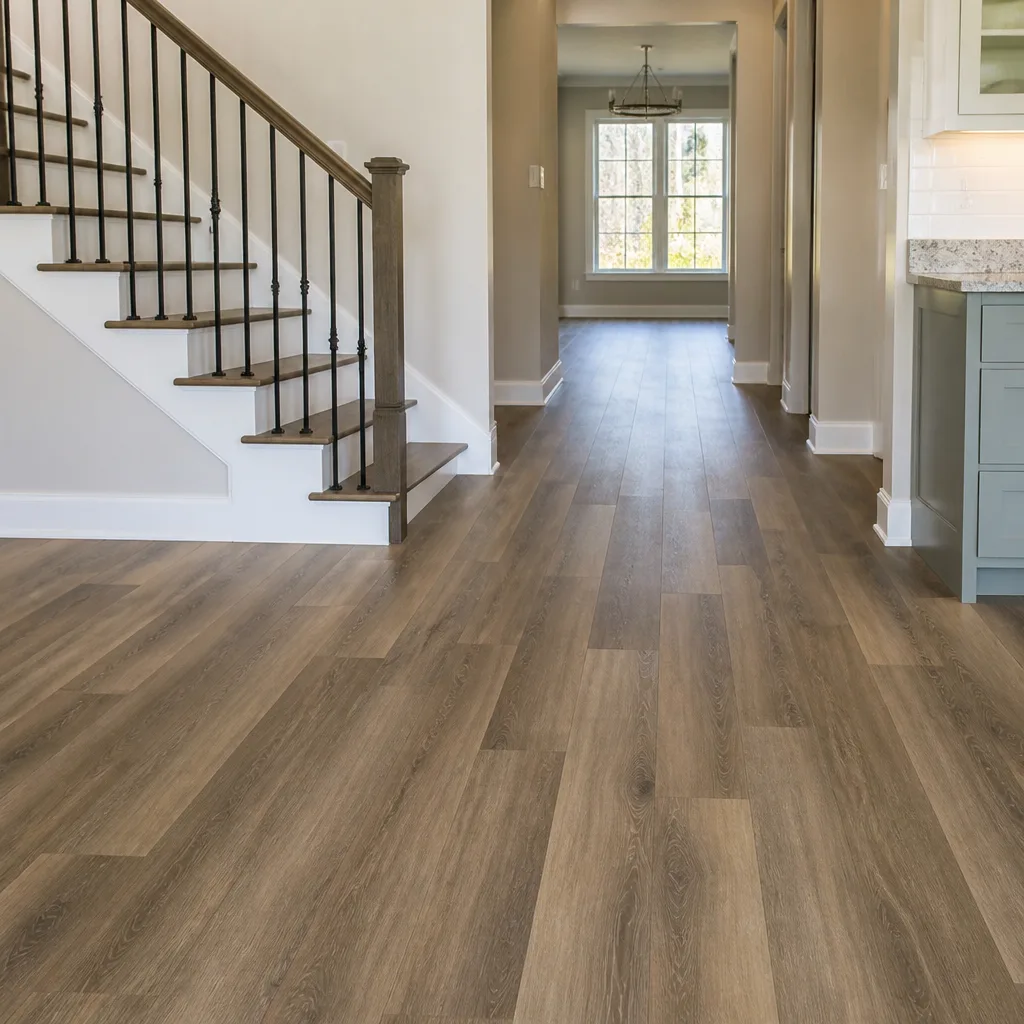 Mohawk
 COREtec
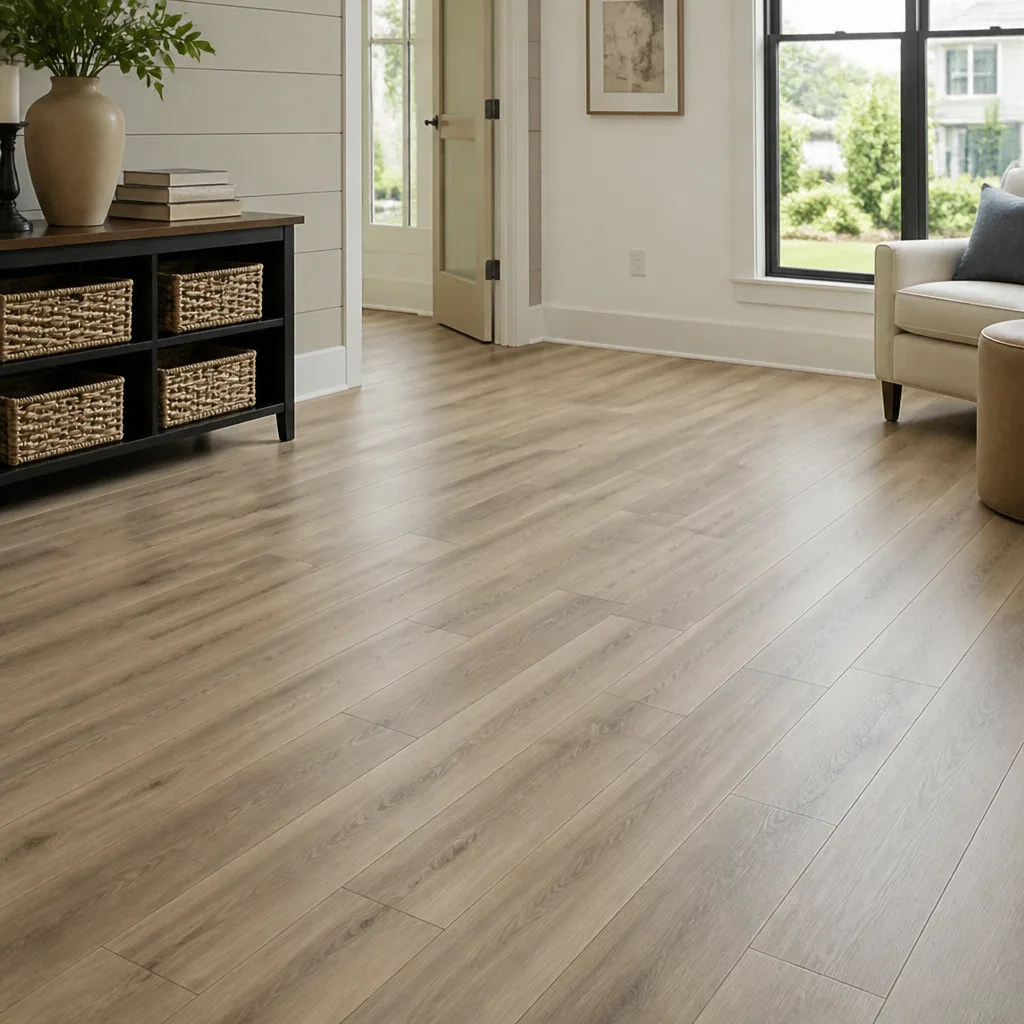 Pergo
Free in-home measure and written estimate: Shaw, Mohawk, COREtec and Pergo lines compared on your own rooms, with carpet, tile, vinyl plank, laminate and hardwood laid out side by side
Get your free estimateSubfloors Explained: What Sits Under Your New Floor
A floor that fails in year two almost always failed at the subfloor level, not the product level. That’s the part nobody photographs for the brochure: the slab, the plywood, the OSB underneath everything you actually see. In North Las Vegas, where most homes sit on a concrete slab poured over desert soil, the moisture coming up through that slab is the number your installer should be checking before a single plank or tile gets set. This guide covers what subfloors are common here, how moisture gets tested, why flatness matters more than most people realize, and how to spot a low-bid job that skipped the prep. By the end you’ll know what questions to ask before you sign anything.
Quick Answer
The subfloor is the structural surface beneath your finished floor. In North Las Vegas it’s usually a concrete slab-on-grade in newer homes, or plywood over a raised or wood-framed structure in older ones. What sits under your new floor matters more than the floor itself, because moisture vapor, flatness, and substrate condition decide whether that floor lasts or telegraphs every imperfection within a couple of years.
Styles & brands we work with
- Hardwood
- Engineered hardwood
- Luxury vinyl plank
- Laminate
- Porcelain tile
- Carpet
- Shaw
- Mohawk
- COREtec
- Pergo
Table of Contents
- What Are the Main Subfloor Types, and Which Are Common in North Las Vegas?
- How Do You Test a Concrete Slab for Moisture Vapor?
- Why Flatness Matters More Than Levelness
- What Self-Leveling Compound Actually Does
- How Subfloor Condition Should Drive Product Selection
- How to Spot a Subfloor Repair Being Skipped
- Subfloors in Renovations and Older North Las Vegas Homes
- What Subfloor Prep Adds to a Flooring Estimate
What Are the Main Subfloor Types, and Which Are Common in North Las Vegas?
There are three subfloor types you’ll run into in North Las Vegas homes, and each one behaves differently under a new floor. Knowing which you have is the first step in choosing a product that will actually hold up.
Concrete slab-on-grade
This is the dominant foundation type in newer North Las Vegas construction, especially in the master-planned subdivisions that spread across the valley from the late 1990s onward. A slab-on-grade is exactly what it sounds like: a poured concrete slab sitting directly on graded desert soil, with the finished floor laid over it. Slabs are dimensionally stable and they don’t squeak, which is why builders favor them. The catch is moisture. Concrete is porous, and desert soil holds more moisture than people assume, particularly after monsoon season. That moisture migrates upward through the slab and has to go somewhere. If it meets an adhesive or a flooring product that can’t tolerate it, you get bubbling, delamination, or cupped planks.
Plywood
Plywood subfloor panels, typically installed over wood joists, are common in older homes and in second-story construction. Plywood is dimensionally stable and holds fasteners well. It also tolerates minor flex better than OSB under some products. If your North Las Vegas home has a second floor, there’s a good chance it’s plywood up there even if the ground floor is slab.
OSB (oriented strand board)
OSB is a compressed strand board that’s cheaper than plywood and used widely in production building. It performs fine as a subfloor when it’s dry and properly installed, but it swells when it gets wet and doesn’t fully recover. If an OSB subfloor has been exposed to a roof leak or a plumbing issue, the repair needs to happen before any new floor goes down. We’ve seen plenty of OSB panels in North Las Vegas homes that looked fine from above and were soft along a seam from a slow leak.
By era and construction type
- Production homes from the late 1990s and 2000s: mostly concrete slab-on-grade on the first floor, plywood or OSB above.
- Older single-story homes: slab is still common, though you’ll find some pier-and-beam construction in older parts of the valley.
- Second stories in any era: plywood or OSB over joists.
- Conversions, additions, and garage build-outs: a mix, often with inconsistent substrate from one section to the next.
If you’re unsure what you’re standing on, the estimate visit is the time to find out. Our technicians have up to 8 years of experience identifying substrate and matching it to the right product. For a closer look at how we approach a full-room replacement, see our flooring North Las Vegas page.
How Do You Test a Concrete Slab for Moisture Vapor?
You test a concrete slab for moisture vapor emission rate (MVER) with a calcium chloride test or an in-situ relative humidity probe. Both give you a number in pounds per 1,000 square feet per 24 hours. That number tells you whether the slab is dry enough for the flooring product and adhesive you want to use. Skip the test and you’re guessing, and guessing is how floors fail.
The two common test methods
- Calcium chloride test (ASTM F1869). A small dish of calcium chloride is sealed under a plastic dome on the slab for 60 to 72 hours. The dish absorbs moisture vapor, and the weight gain converts to an MVER in pounds per 1,000 square feet per 24 hours. It’s the traditional industry test and the one many product warranties reference.
- In-situ relative humidity probe (ASTM F2170). A probe is inserted into a drilled hole in the slab and left to equilibrate for 72 hours. It reports the internal relative humidity of the concrete. Many manufacturers now accept this test in place of, or alongside, the calcium chloride test.
Neither test is optional on a slab-on-grade in North Las Vegas. Desert soil, monsoon-season humidity, and the way a slab cures all factor into how much moisture is moving through the concrete. A slab that looks bone dry on the surface can still be emitting enough vapor to fail a product’s spec.
What the MVER number means for different products
- Adhesive-applied flooring and tile. Many adhesives and thin-set mortars specify a maximum MVER, often in the range of 3 to 5 pounds. Higher readings require a moisture barrier or a different adhesive system.
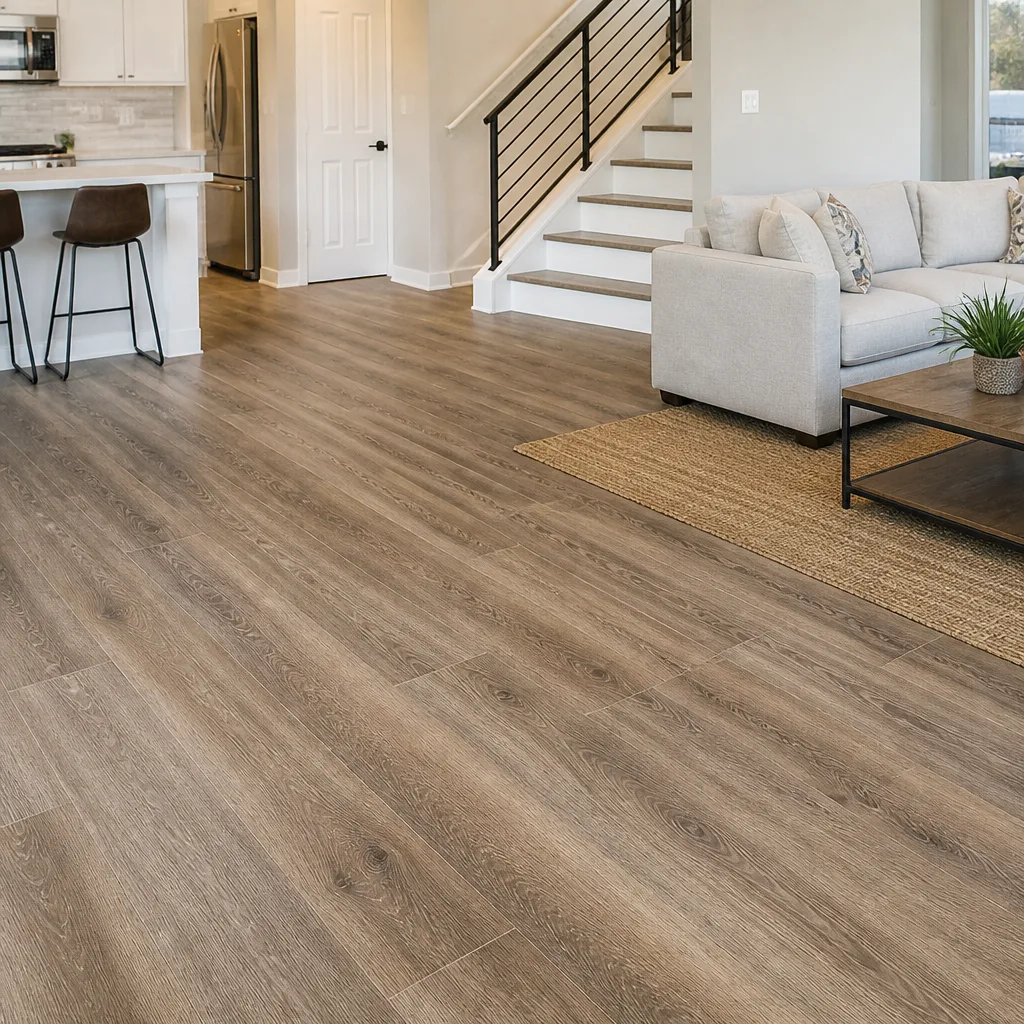
- Floating floors. Floating installations with an underlayment vapor barrier tolerate higher MVER because there’s a barrier between the slab and the product. This is one reason many luxury vinyl plank products are more forgiving on slabs than glue-down floors.
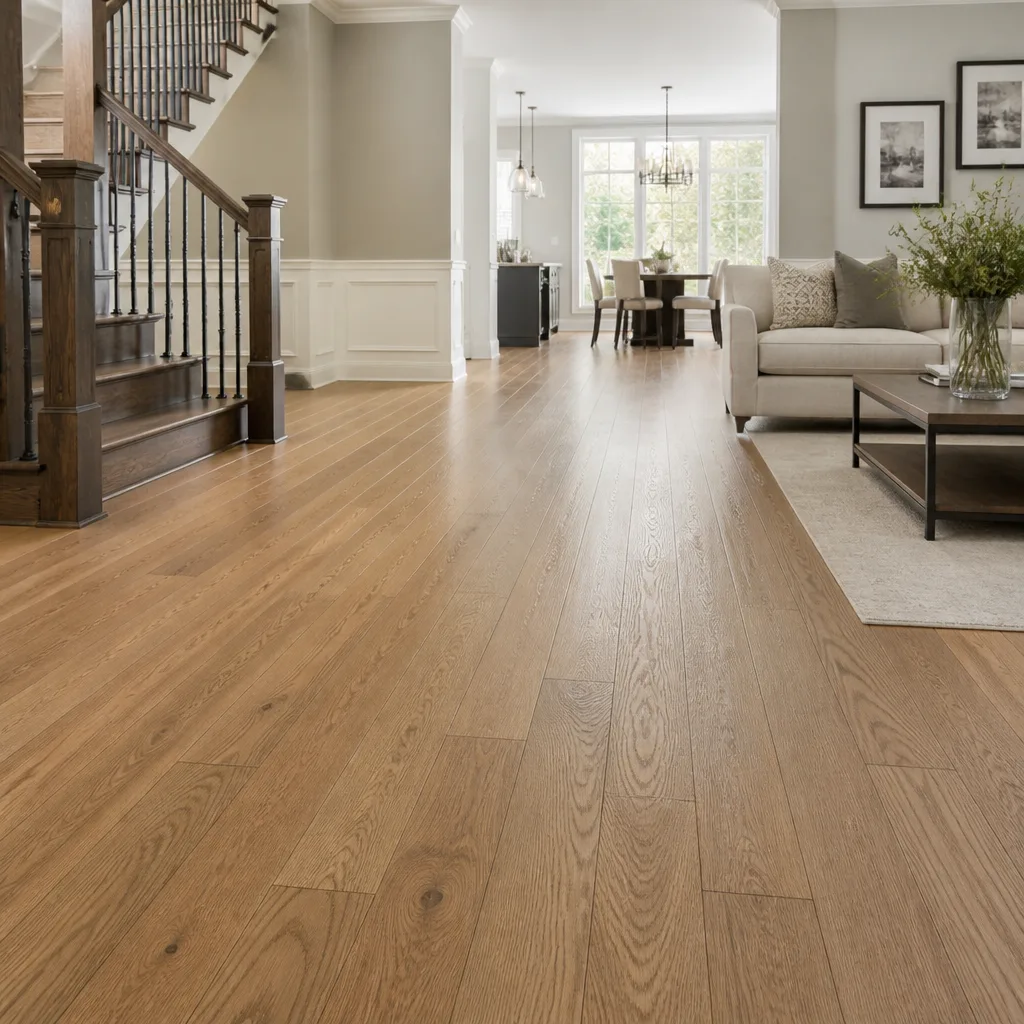
- Hardwood. Solid and engineered hardwood are the most sensitive to slab moisture. Solid hardwood typically can’t be glued directly to a slab at all; engineered hardwood over a moisture barrier is the common solution.
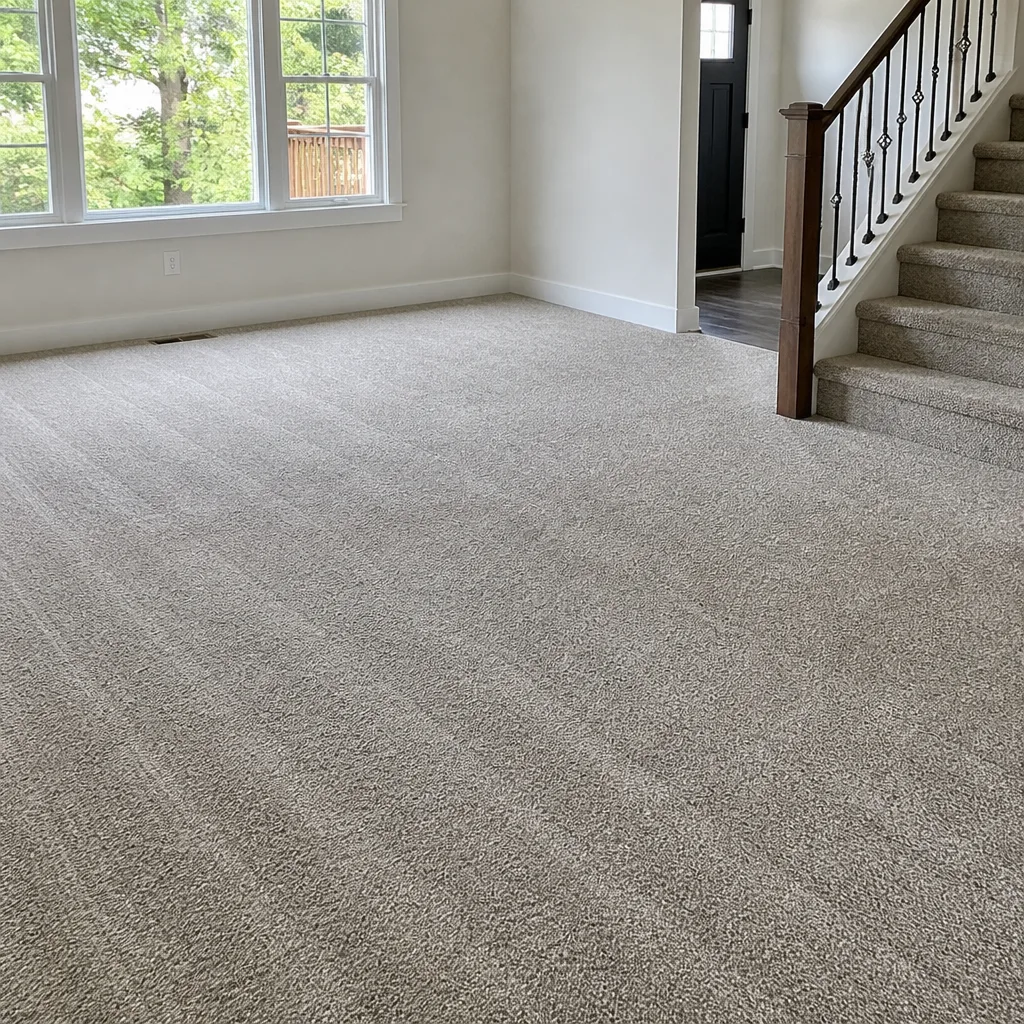
- Carpet. Carpet over a slab needs a vapor barrier and a cushion rated for slab installation. The carpet itself is forgiving, but the pad and adhesive are not.
Always defer to the product manufacturer’s written instructions for the exact MVER limit. Those limits are set by the product you choose, not by us. What we do is test the slab, report the number, and recommend a system that meets the product’s spec. If you’re planning carpet installation over a slab, ask about the vapor barrier and cushion spec before anything else.
Why Flatness Matters More Than Levelness
Flatness, not levelness, is the spec that determines whether your new floor will squeak, bounce, or telegraph every dip and ridge in the substrate. Level means the floor is parallel to the horizon. Flat means it has no high or low spots over a given distance. Those are two different measurements, and a floor can be perfectly level and still be badly out of flat.
How flatness is measured
The industry measures flatness by placing a straightedge on the substrate and measuring the gap underneath it at the worst point. The tolerance is typically expressed as a fraction of an inch over a specified distance, and different products specify different tolerances. Large-format tile, for example, requires a flatter substrate than a small mosaic because the tile can’t conform to a dip. Rigid luxury vinyl plank with a thick core is less forgiving than a thin, flexible sheet product.
What happens when flatness is ignored
- Tile cracks. A hollow spot under a tile creates a stress point. Step on it and the tile fails.
- Planks telegraph. A ridge in the slab shows through a plank within months, even a rigid-core plank.
- Hardwood bounces. A dip under a hardwood floor causes movement, and movement causes squeaks and gaps.
- Carpet ripples. A dip in the substrate causes the carpet to pull tight over the high spots and slacken over the low ones.
- Adhesive fails. A dip collects adhesive, which cures unevenly and fails at the edges of the dip.
In North Las Vegas, slab flatness is usually pretty good from the pour. Where it goes wrong is at transitions, patches from past renovations, and anywhere concrete has settled or cracked. A floor prep step at the estimate visit is not a sales tactic. It’s how we know whether the product you want can actually be installed to spec.
What Self-Leveling Compound Actually Does
Self-leveling compound is a pourable, cement-based underlayment that fills low spots and creates a flat surface over an uneven substrate. It doesn’t make a floor level. It makes it flat. That distinction matters because most flooring products only care about flatness, not level.
When self-leveling compound is required
- Low spots outside the product’s flatness tolerance. If a straightedge shows more gap than the product allows, the low spot gets filled.
- Old adhesive residue or patchy substrates. A thin pour over a scraped and primed slab can create a clean, uniform surface for the new floor.
- Large-format tile installations. Flatter substrate means less thin-set under each tile and fewer hollow spots.
- Rigid-core luxury vinyl plank. These products have a thicker, less flexible core than older vinyl, and they can’t conform to a dip the way a flexible sheet can.
What self-leveling compound does not do
It doesn’t fix structural movement. It doesn’t stop a slab from emitting moisture unless the product is a moisture-mitigating version, and even then the slab still needs to be tested. It doesn’t fix a soft or damaged subfloor; that has to be repaired or replaced first. And it doesn’t solve a slope problem in a shower or a step-down transition. Those need a different approach.
How to spot a skipped pour on a low bid
- The estimate doesn’t mention substrate prep at all.
- Nobody came out with a straightedge.
- The written scope says “patch as needed” with no dollar figure or allowance.
- The bid is dramatically lower than every other bid, with no line item for prep.
Prep is a real line item in a real estimate. When it’s missing, the floor installer either isn’t planning to do it or is planning to charge you for it later. Get it spelled out in writing.
How Subfloor Condition Should Drive Product Selection
Subfloor condition should drive product selection, not the other way around. Too many homeowners pick a floor at a big-box store and then try to make the subfloor work. The order should be reversed: understand the substrate, then pick a product that meets its conditions.
What different products demand of the substrate
- Large-format tile (Daltile, for example). Demands a flat substrate and a stiff structure. Small dips that a small mosaic can absorb will crack a large-format tile. Daltile is the most specified tile brand in North America, and it’s what architects and commercial contractors reach for, which is one reason we stock it.
- Luxury vinyl plank (Karndean, COREtec, LifeProof). Marketing around LVP emphasizes water resistance and easy installation. What it doesn’t emphasize is that most LVP products have a flatness tolerance, and a rigid-core product can telegraph a dip in the first year. Karndean is a design-forward brand primarily available through flooring specialists, and it’s a product worth specifying when the substrate is right.
- Laminate (Pergo, Armstrong, Mannington). Laminate floats over an underlayment and tolerates minor dips better than rigid LVP, but the underlayment and the flatness tolerance still matter. Pergo and Armstrong are long-standing laminate names, and Mannington brings a deep engineered-hardwood and resilient lineup to the table.
- Hardwood (Shaw, Mohawk, Mannington). The least forgiving over slab. Engineered hardwood can be glued or floated over a proper moisture barrier; solid hardwood usually needs a plywood subfloor over the slab, which adds cost and floor height.
- Carpet (Shaw, Mohawk). The most forgiving over minor substrate imperfections, but still needs a proper cushion and vapor barrier.
The marketing-vs-spec gap on rigid LVP
A rigid luxury vinyl plank is genuinely a very good product. What it isn’t is a product that ignores its flatness tolerance. When a homeowner picks a thick-core plank on the assumption that “it can go over anything,” the installer either has to refuse the install, prep the floor properly, or take a chance. Taking a chance is what produces a floor that telegraphed a slab ridge by year two. If you want a specific plank, that’s fine. Just make sure the estimate includes the prep that plank actually needs.
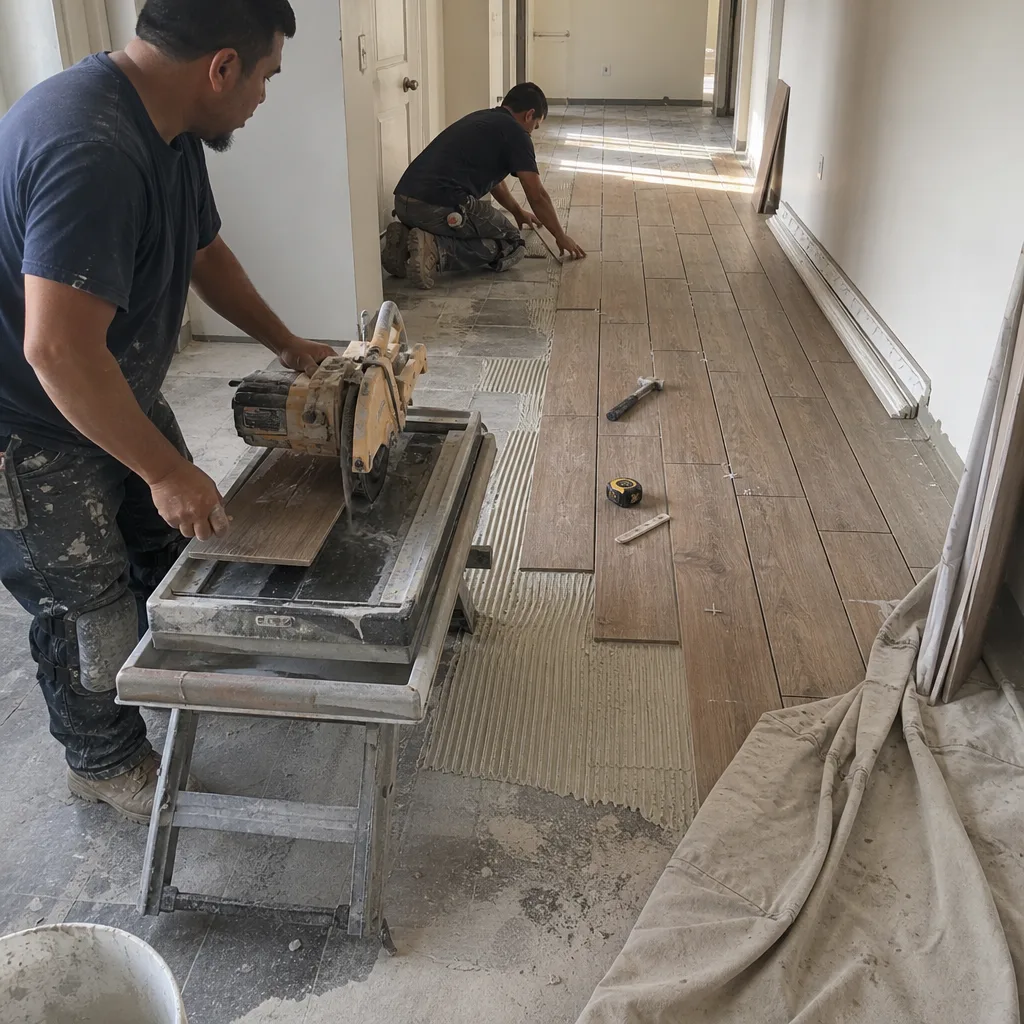
Interesting detail worth knowing: hardwood refinishing is a different skill set from installation, and it’s a big reason to hire a flooring specialist rather than a generalist. A floor that’s worn but structurally sound often can be sanded and refinished rather than replaced. If you have an existing wood floor, ask about that before you default to tear-out. We do both new tile flooring installation and hardwood refinishing, and we’ll tell you honestly which is worth it.
How to Spot a Subfloor Repair Being Skipped
Skipped subfloor repair is the single most common reason a new floor underperforms. Here’s how to spot it before the planks go down.
Warning signs at the estimate visit
- No straightedge and no moisture meter. If the person who wrote your estimate didn’t bring both, the prep is a guess.
- No discussion of MVER. On a slab-on-grade in North Las Vegas, moisture is the first thing that should come up.
- “It’ll be fine” as a prep answer. Fine is not a spec. A real answer gives you the flatness tolerance and the moisture reading.
- A price that’s dramatically lower than every other bid. Prep costs money. A bid without prep is a bid that skipped the prep.
- No written scope. The prep work should be spelled out, itemized, and priced. If it’s not, it’s not going to happen.
Warning signs during the install
- No moisture barrier over a slab.
- No self-leveler at a visibly dipped area.
- Soft spots in the subfloor that weren’t cut out and replaced.
- Old adhesive residue left in place without scraping or priming.
- Tile set directly over a cracked slab without a crack-isolation membrane.
What a real prep scope looks like
A written prep scope typically includes: a moisture test result, a flatness check, the specific repair items (patch, self-leveler, panel replacement, crack isolation), and a priced line for each. If you’re in an older North Las Vegas home with mixed substrate, ask for the repair items to be listed by room. The estimate you sign is the estimate that gets built; get it right on paper.
Subfloors in Renovations and Older North Las Vegas Homes
Renovations and older North Las Vegas homes bring subfloor challenges that new construction usually doesn’t. The housing stock here runs from mid-century single-family homes to newer subdivisions, and the substrate can vary from room to room within the same house.
What to expect in older homes
- Mixed substrate. A room addition might have a different slab or a plywood section abutting the original slab. Transitions between different substrates create movement and flatness problems.
- Old adhesive. Many mid-century and 1970s floors were glue-down, and the residue has to be scraped, ground, or encapsulated before a new floor can go down.
- Past moisture damage. A slow leak under a toilet or a refrigerator ice line can soften an OSB panel without any obvious surface sign. It gets found during tear-out.
- Settled slabs. Desert soil moves, and a slab that settled after the original pour can have a dip at a wall or a step. Flatness checks catch it.
- Cracked slabs. A cosmetic crack doesn’t necessarily mean a problem, but a moving crack under a tile floor does. Crack-isolation membrane is the standard fix.
What to expect in newer homes
Newer North Las Vegas homes usually have a nice, flat slab from the original pour. The issues tend to be at transitions and in rooms where a previous owner installed a floor without prep. A slab from a production builder is usually a good starting point; the question is what’s happened since.
What we do on a renovation estimate
We look at the substrate in every room being redone, not just the room we’re pricing first. Substrate problems are often discovered during tear-out, and a renovation estimate that doesn’t account for them is a surprise waiting to happen. A written estimate that includes prep by room is a fairer estimate. It’s also the one that holds up.
What Subfloor Prep Adds to a Flooring Estimate
Subfloor prep is a separate line item from the flooring product and the installation. The final price is set by the written estimate, so what we list below is a general guide to the categories of prep cost, not a quoted price for your job.
Typical prep line items
- Moisture testing. Usually bundled into the estimate visit. Ask specifically whether MVER testing is included.
- Scraping and grinding old adhesive. Priced by square footage and by how stubborn the residue is.
- Self-leveling compound. Priced by the bag or by square footage at a given thickness.
- Patch and repair of damaged panels. Priced per panel or by the square foot.
- Moisture barrier or vapor retarder. Priced by square footage; included in the system spec, not optional.
- Crack isolation membrane. Priced by square footage over cracked slab.
- Plywood overlay over slab for solid hardwood. Priced by square footage, and it raises finished floor height at every transition.
How to compare bids fairly
If two bids are $2,000 apart and one has a full prep scope while the other says “prep included,” they’re not the same bid. Compare the line items, not the totals. The floor product will get installed either way. The prep is what determines what it looks like in year five. Also compare the products side by side: name brands you can research before you commit beat a mystery label at a big-box store, and nine brands across carpet, tile, and hardwood is a selection you can actually evaluate rather than accept. Mannington, Armstrong, Daltile, and Karndean are all brands you can look up before you commit, which is exactly the point of naming them.
Common Mistakes to Avoid
- Choosing the product before checking the substrate. Know what’s under the floor before you fall in love with a plank. Rigid LVP and large-format tile both demand more prep than their marketing implies.
- Skipping the moisture test on a slab-on-grade. North Las Vegas soil holds moisture, and concrete wicks it upward. If nobody tested the MVER, nobody knows whether the adhesive will hold.
- Confusing level with flat. A floor can be parallel to the horizon and still have a dip that telegraphs through a plank. Straightedge and gap, not eyeball.
- Taking the lowest bid without reading the prep scope. Prep is a real line item. A low bid that skips it is a bid that shifts the cost into a repair later.
- Reusing old adhesive residue. Old glue has to be scraped, ground, or encapsulated before any new floor goes down. Leaving it is a shortcut that shows up at year two.
- Assuming plywood and OSB are interchangeable. They’re not, especially if the OSB got wet. Soft panels have to be cut out and replaced.
- Forgetting the transitions. New floor height changes at every doorway. A little planning at the estimate keeps the thresholds clean.
See the difference
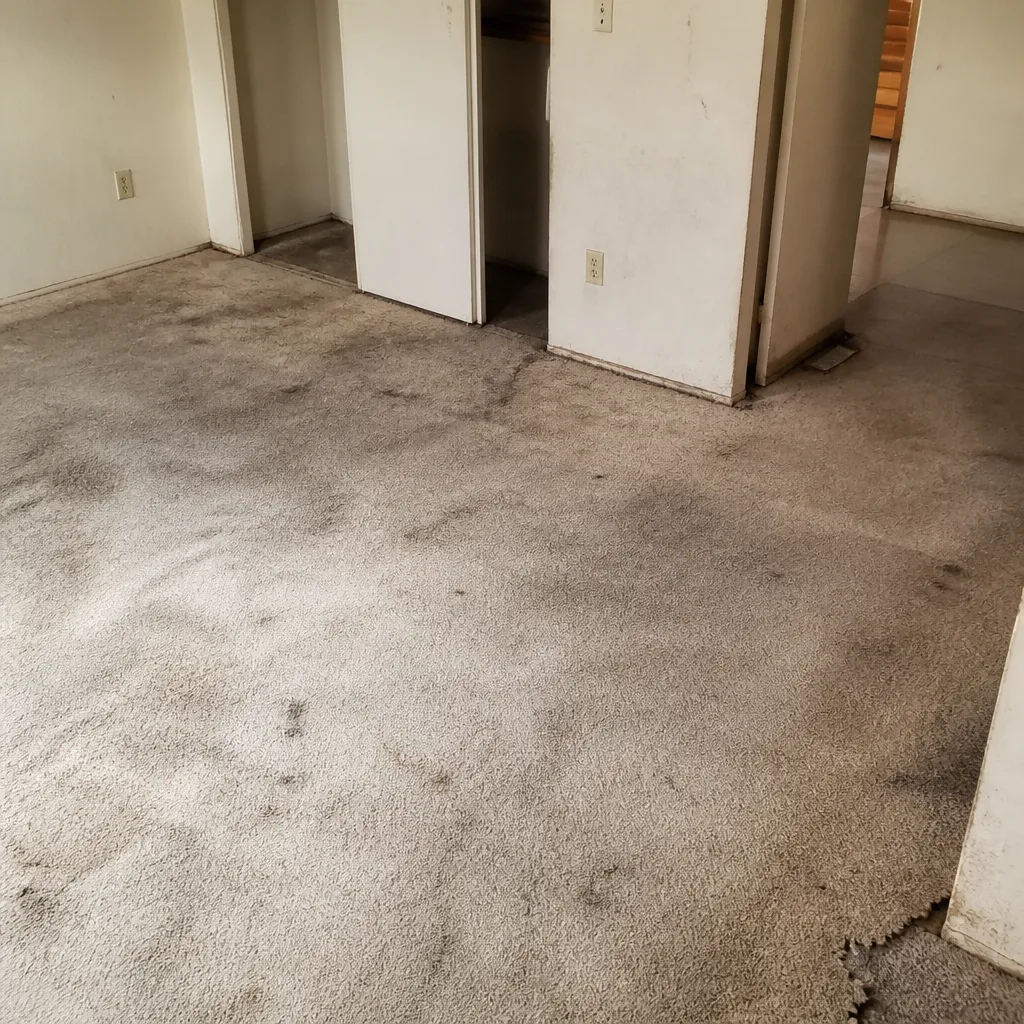 Before
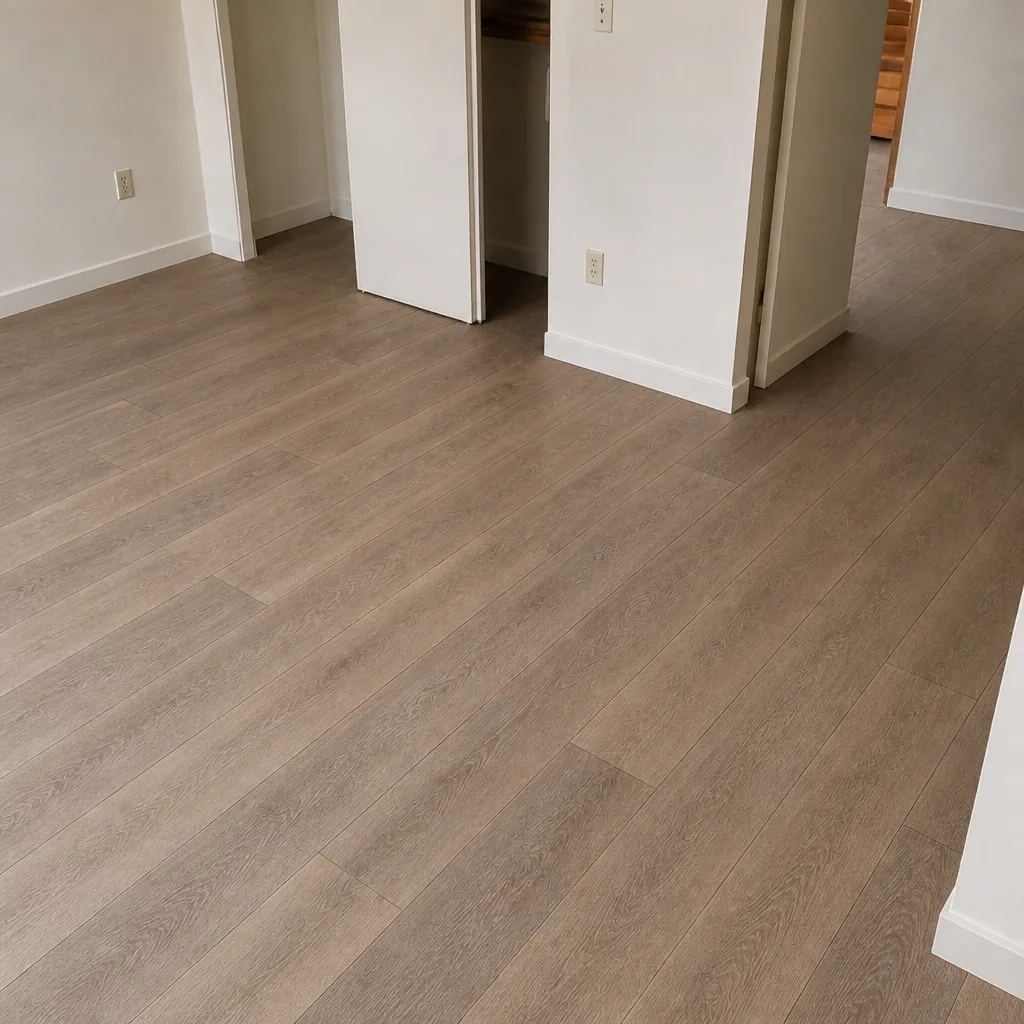 After
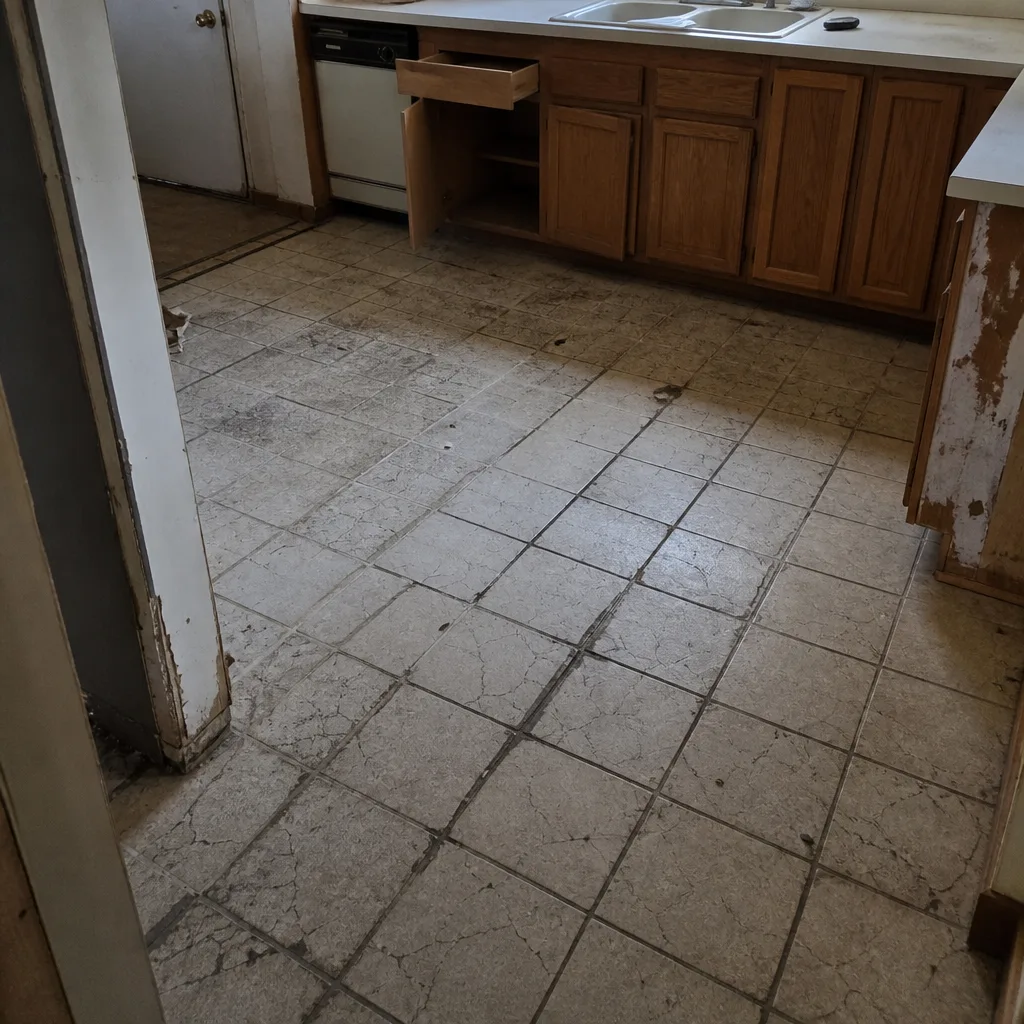 Before
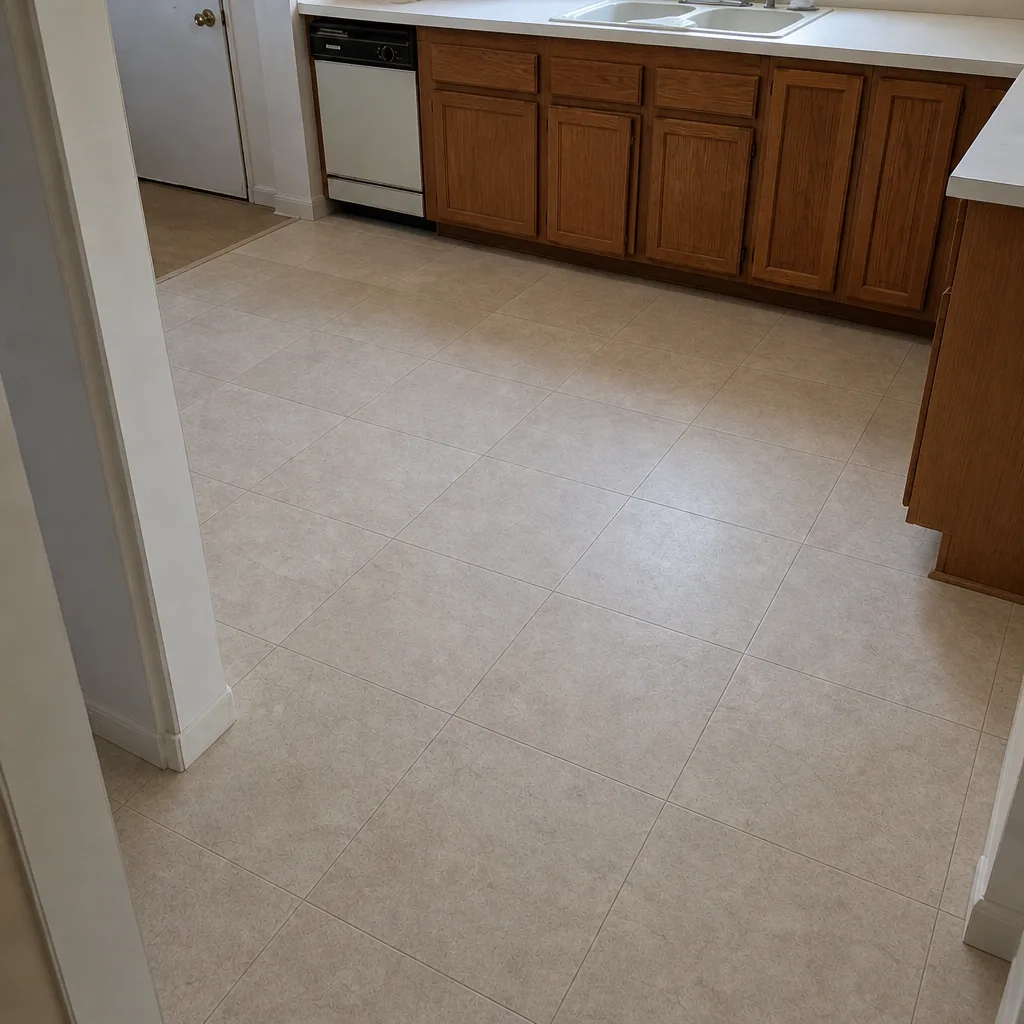 After
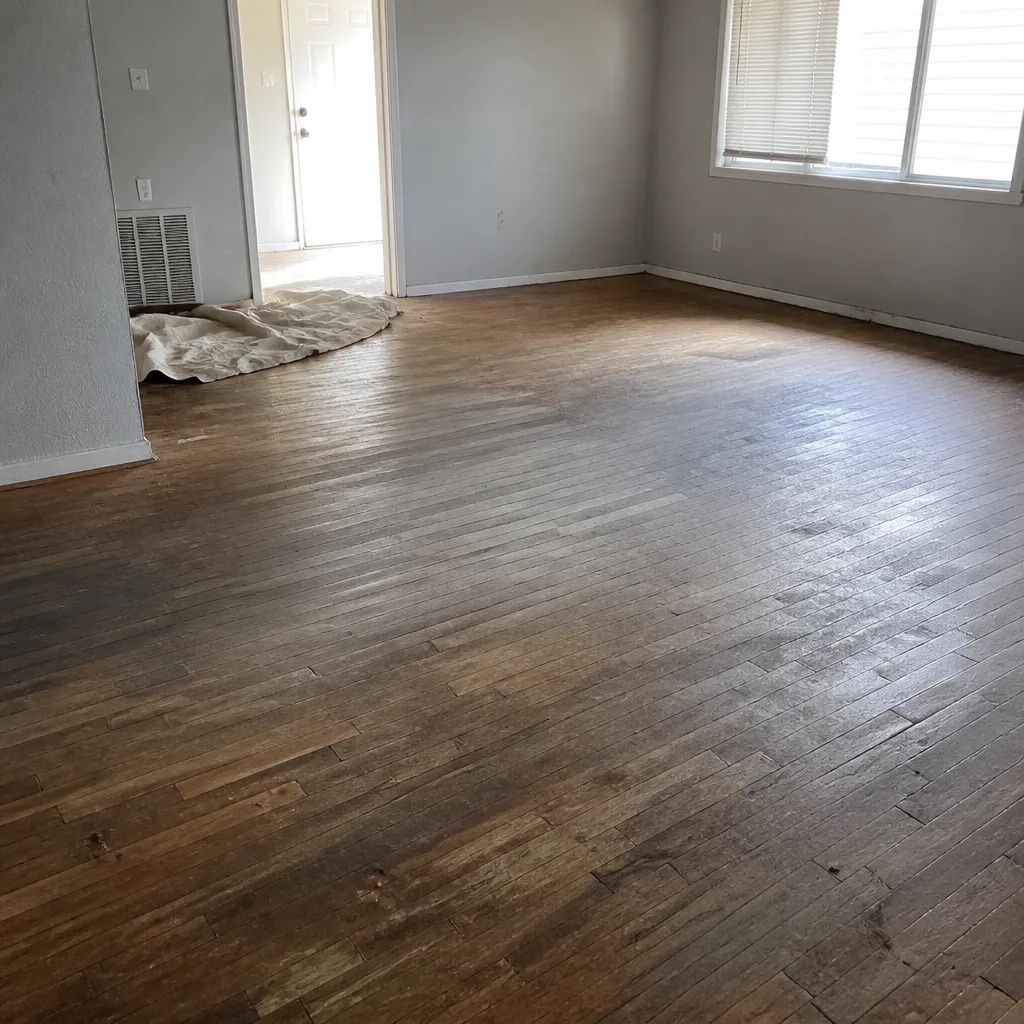 Before
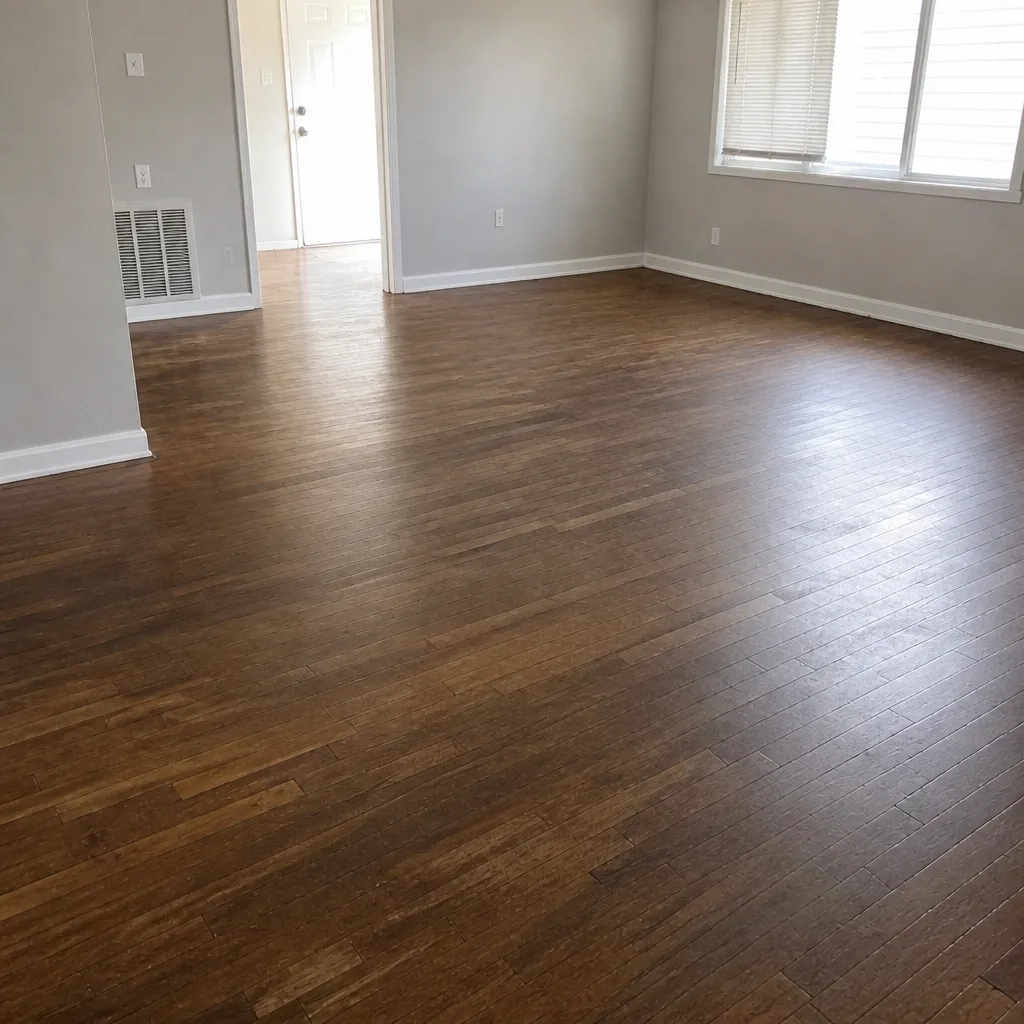 After
When to Call a Professional
Call a professional if any of the following is true: you don’t know what your subfloor is made of, you’re laying a floor over a slab-on-grade and nobody has tested it for moisture, you have a soft spot or a squeak you can’t explain, you’ve noticed a crack in the slab that seems to have widened, or the floor you want is a rigid-core or large-format product and you’re not sure whether the substrate meets its tolerance. Those are all cases where the correct answer involves a straightedge, a moisture meter, and a written scope. They’re also cases where a generalist handyman or a big-box install crew is not the right call. Flooring North Las Vegas offers free estimates in North Las Vegas. Call (844) 761-9160. We answer 24/7. Fast dispatch from 7am to 7pm, Sunday through Friday.
Frequently Asked Questions
Yes. On a slab-on-grade, moisture vapor emission is the most important substrate condition to know before installation. The desert soil and monsoon season mean a slab can look dry at the surface and still fail a flooring product’s moisture spec, so ask your installer for a calcium chloride or in-situ relative humidity test result. Call (844) 761-9160 for an exact quote. Estimates are free.
Level means parallel to the horizon; flat means no high or low spots. Most flooring products care about flatness, not levelness. A floor that’s perfectly level and badly out of flat will crack tile, transmit ridges through planks, and cause squeaks in hardwood.
Very common. Most newer North Las Vegas homes, especially in the subdivisions built from the late 1990s onward, sit on a slab-on-grade. Older homes and second floors may have plywood or OSB over wood joists instead.
No. Even the best luxury vinyl plank products have a flatness tolerance, and rigid-core products are more sensitive to dips and ridges than flexible sheet vinyl. The product’s written instructions set the spec. If the substrate doesn’t meet it, self-leveler or another prep step is required first.
Self-leveling compound is priced by the bag or by square footage at a given thickness, and the actual price is set by the written estimate. Whether you need it depends on the flatness check: if the gap under a straightedge is outside the product’s tolerance, the low spot gets filled.
Refinish if the wood is thick enough and structurally sound; replace if it isn’t. That’s a decision made at the estimate visit after examining the floor. Hardwood refinishing is a different skill set from installation, and it’s a reason to hire a flooring specialist rather than a generalist.
The Bottom Line
What sits under your new floor decides more about how it performs than the product itself. In North Las Vegas, that means knowing whether you have a slab-on-grade, plywood, or OSB, and testing the substrate for moisture and flatness before anything gets set. The product you pick matters, and nine brands across carpet, tile, and hardwood is a selection worth taking seriously. But the prep is what makes those products last. A written estimate that spells out the moisture test, the flatness check, the prep items, and the price per item is the one worth signing. The other one is cheaper today and more expensive in year three.
Call (844) 761-9160 to schedule a free estimate. We answer 24/7. Fast dispatch from 7am to 7pm, Sunday through Friday.
Written by the team at Flooring North Las Vegas.