
Last updated November 18, 2026
 Hardwood
 Engineered hardwood
 Luxury vinyl plank
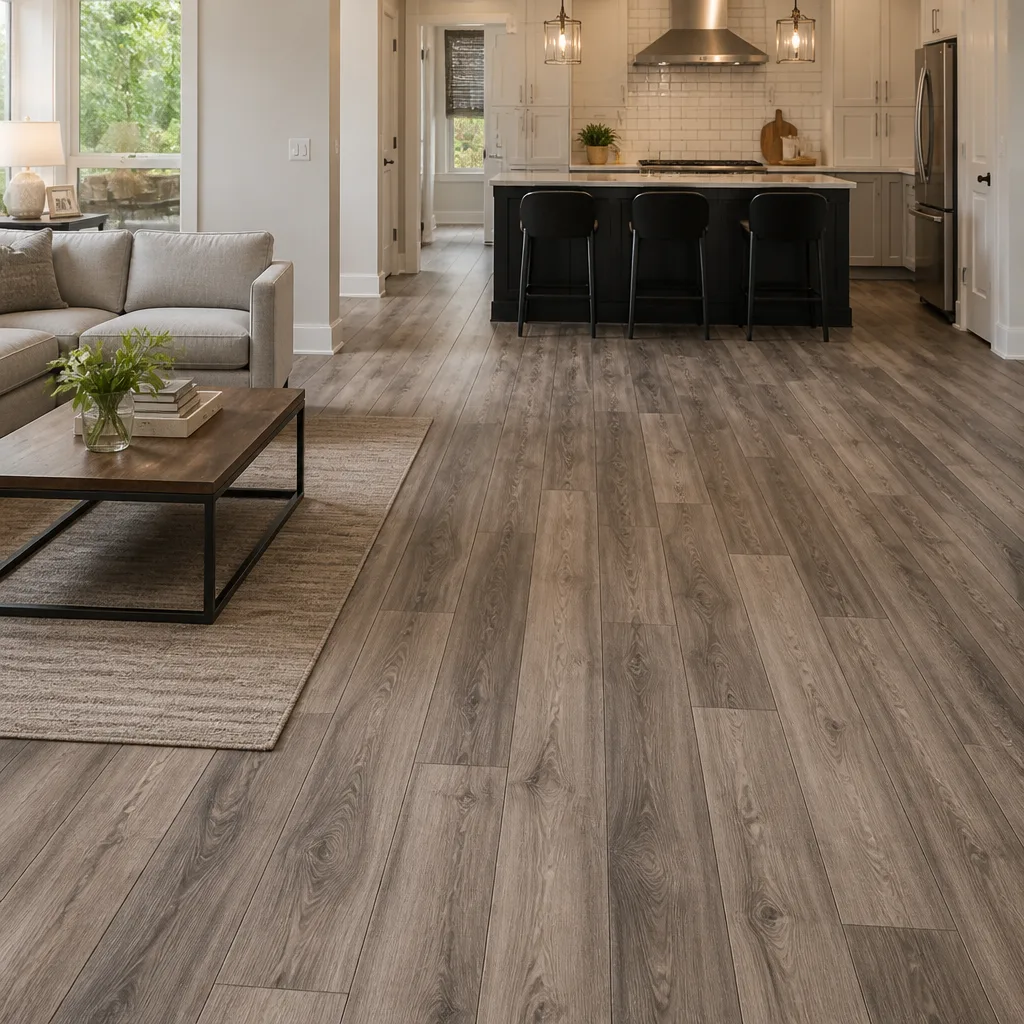 Laminate
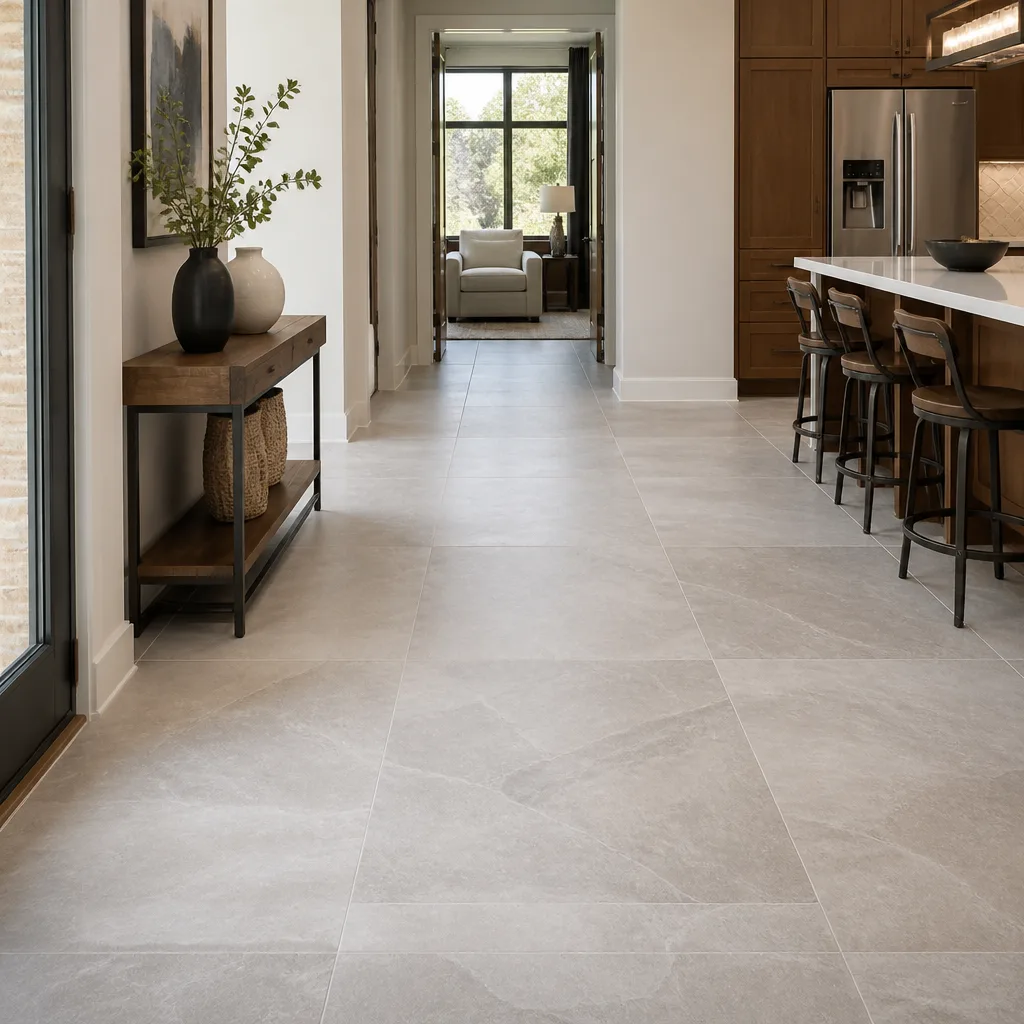 Porcelain tile
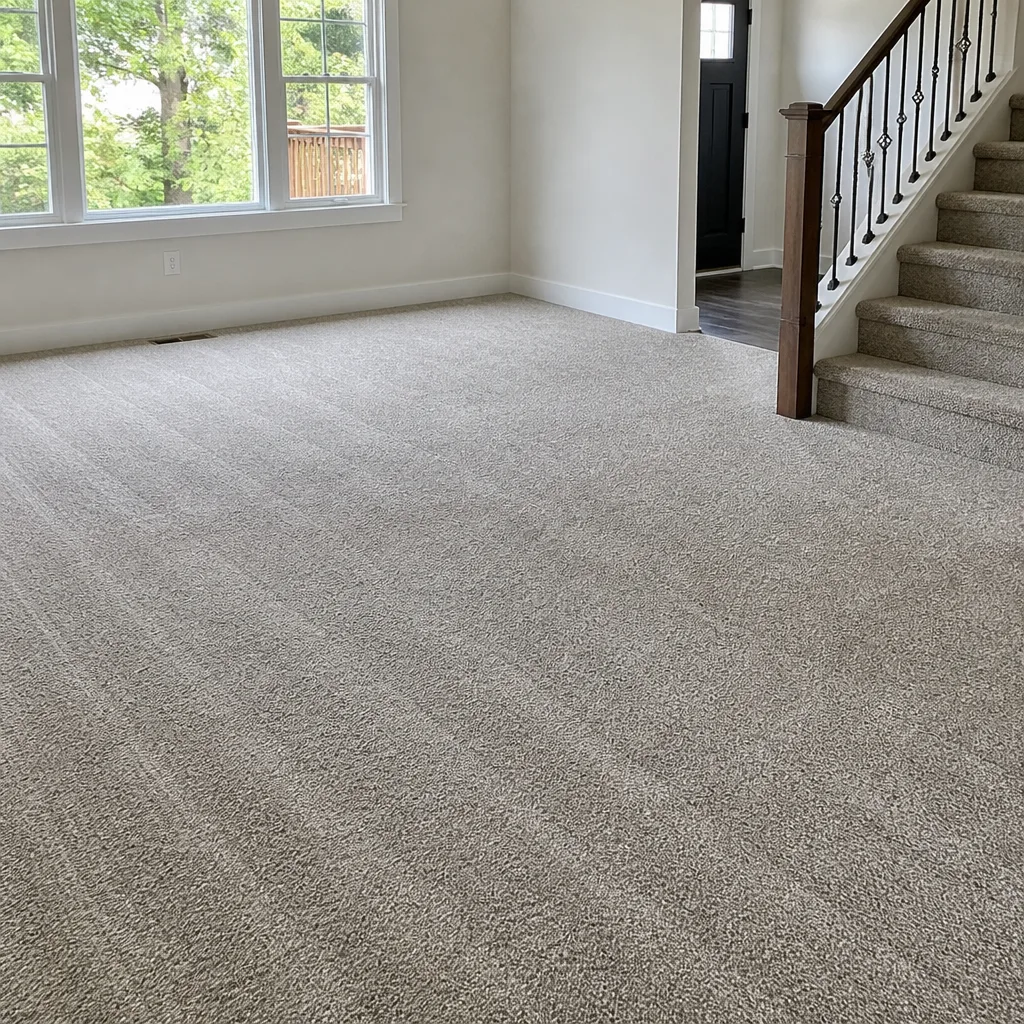 Carpet
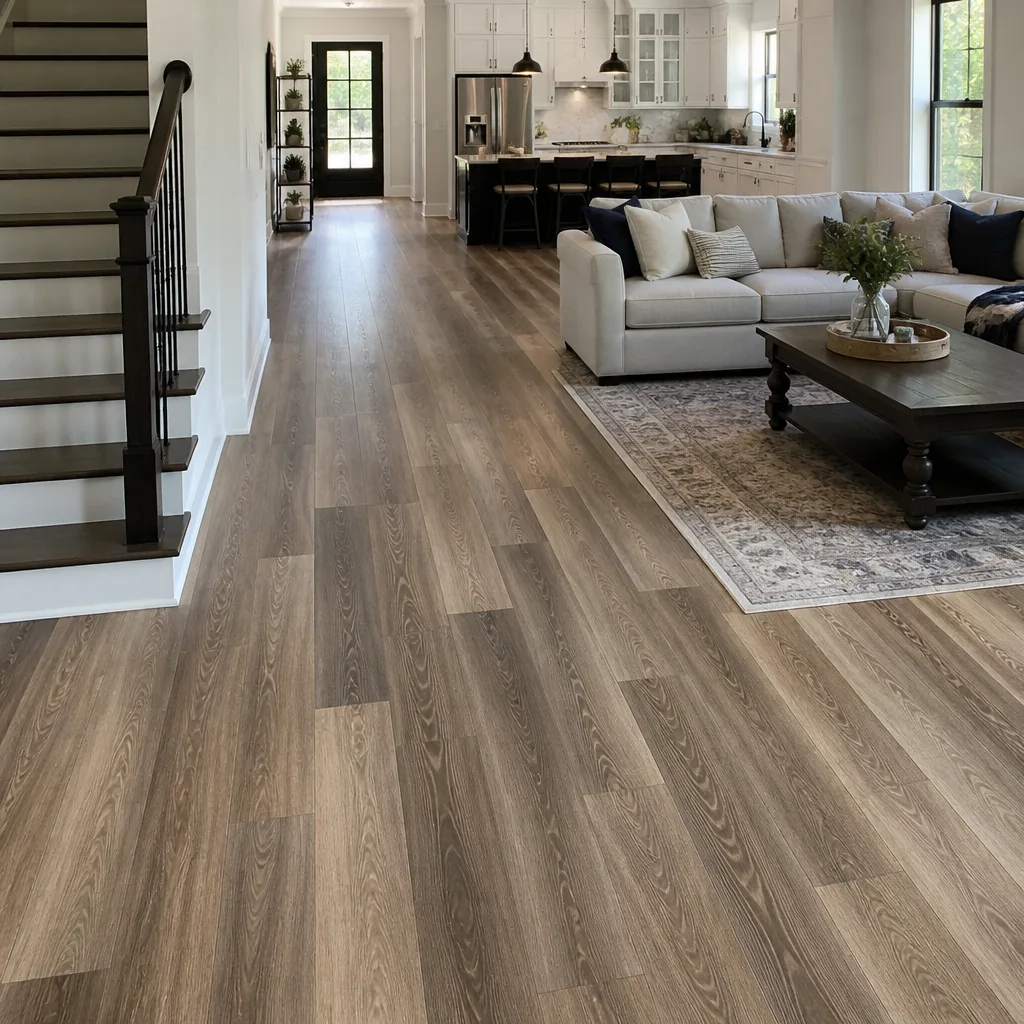 Shaw
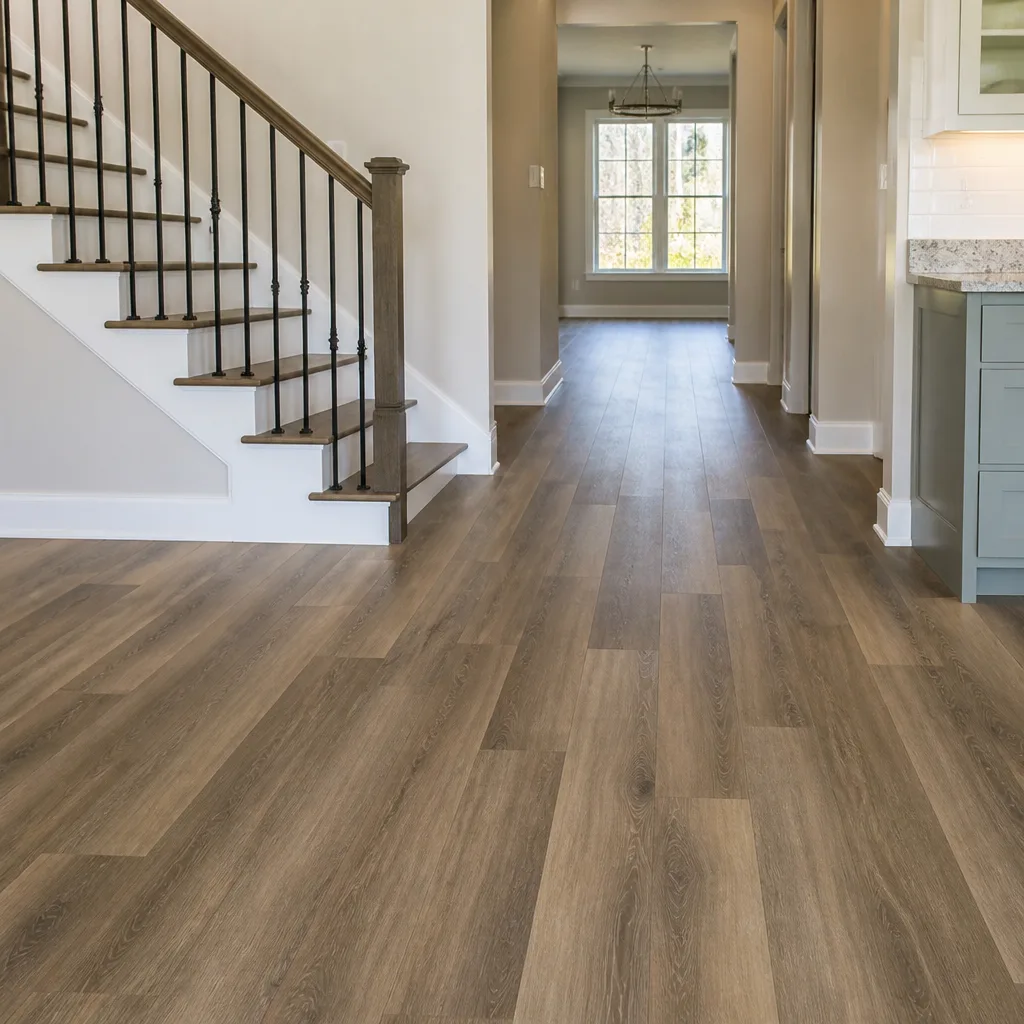 Mohawk
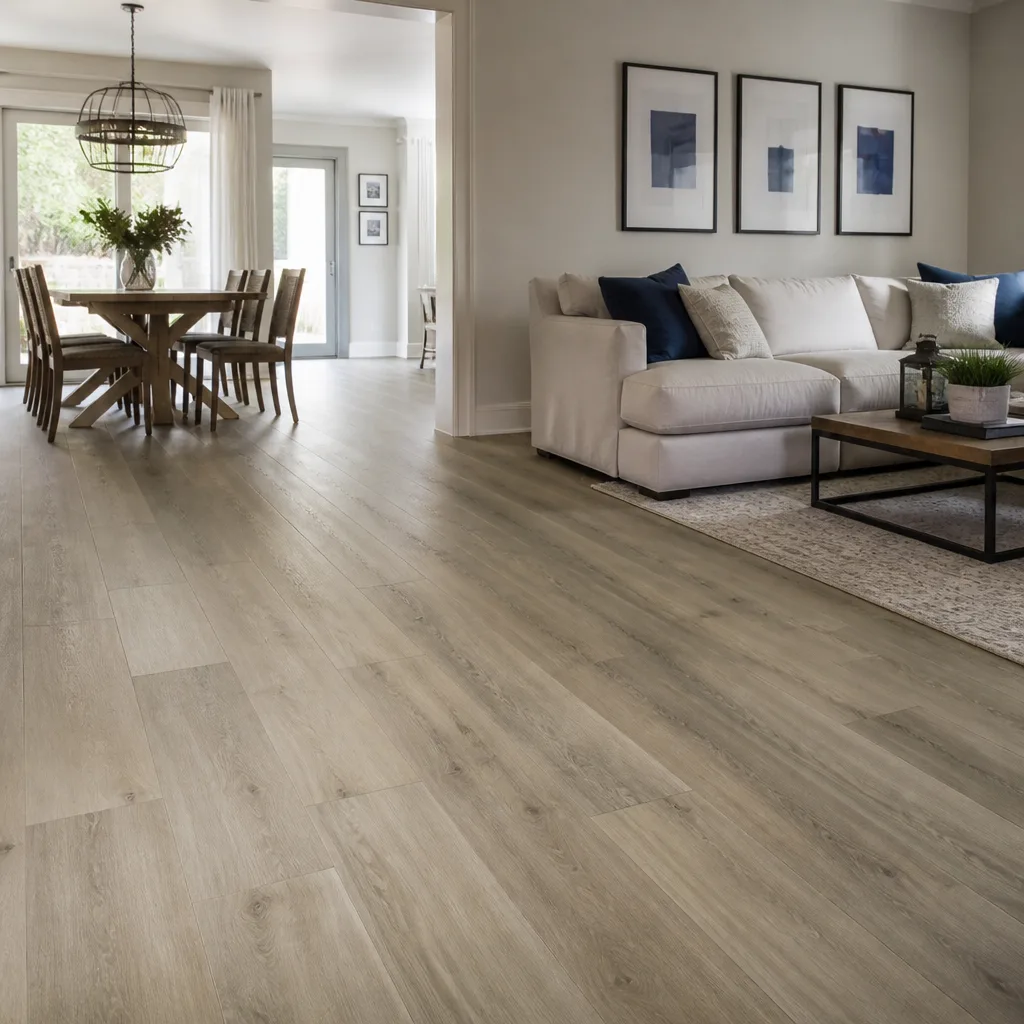 COREtec
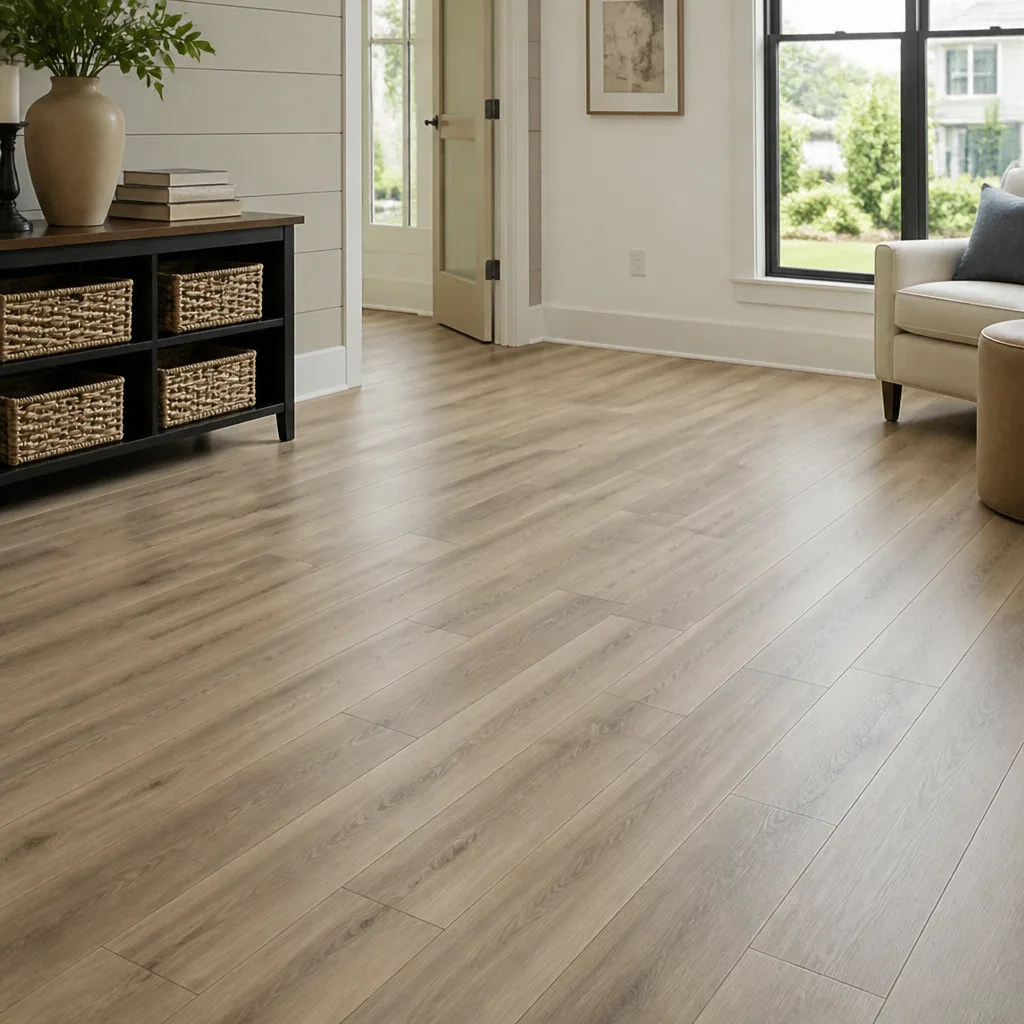 Pergo
Free in-home measure and written estimate: Shaw, Mohawk, COREtec and Pergo lines compared on your own rooms, with carpet, tile, vinyl plank, laminate and hardwood laid out side by side
Get your free estimateHow North Las Vegas’s Climate Can Affect Your Flooring Choice
North Las Vegas regularly swings about 40°F between a summer afternoon and a winter night. That daily thermal expansion cycle does more cumulative damage to the wrong flooring product than a decade of foot traffic. Most homeowners walk into a flooring decision thinking about color, plank width, and how a sample looks against the kitchen cabinets. Almost nobody starts with a relative humidity number. That is the mistake this guide exists to fix. By the end, you’ll understand why solid hardwood gaps and cups here, which products hit a temperature ceiling in a west-facing room, and how the slab under your floor quietly decides what belongs on top of it.
Quick Answer
The best flooring for the North Las Vegas climate depends on the room, but the short answer is this: engineered hardwood, tile, and water-resistant luxury vinyl handle our heat and single-digit humidity far more predictably than solid hardwood, and carpet performs well when paired with the right padding over a slab. With average relative humidity around 9% and summer interior surface temperatures that climb fast in sun-facing rooms, the floor you choose needs to be matched to the desert, not just to your taste. Tile over a properly jointed slab, engineered wood with a stable core, and quality vinyl plank are the most forgiving choices in North Las Vegas.
Styles & brands we work with
- Hardwood
- Engineered hardwood
- Luxury vinyl plank
- Laminate
- Porcelain tile
- Carpet
- Shaw
- Mohawk
- COREtec
- Pergo
Table of Contents
- Why 9% Humidity Is Hard on Wood Floors
- Acclimation: What It Means in the Desert
- The Temperature Ceiling on Luxury Vinyl Plank
- Tile, Grout, and Expansion Joints on Desert Slabs
- Radiant Heat From a Concrete Slab
- Seasonal Temperature Swings and Movement
- Which Products Hold Up Best Here
- How to Choose, Step by Step
Why 9% Humidity Is Hard on Wood Floors
Wood moves. It always has. A solid hardwood board takes on moisture from the air and swells, and it gives moisture back and shrinks. In most of the country, that cycle is gentle and slow because the air holds a fairly steady amount of water vapor year-round. In the Las Vegas Valley, average relative humidity sits around 9%, and it can drop well below that in the middle of summer. A solid wood floor installed in that air is being asked to live in conditions that are close to a kiln.
What that looks like in a real North Las Vegas home: boards that were tight at installation start to show narrow gaps at the seams as the wood shrinks. Run your hand across the floor in a dry month and you might feel a slight crown in the middle of a board, or a cupped edge that has lifted because the top dried faster than the bottom. Those are not installation defects. They are wood behaving exactly as wood behaves when its moisture content falls below where the floor was milled.
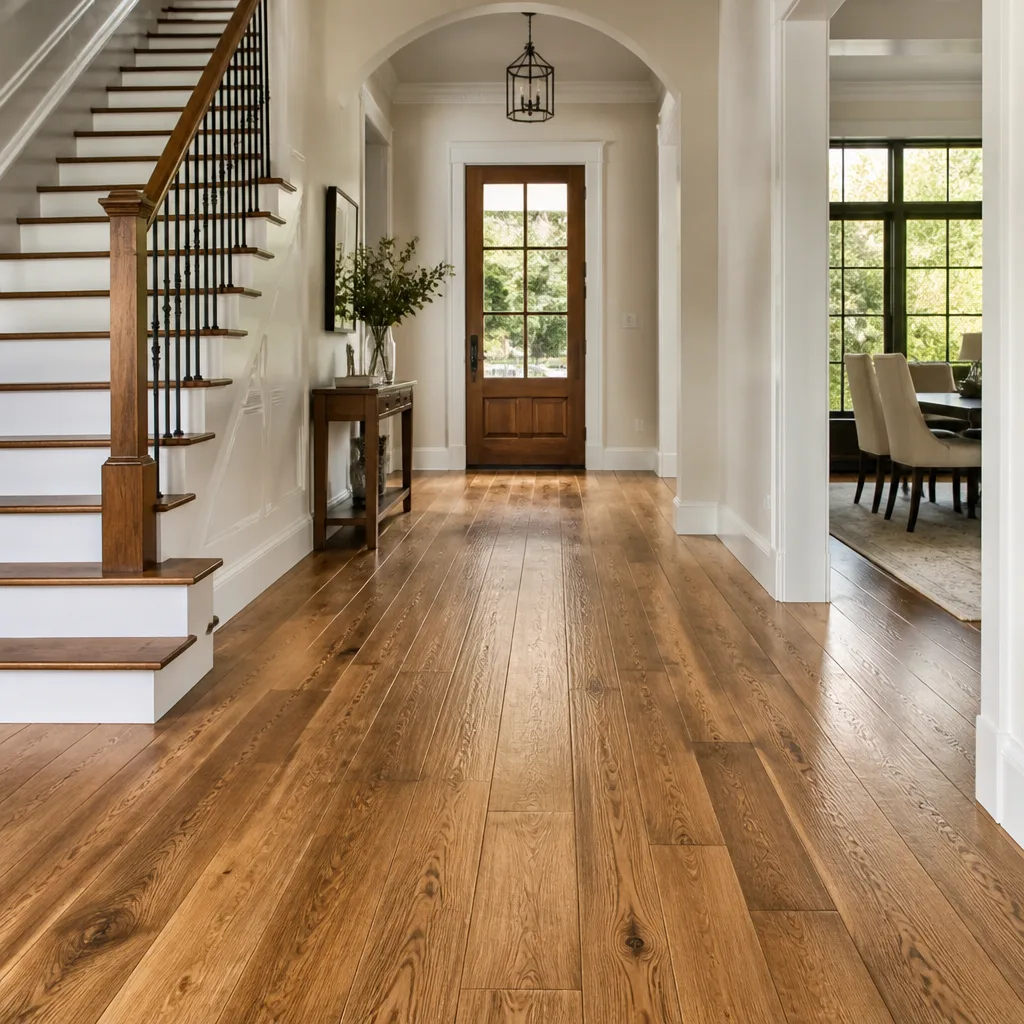
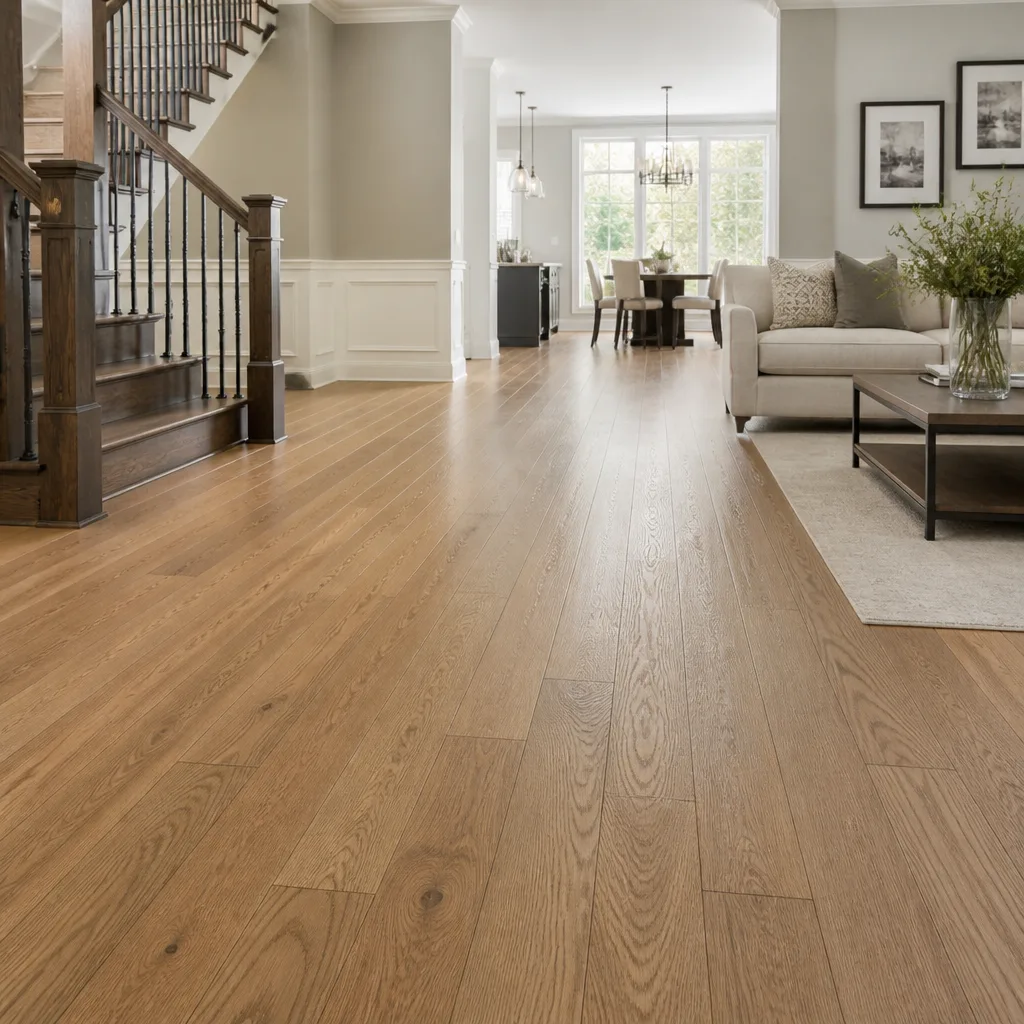
The practical range matters. Solid hardwood generally wants to sit in a stable interior environment with more moisture in the air than the desert provides on its own. That is why engineered hardwood exists. An engineered board is built with a plywood or composite core under a real wood wear layer, and that layered construction resists the dimensional movement that solid lumber cannot. The wood face gives you the look and the refinish potential. The core keeps the board from doing what a solid plank does in dry air.
This is the reason we ask about the product before we talk about the pattern. A solid oak floor can be gorgeous, but in a North Las Vegas living room that gets no humidity help, it is a floor that will keep you busy watching the seams. If you want wood, engineered is the honest recommendation for most rooms here. If you already have solid wood and it’s showing gaps, Flooring North Las Vegas can look at what you have and tell you whether refinishing is worth it.
Acclimation: What It Means in the Desert
Acclimation is the step where the flooring sits in your home long enough to adjust to the interior conditions before anyone installs it. It sounds like a minor formality. It is the single most skipped step behind the moisture-related problems we hear about. A board that was manufactured and stored in a different climate needs time to reach equilibrium with your house before it gets nailed or glued down, or it will move after installation instead of before it.
In a humid climate, acclimation is mostly about letting wood take on moisture. In North Las Vegas, it works the other way. The air here is dry, and the product needs to settle into that dry air so its moisture content stops changing. Bring a wood floor into a North Las Vegas home and install it the same week, and you’re essentially installing a board that hasn’t finished adjusting. It shrinks against the fasteners and the seams open.
Every product has its own acclimation requirement, and the number of days varies from one manufacturer to the next. That’s why we don’t quote a universal timeline or hand you a fixed number to plan around. The acclimation window depends on the product, the packaging, the indoor conditions, and how the material was stored. The product instructions and the written estimate set it. What we will say is that skipping or shortening that window to hit a schedule is one of the ways a good floor turns into a gapped floor.
What to check before installation begins:
- The material is on site and unpacked as the manufacturer directs, not sitting in a garage or on a covered patio in desert heat.
- Interior conditions are stable and close to how the home will actually run, not a construction-site environment with open doors and no air conditioning.
- The subfloor is checked and clean, because moisture from below is a separate issue from dry air above.
- Nobody has stacked boxes on top of the flooring while it settles.
If you’re choosing between a floor that needs a longer acclimation and one that needs less, the schedule is a legitimate part of the decision. A booked install day is set at the estimate, and the acclimation window is baked into that schedule rather than tacked on afterward.
The Temperature Ceiling on Luxury Vinyl Plank
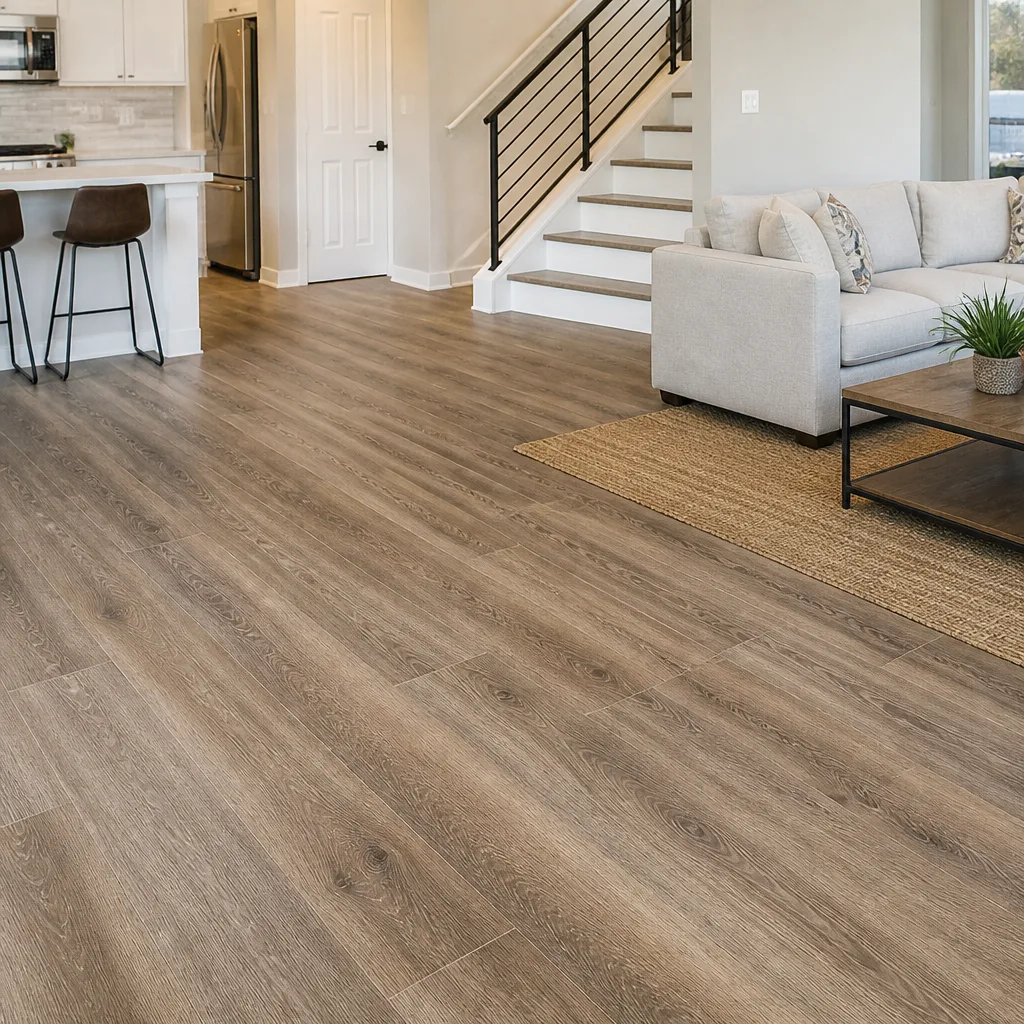
Luxury vinyl plank is one of the most practical floors you can put in a desert home. It’s water-resistant, it doesn’t care about dry air the way wood does, and it takes the traffic of a busy household without complaint. It also has a temperature ceiling, and in North Las Vegas that ceiling matters more than most sales conversations admit.
Vinyl plank is a plastic product. That’s not a knock on it. It’s the reason it holds up to moisture and the reason it has limits. Standard luxury vinyl has a surface temperature range in the neighborhood of 85°F to 100°F, depending on the product and the manufacturer. Above that range, plank can start to soften, expand, or lift at the edges, and a glued or click-locked floor can come apart at the seams. In most climates that ceiling is theoretical. In North Las Vegas, it isn’t.
Picture a family room with a large west-facing window. The summer sun hits that window through the hottest part of the afternoon, and the floor right inside the glass gets warm in a way the rest of the room doesn’t. Add a tile roof overhead that holds heat, and the surface temperature in that patch of floor can climb well past what the product was rated for. The floor doesn’t fail everywhere. It fails in the sun zone, which is why the symptoms can look mysterious to a homeowner.
This doesn’t mean skip vinyl. It means site the product to the room. Products built for higher heat tolerance exist, and some ranges handle sun exposure better than others. A design-forward line like Karndean, or a water-resistant plank engineered with a more stable core, performs differently than a thin builder-grade plank. The floor under a west window wants a different product than the floor in a hallway with no direct sun. If you want to compare options, carpet installation information about soft surfaces is worth reading too, because often the best answer for a hot, sun-baked room is a floor that wasn’t designed to feel cool underfoot.
Tile, Grout, and Expansion Joints on Desert Slabs
Tile is the natural fit for a desert home. It handles heat, it ignores dry air, and it holds up to the sand and grit that come in from outside. The catch is what happens under the tile. A tile floor is a rigid surface over a slab that moves, and in North Las Vegas the soil under that slab sees real temperature variance across the year. Concrete expands and contracts with the ground temperature, and a tile installation that ignores that movement will eventually show it.
This is where expansion joints come in. An expansion joint is a deliberate gap that lets the tile field move without cracking. Installers who skip them, or who fill a control joint in the slab with tile and grout instead of honoring it, leave the floor with nowhere to move. The result usually shows up months later as a hairline crack running straight through a field of tile, or grout that crumbles along a line where the slab flexed.
What a properly planned tile job accounts for:
- How the slab’s control joints line up with the tile layout, so the tile can honor them rather than being laid across them.
- Perimeter movement gaps at walls and fixed objects, so the field has room to expand toward the edges.
- A grout and setting material suited to the specific tile, and to a slab that’s exposed to desert seasonal movement.
- A layout that keeps the tile field visually clean while still meeting the movement needs of the slab beneath it.
We install tile with Daltile products because it’s professional-grade material that architects and commercial contractors specify, and it holds up the way you’d expect a specified tile to hold up. But the tile is half the story. The movement planning under it is the other half, and it’s not something you can see after the grout is finished. It’s the reason a tile floor performs for years in North Las Vegas. When you want a hard surface done right, tile flooring installation is the category to start with.
Radiant Heat From a Concrete Slab
A lot of North Las Vegas tract homes sit on a concrete slab that thermal masses through the day. The slab absorbs heat during the long desert daylight and releases it slowly into the evening, which is why the floor can feel noticeably warm even after the sun goes down. That stored heat is a real factor in what goes on top of the slab, and it’s the reason the underlayment decisions beneath a carpet matter as much as the carpet itself.
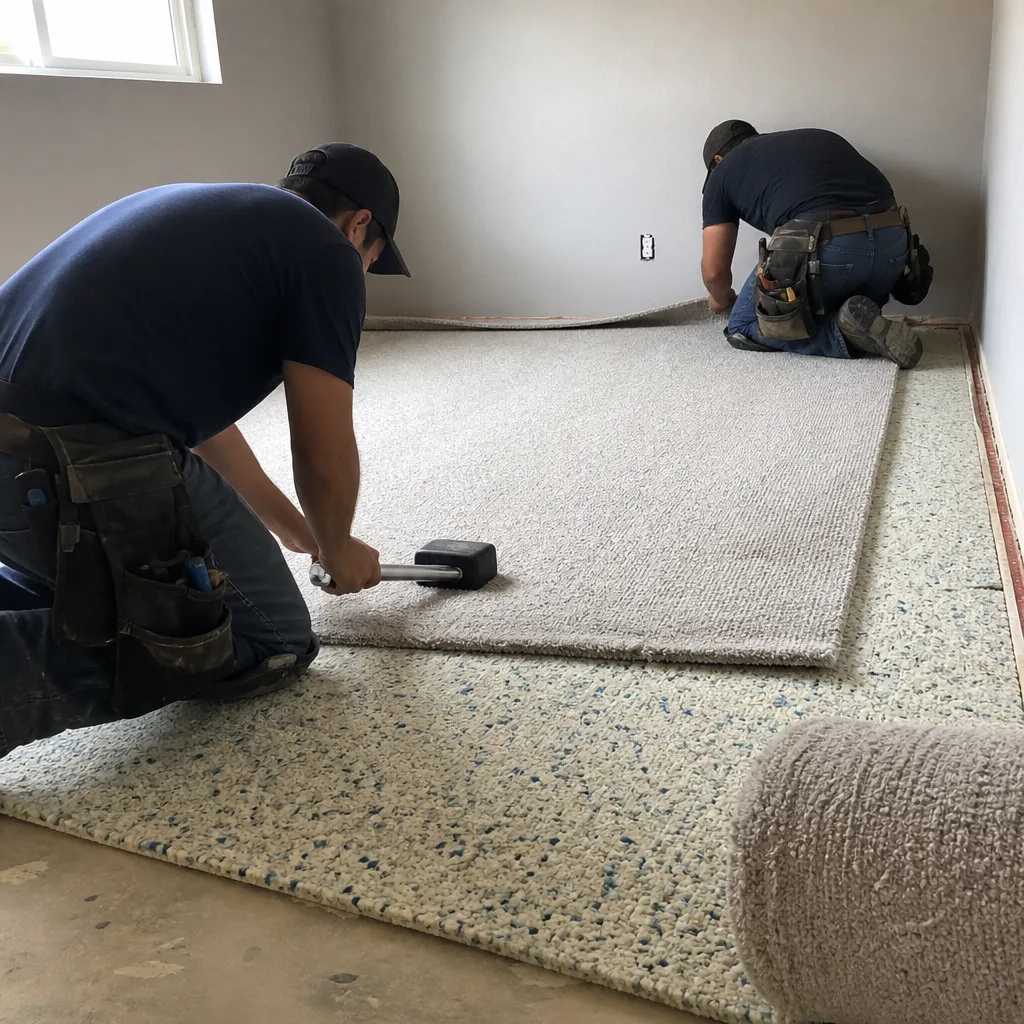
Carpet is a good choice for bedrooms and living areas here, but the padding is doing two jobs. It’s cushioning the foot traffic, and it’s standing between the carpet backing and a slab that can run warm. Padding that’s too thin or that degrades under heat will compress unevenly, and the carpet above it starts to show the wear pattern. A padding rated for the conditions and matched to how the room is used performs better than whatever is thinnest and cheapest.
Adhesives are the other half of this. Glue-down installations, whether carpet, vinyl, or engineered wood, depend on the adhesive holding through temperature swings. An adhesive that softens under slab heat or fails in a cold snap during winter will let the floor lift or shift at the edges. That’s not a brand problem. It’s a product-selection problem, and it’s why the right adhesive for the slab matters as much as the floor itself.
We ask about how the home is used, which rooms get sun, and how the slab behaves before we recommend anything. It’s the difference between a floor that lasts and a floor that shows every shortcut in the first hot summer. Our technicians have up to 8 years of experience reading those signals in North Las Vegas homes.
Seasonal Temperature Swings and Movement
North Las Vegas doesn’t just get hot. It gets hot and then gets cold, with real range on either side of the year. Summer afternoons can push well past 100°F, and winter nights drop into conditions that make the desert feel like a different place entirely. A 40°F swing between an afternoon and a night is normal here, and that cycle repeats every single day through much of the year. Flooring lives through that expan- contraction loop thousands of times across its service life.
What that means for each surface:
- Wood: Engineered wood handles the swing far better than solid wood because the core is built to resist dimensional change. Solid wood in a room without humidity control will open seams in the dry months.
- Tile: Pretty much indifferent to the swing, provided the movement joints under it are done correctly. Tile cracks when the slab moves against a rigid installation, not because of the temperature itself.
- Carpet: Flexes with the swing without issue, and the main risk is the padding and adhesive underneath rather than the carpet face.
- Vinyl plank: Tolerates dry air well and expands with heat, which is why the temperature ceiling on the product matters more than in a mild climate.
Manufacturers design products for the climate they’re sold in. Some lines are built with more tolerance for temperature movement and drier air than others. Products like LifeProof and Mannington are engineered to handle moisture and movement differently depending on the specific plank, and Armstrong’s engineered wood ranges are built with a core that resists the swing better than a solid board. The point isn’t the logo on the box. It’s reading the product characteristics against the conditions in the room. If you want to understand how a whole-house flooring choice fits together across rooms, see North Las Vegas.
Which Products Hold Up Best Here
In our experience across North Las Vegas homes, the products that perform most consistently are the ones engineered with the climate in mind rather than the ones chosen on looks alone. That’s not a knock on aesthetics. It’s a distinction that saves a lot of frustration. Here’s what the categories look like in this desert.
- Engineered hardwood and wood-core products: The layered construction resists the dry-air shrinkage that opens seams in solid wood. This is the wood floor that belongs in most North Las Vegas rooms unless the home has real humidity control.
- Water-resistant luxury vinyl plank: Handles dry air without issue and stays stable in rooms where moisture and spills are a risk. Watch the sun exposure, and pick a line with a heat tolerance that fits the room.
- Porcelain and ceramic tile: The most reliably stable surface in this climate. The performance lives or dies on the movement planning under it, not on the tile itself.
- Carpet with a proper pad: Excellent in bedrooms and living areas when the padding and adhesive are matched to a warm slab. The wrong pad undoes a good carpet.
We carry nine nationally recognized brands so that the choice is made on product characteristics rather than on what happens to be available. Karndean is a designer vinyl line you’ll mostly find through flooring specialists, and Daltile is specified by architects for a reason. The right floor for your space is not the one that’s easiest to sell. It’s the one that matches the room, the slab, and the climate. Nine brands. Three surface categories. One specialist.
How to Choose, Step by Step
Choosing flooring for a North Las Vegas home comes down to a process more than a preference. Work through these steps in order and the decision tends to make itself.
- Walk the room and note the sun. Which windows face west or south, and how much direct sun lands on the floor during the afternoon? That tells you whether a vinyl product is risky in that specific room and whether engineered wood or tile is the safer call.
- Check what’s under the floor. A slab behaves differently from a wood subfloor, and the slab’s warmth and movement drive both the underlayment and the adhesive choice. This is a look-at-it-in-person step, not a phone call.
- Decide how much you want to restore vs. replace. If there’s existing hardwood and it’s in decent shape, refinishing might beat replacement. That depends on the thickness of the wood and its condition, and it’s checked at the estimate visit. Refinish before you replace, and we’ll tell you honestly which is worth it.
- Match the product to the room’s job. Carpet for bedrooms and quiet living areas. Tile for entries, kitchens, and baths. Engineered wood or vinyl for the main living spaces where looks and durability both matter.
- Check the product characteristics against the climate. Heat tolerance for sun rooms, dry-air stability for the whole house, and a padding or adhesive that fits the slab. Read the spec sheet before you love the sample.
- Book the measure and estimate. The written estimate sets the price and the schedule, including the acclimation window. Nothing gets installed until that’s signed off and the numbers are clear.
This is the part where a specialist is worth talking to. Name brands you can research before you commit, and a real conversation about your rooms, your slab, and your sun exposure beats a showroom full of samples every time.
Common Mistakes to Avoid
- Installing solid hardwood in a dry North Las Vegas room. The dry air pulls moisture out of the wood and the seams open. Engineered wood or a different surface is the answer unless the home has humidity control.
- Skipping or shortening acclimation to hit a date. The product needs to settle in the air it will live in. Rushing it puts the movement after installation instead of before it.
- Putting luxury vinyl under a west-facing window without checking the temperature ceiling. Sun and slab heat can push surface temperature past what the plank was rated for, and the failure shows up only in that one zone.
- Letting a tile installer lay straight across a slab control joint. The slab will move, and the tile will crack along that line. Expansion joints and perimeter gaps are not optional here.
- Using cheap padding under carpet over a warm slab. Thin padding compresses under heat and traffic, and the carpet shows it. Match the pad to the slab and the room.
- Choosing on sample appearance alone. A sample looks the same in every climate. The product’s heat tolerance, moisture stability, and core construction are what decide how it performs in North Las Vegas.
- Skipping the written estimate to save time. The estimate is free, and it’s where the acclimation window, the schedule, and the final price get set. Skipping it means folding a whole set of decisions into a handshake.
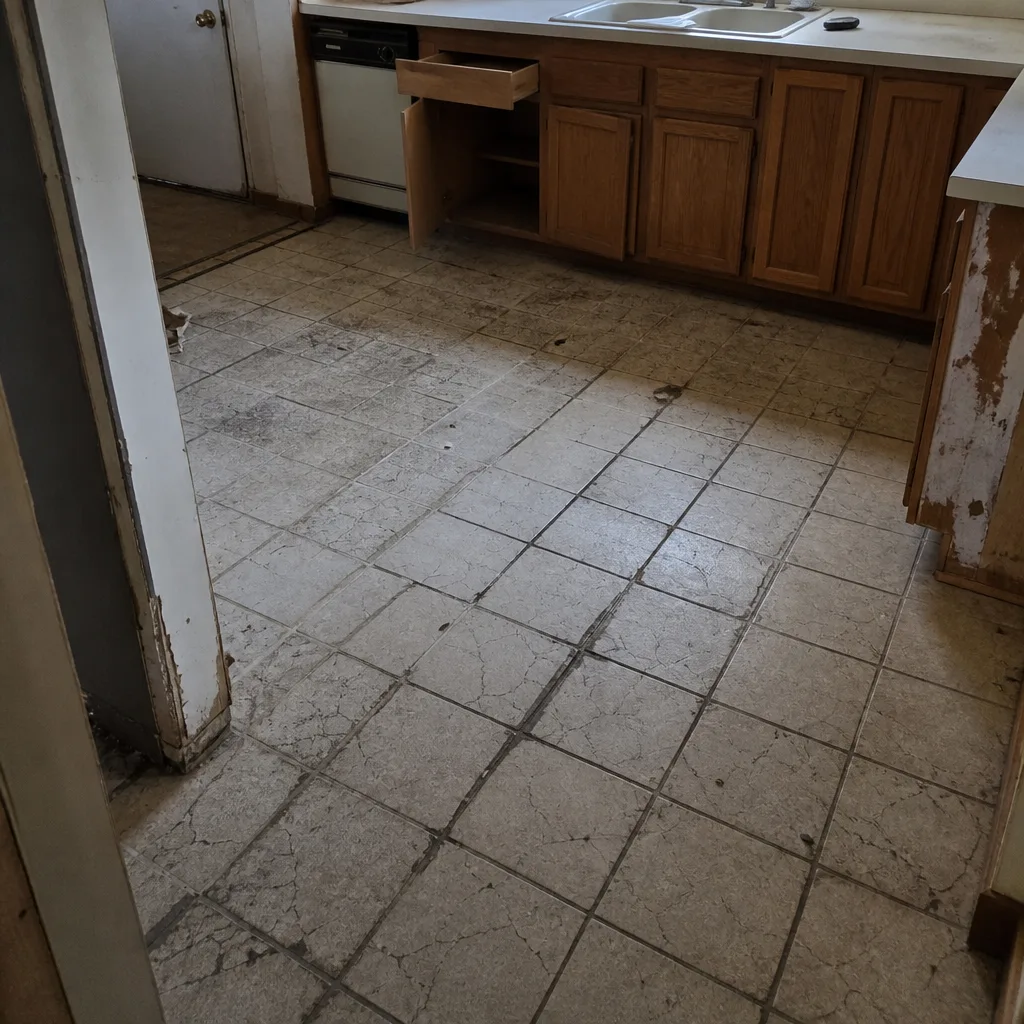
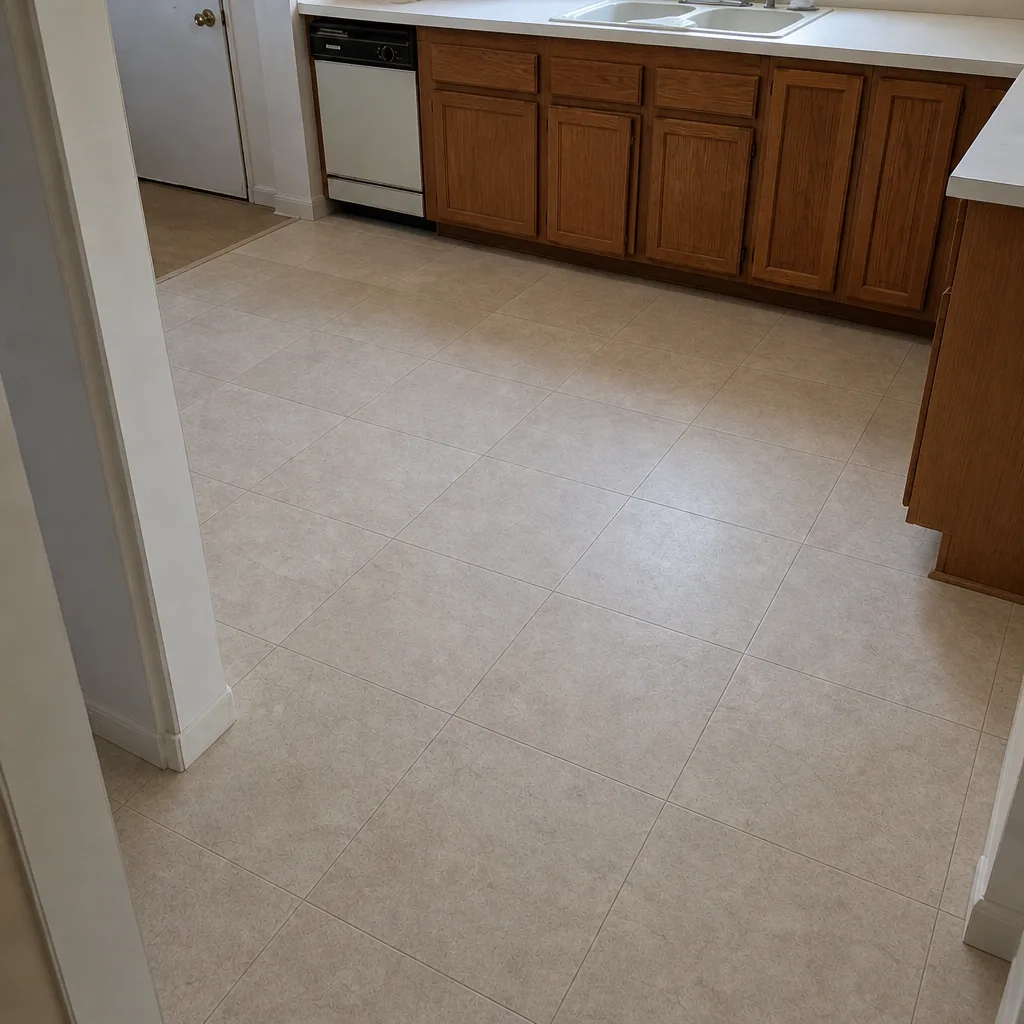
See the difference
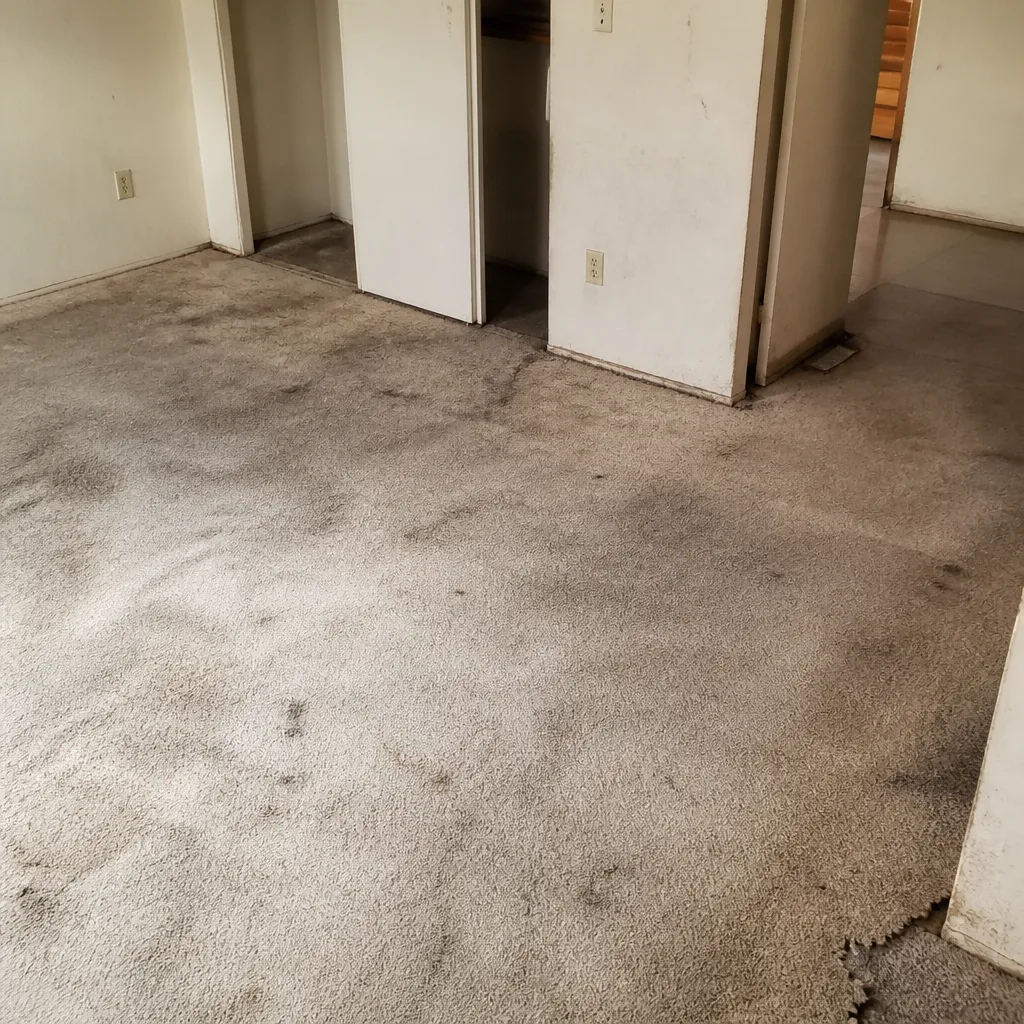 Before
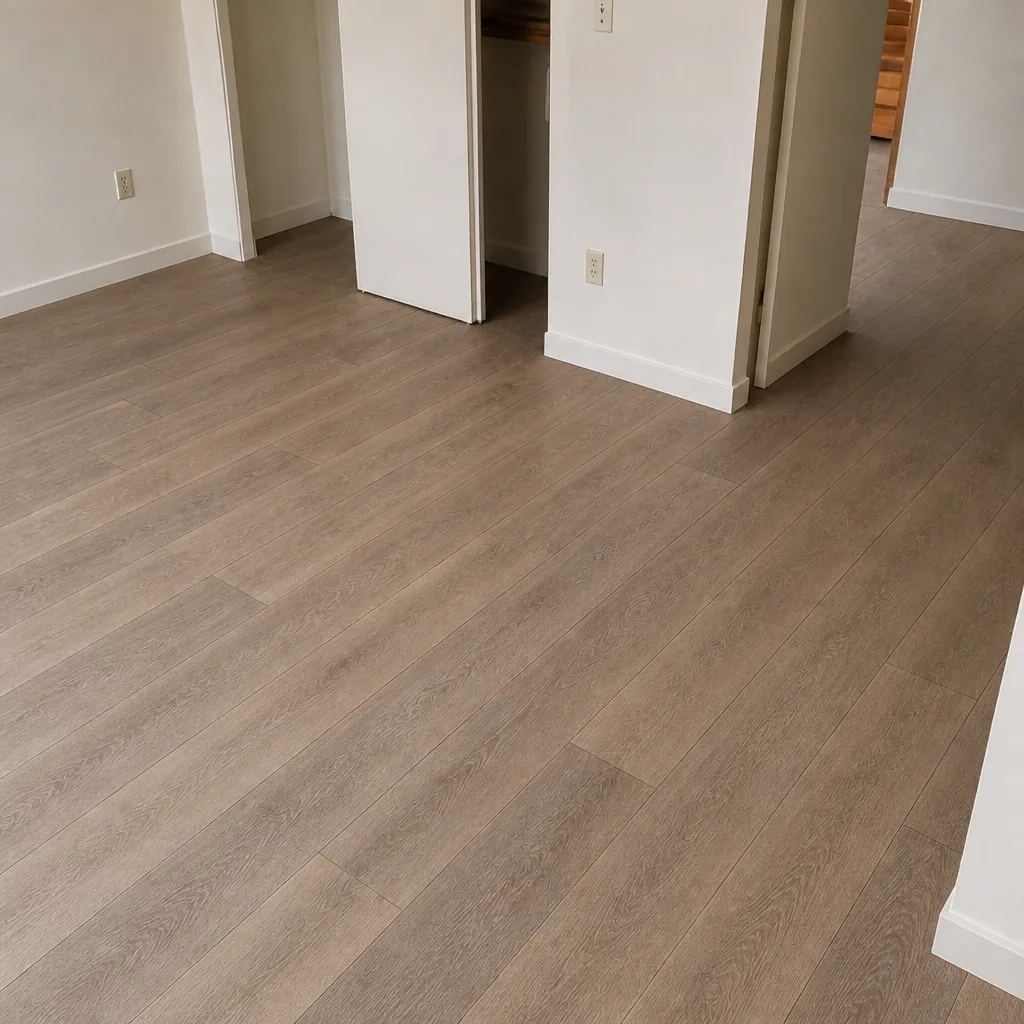 After
 Before
 After
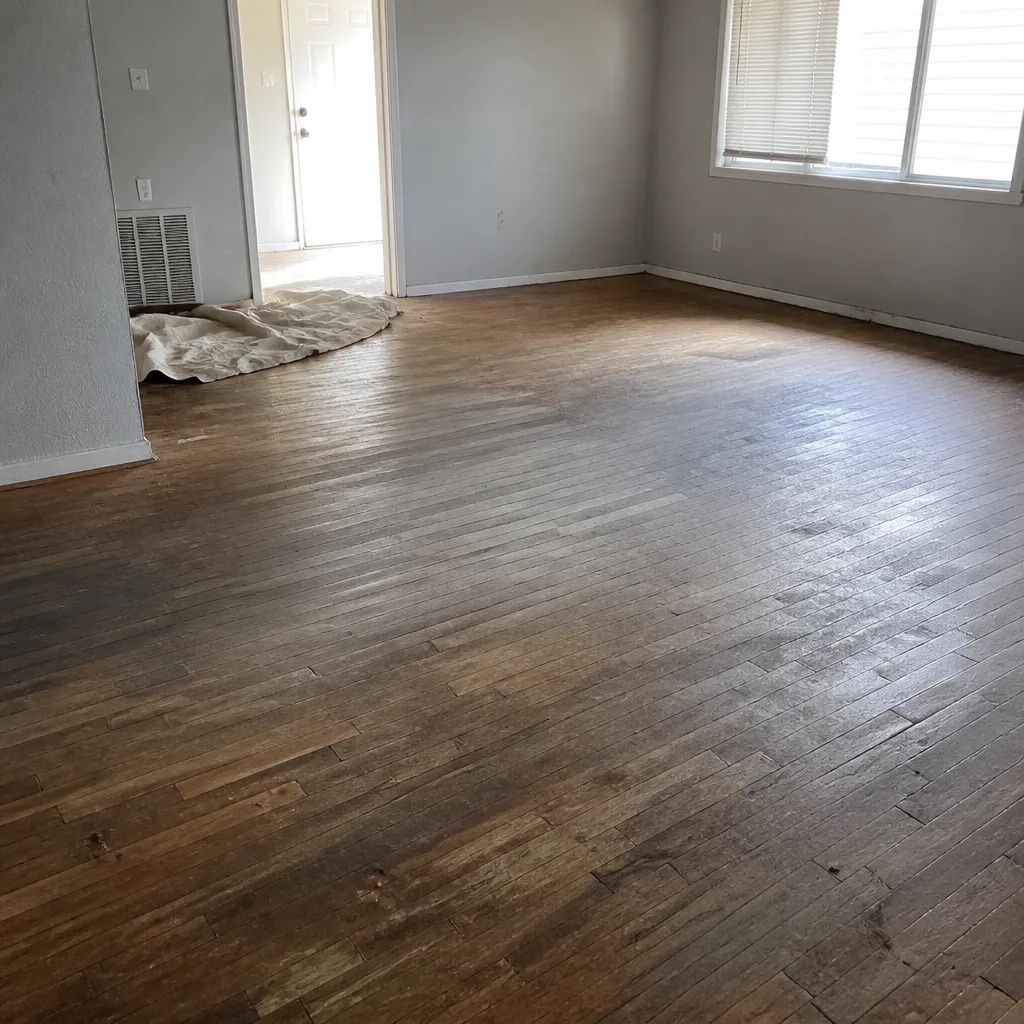 Before
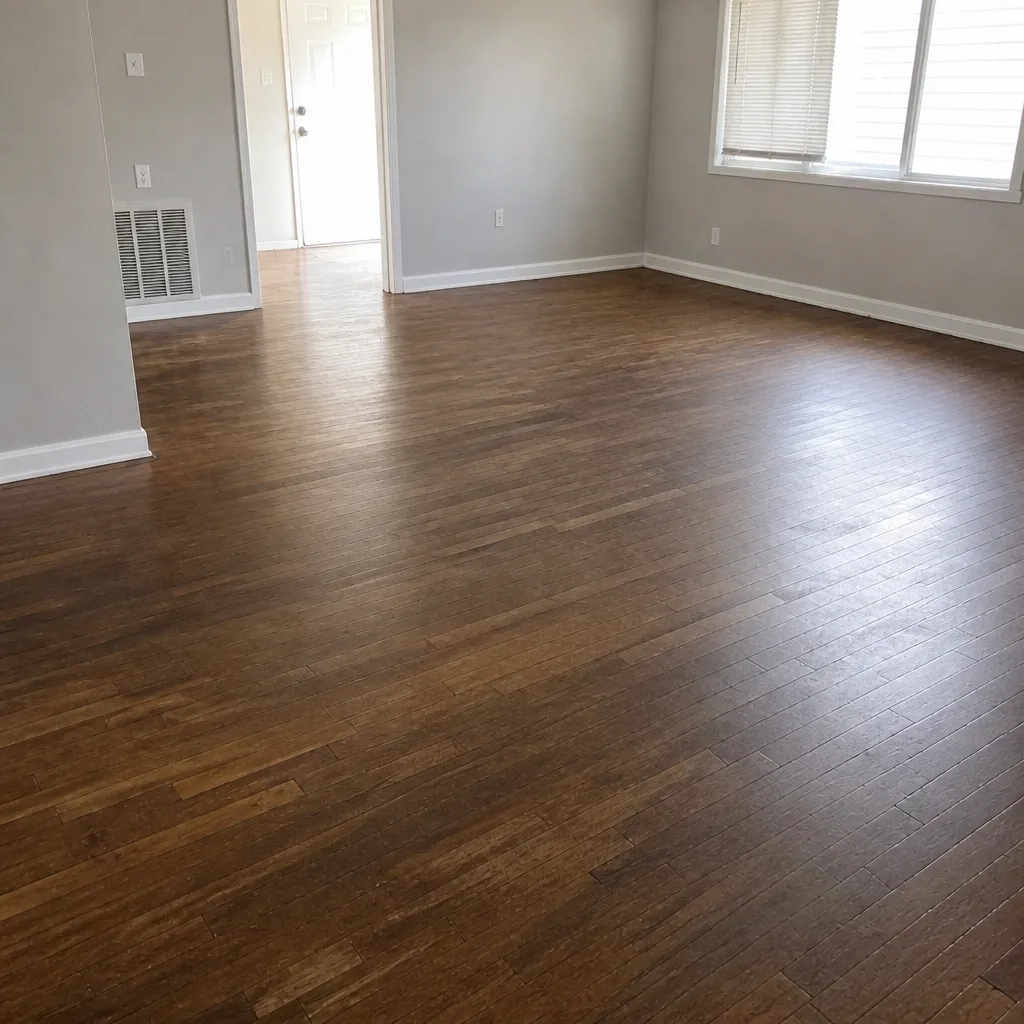 After
When to Call a Professional
Some flooring decisions are straightforward and some need eyes on the actual slab and the actual room. Call a professional when your existing solid wood is gapping and you want to know whether refinishing will fix it or whether it’s a moisture problem that needs a different answer. Call when you’re putting tile over a slab and there’s any question about control joints. Call when a vinyl floor in a sun room is showing lifting or seam separation. Call when carpet over a warm slab feels uneven underfoot or the padding has started to compress. And call when you’re replacing flooring across several rooms and want one specialist to handle carpet, tile, and wood under one relationship instead of three separate contractors. Flooring North Las Vegas offers free estimates in North Las Vegas. Call (844) 761-9160. We answer 24/7. Fast dispatch from 7am to 7pm, Sunday through Friday.
Frequently Asked Questions
Engineered hardwood, porcelain tile, and water-resistant luxury vinyl are the most reliable choices for the North Las Vegas climate, with quality carpet over the right padding doing well in bedrooms and living areas. Solid hardwood is the product that struggles here because 9% average humidity pulls moisture from the boards and opens seams. The room and the sun exposure decide the final pick. Call (844) 761-9160 for an estimate that matches the product to your specific rooms.
Solid hardwood gaps and cups here because the air is too dry for the wood to hold its milled dimensions. At around 9% relative humidity, boards give up moisture and shrink, which opens the seams, and the top face dries faster than the bottom, which causes the cupping. It’s not a defective floor. It’s the wrong product for the climate unless the home has real humidity control. Call (844) 761-9160 to talk through whether refinishing or replacement is the better call for what you have.
Luxury vinyl plank can fail in North Las Vegas when the surface temperature climbs past the product’s rated ceiling, which is roughly 85°F to 100°F depending on the line. The failures show up in sun zones, typically right inside west-facing windows or under a tile roof that holds heat, and they look like lifted edges or separated seams. The fix is choosing a plank with the heat tolerance to match the room. Call (844) 761-9160 and we’ll help you sort out which product belongs in which room.
Acclimation time in the desert depends on the specific product, the packaging, and the interior conditions, so there’s no single number that applies to every floor. The product instructions and the written estimate set the window, and shortening it to hit a schedule is a common cause of seams opening later. It’s better to plan the install date around the acclimation than the other way around. Call (844) 761-9160 for an estimate that builds that window into the schedule.
Yes, the estimate is free, and it’s where the product, the acclimation window, and the final price get set. We look at the slab, the sun exposure, and the existing floor so the recommendation fits the room, not just the sample you liked. The written estimate is the number that holds. Call (844) 761-9160 to schedule your free estimate.
We can refinish existing hardwood when the wood is thick enough and in good enough condition to take it, and whether that’s true depends on the thickness of the wood and how it has worn, which is checked at the estimate visit. Refinishing is often the better call when the floor is structurally sound and you just want the surface renewed. Call (844) 761-9160 and we’ll tell you honestly whether refinishing is worth it in your home.
The Bottom Line
North Las Vegas flooring is an engineering decision before it’s an aesthetic one. The combination of 9% average humidity, surface temperatures that climb in sun-facing rooms, and a 40°F daily swing eliminates products that were built for a different climate, not because they’re bad floors but because they’re the wrong tool. Choose engineered wood over solid, site your vinyl to the sun, honor the expansion joints under tile, and match the padding or adhesive to the slab. The right floor for your space comes from reading the room and the product together. Nine brands. Three surface categories. One specialist.
Ready to stop guessing and get a real answer for your rooms? Call (844) 761-9160 for a free estimate. We answer 24/7. Fast dispatch from 7am to 7pm, Sunday through Friday.
Written by the team at Flooring North Las Vegas.